

What Exactly Is a Lunar Eclipse?
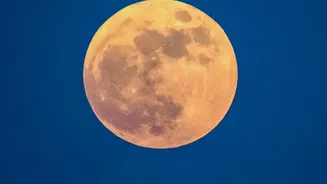
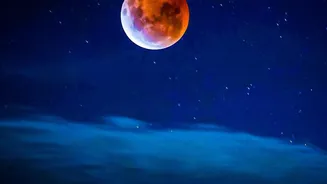
Imagine the Sun, Earth, and Moon as three cosmic dancers. A lunar eclipse happens when they align perfectly, with Earth positioned directly between the Sun and the full Moon. When this happens, our planet casts a massive shadow onto the lunar surface,
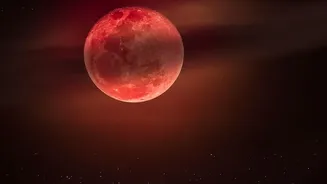
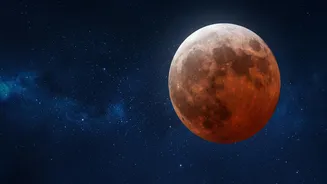
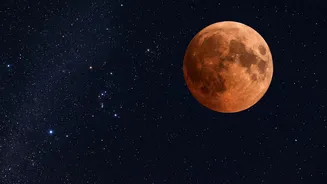
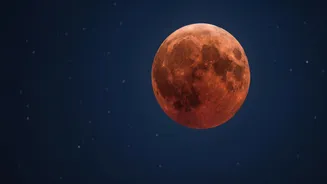
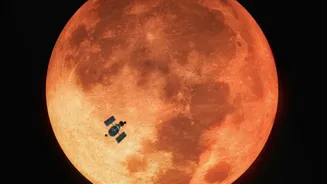
causing the Moon to dim and sometimes change colour dramatically. There are three main types: total, partial, and penumbral. A total eclipse is when the Moon passes completely into Earth's darkest shadow. A penumbral eclipse is a subtle dimming that's often hard to notice. The upcoming event is a partial lunar eclipse, which sits excitingly in between.
Understanding the Shadow Play
To get what's happening, it helps to know that Earth’s shadow has two parts: the umbra and the penumbra. The umbra is the dark, inner core of the shadow, while the penumbra is the fainter, outer part. During a partial lunar eclipse, the Moon glides through the penumbra and then a part of it dips into the much darker umbra. This is when the real magic happens. You'll see a distinct 'bite' taken out of the Moon, as if a piece of it has vanished into the night sky. This dark notch is Earth's umbral shadow creeping across the lunar face.
When and Where to Watch in India
Mark your calendars for the night of September 7-8, 2026. This impressive partial lunar eclipse will be visible across all of India, offering a fantastic viewing opportunity for millions. The show begins late in the evening on September 7. The most dramatic phase, when the Moon is deepest inside Earth's shadow, will occur around 11:43 PM IST. Since this is a night-time event happening high in the sky, you'll be able to see it from anywhere in the country, provided the skies are clear. The entire partial phase will be an amazing sight, as nearly 92% of the moon will be covered by Earth's shadow at its peak.
No Special Glasses Needed
Here's the best news for first-timers: unlike a solar eclipse, you don’t need any special filters or protective glasses to watch a lunar eclipse. It is perfectly safe to view with your naked eyes. The Moon is simply being dimmed by Earth's shadow; it is not emitting any dangerous rays. So, you can relax and enjoy the spectacle without any worry. This safety and ease of viewing make lunar eclipses an ideal entry point into the wonderful hobby of skywatching.
Tips for the Best Experience
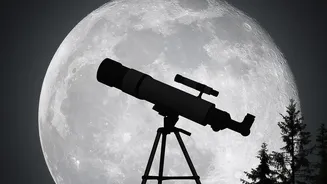
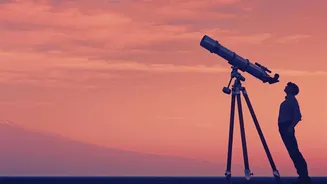
While you don't need equipment, a little preparation can make the experience even more memorable. First, try to find a viewing spot away from bright city lights. This will make the subtle colour changes on the Moon's surface more visible. Give your eyes about 15-20 minutes to adjust to the darkness. If you have a pair of binoculars or a small telescope, bring them along! They will provide a stunning, detailed view of the curved edge of Earth's shadow moving across lunar craters. Finally, be patient. Eclipses unfold slowly, over a couple of hours. It’s a marathon, not a sprint, so get comfortable, perhaps with a flask of tea, and watch the cosmic clockwork in action.