



The Wisdom of the Wooden Press
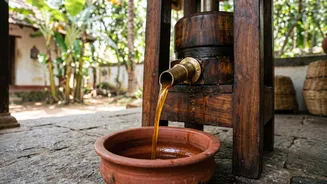
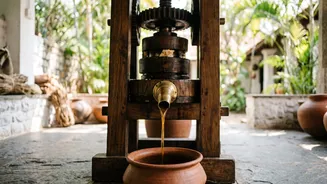
Long before industrial factories, oil was extracted using a simple, powerful tool: the wooden press. Known as 'chekku' in Tamil or 'ghani' in other parts of India, this method involves crushing oilseeds in a large wooden mortar with a rotating wooden pestle.
The process is slow and gentle, driven by a low-speed motor that mimics the pace of the bullocks that once powered it. The key advantage of using wood is that it generates significantly less friction and heat compared to modern steel expellers. This low-temperature extraction, typically staying below 40-50°C, is the essence of what we now call cold-pressing. It ensures the oil is not subjected to the high temperatures that can alter its chemistry and strip it of delicate nutrients.
Meet the Phytosterols
So, what are we trying to preserve? Among the most valuable compounds in sesame oil are phytosterols. These are naturally occurring substances in plants with a structure very similar to cholesterol. Think of them as the plant's version of cholesterol, helping to maintain the integrity of its cell membranes. When we consume them, they offer a range of health benefits. Sesame oil is a particularly rich source of phytosterols, containing higher levels than many other common vegetable oils. The most prominent among them are β-sitosterol, campesterol, and stigmasterol. These compounds are celebrated for their ability to help lower blood cholesterol levels, but their benefits don't stop there.
Why Heat Is the Enemy
The link between the wooden press and phytosterols comes down to temperature. Phytosterols are heat-sensitive. Industrial oil extraction often involves high heat and chemical solvents to maximize yield. While efficient, this process can be destructive. Studies have shown that heating oils at high temperatures can lead to a significant loss of phytosterols through oxidation. For example, one study observed a loss of over 90% of certain phytosterols when rapeseed oil was heated to 180°C. In contrast, cold-pressing methods that keep temperatures low help preserve these valuable compounds in their natural, active state. This means more of the plant's goodness makes it from the seed into the bottle.
The Soothing Digestive Connection
The headline's promise of 'better digestive function' is where these preserved phytosterols really shine. Scientific research has highlighted the anti-inflammatory properties of phytosterols, which can be particularly beneficial for the gastrointestinal system. Chronic inflammation is a known issue in many digestive ailments. Compounds like phytosterols can help soothe inflammatory conditions in the gut. Some studies suggest that phytosterols play a role in improving the healing of the mucosal lining of the gut and preserving the intestinal barrier. While not a cure for disease, incorporating foods rich in these compounds can be a supportive strategy for overall digestive wellness and comfort.
A Taste of South Indian Heritage
In South India, sesame oil, often called 'gingelly oil', is more than just a cooking medium; it's a cultural cornerstone. It’s used in countless traditional dishes, in oil-pulling for oral health, and in Ayurvedic massage practices. The resurgence of 'chekku' or wood-pressed oil represents a movement back to these roots. Consumers are increasingly seeking out these oils not just for their superior flavour and aroma, but for the nutritional integrity that this gentle process guarantees. Choosing wood-pressed sesame oil is a way to support artisanal producers who are keeping a valuable tradition alive and to connect with a food heritage that has valued wellness for centuries.