




Graduate to the Gas Giants
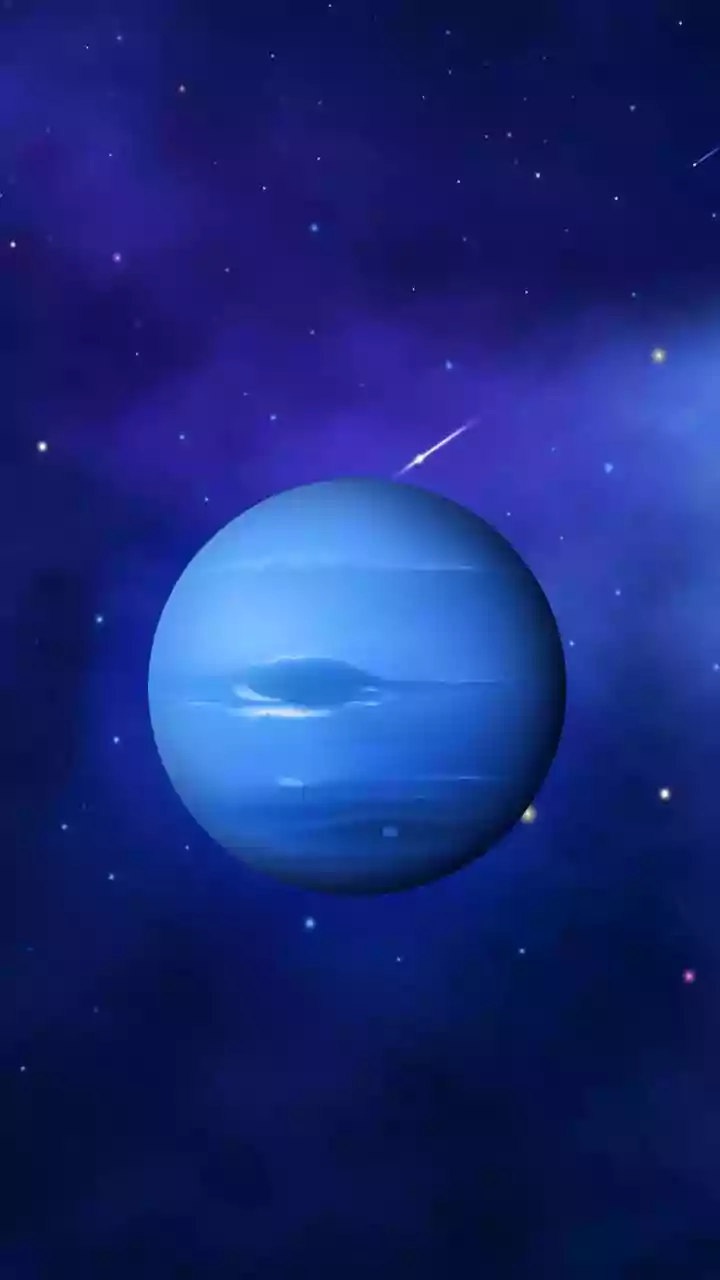
While meteor showers are fleeting, planets offer a more constant and rewarding target. This season, the titans of our solar system take centre stage. Saturn, with its famous rings, rises in the east in the evening. Even a basic pair of binoculars might
reveal its slightly elongated shape, though a small telescope is needed to truly resolve the rings. Not to be outdone, Jupiter, the second-brightest planet, makes its appearance late in the night, rising in the east before dawn. Its steady, brilliant light is unmistakable and doesn't twinkle like distant stars. With good binoculars, you might even spot its four largest moons—Io, Europa, Ganymede, and Callisto—appearing as tiny pinpricks of light in a neat line on either side of the planet. Venus is also a dazzling sight, shining brightly in the western sky right after sunset. Mars can be spotted in the pre-dawn hours as well.
Navigate by the Summer Triangle
High overhead in the late summer and early autumn sky is a giant and easily recognisable pattern called the Summer Triangle. This isn't a constellation but an asterism, formed by three of the brightest stars from three different constellations. The brightest of the trio is the brilliant blue-white star Vega, in the constellation Lyra. To its lower right is Altair, in Aquila the Eagle, and completing the triangle is Deneb, which marks the tail of Cygnus, the Swan. Learning to spot this massive triangle is a key stargazing skill. It’s so prominent you can see it even from light-polluted areas, and it serves as a celestial signpost. Once you find it, you are oriented for the entire season, ready to explore the star-rich regions of the Milky Way that run right through it.
Hunt for a Distant Galaxy
Ready for a real challenge? Try finding the Andromeda Galaxy (M31). It's the most distant object you can see with your unaided eye, a staggering 2.5 million light-years away. To find it, you’ll need a dark sky, away from city lights. The best time to see it is during the autumn months when it’s high in the sky. One popular method is to use the W-shaped constellation Cassiopeia as a guide. The right-hand 'V' of the 'W' forms an arrow that points roughly in the direction of the galaxy. Alternatively, you can use the Great Square of Pegasus. Find the star Alpheratz, which forms the top-left corner of the square, then hop over two stars in the constellation Andromeda to the star Mirach. From Mirach, look just above to find a faint, fuzzy patch of light. To your naked eye, it will look like a small, elongated cloud. With binoculars, this smudge becomes a more distinct oval glow, the core of a vast spiral galaxy containing a trillion stars.
Explore the Heart of the Milky Way
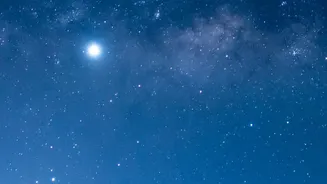
The band of the Milky Way is especially brilliant this time of year, stretching from the south-southwest to the north-northeast. The densest, brightest part is located in the constellation Sagittarius, which sits low on the southern horizon. To find it, look for a distinct teapot-shaped asterism. The steam rising from the teapot's spout marks the direction of our galaxy's core. While you can't see the supermassive black hole at its center, scanning this region with binoculars is an awe-inspiring experience. The area is packed with star clusters and nebulae. Look for the Lagoon Nebula (M8) and the Trifid Nebula (M20), which appear as glowing patches just above the teapot's spout. Even without optical aid, the sheer density of stars in this part of the sky is a stunning reminder of our place in the cosmos.
Learn a New Constellation: Pegasus
As summer fades into autumn, new constellations rise in the east. A great one to learn is Pegasus, the winged horse. Its most prominent feature is the Great Square, a large boxy asterism that forms the body of the horse. This square is a useful starting point for finding other constellations like Andromeda, which extends off one of its corners. The constellations visible in late August and September include Sagittarius, Lyra, and Cygnus high in the sky, with Pegasus and Andromeda rising in the east. Cassiopeia, shaped like a 'W', is also easy to spot in the northeast. Spending some time just tracing these patterns is a relaxing way to familiarise yourself with the night sky’s geography, turning a star-filled canvas into a familiar, friendly map.