




Titan: An Alien Earth
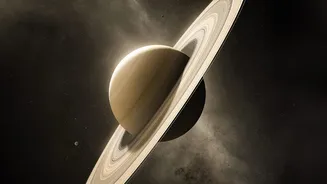
Titan is one of the most intriguing bodies in our solar system. It is the only moon with a dense atmosphere, and it boasts a landscape of rivers, lakes, and seas. But this is not a world of water. On Titan, where temperatures hover around a frigid -179°C,
the rivers and rain are made of liquid methane and ethane. Beneath its icy crust lies a vast liquid water ocean. This unique environment, rich in complex organic molecules that rain down from the atmosphere, makes Titan a natural laboratory for studying how the ingredients for life might form and come together. It's considered an analog for early Earth, before life began, preserving a chemical state that our own planet left behind billions of years ago.
The Search for Prebiotic Chemistry
Dragonfly’s primary goal is not to find existing life. Instead, its mission is to search for what scientists call 'prebiotic chemistry'—the complex chemical processes that could potentially lead to life. The mission will investigate how far this chemical evolution has progressed on Titan. Scientists want to find out if the moon's organic materials have ever mixed with liquid water, which might have been present in the past, perhaps from asteroid impacts or cryovolcanic flows. Such an event could have created a 'primordial soup' similar to the one believed to have given rise to life on Earth. By studying these processes on Titan, we can gain invaluable insight into the origin of life in the universe.
A Revolutionary Flying Machine
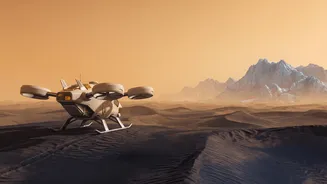
To explore this diverse and mysterious world, NASA is sending a revolutionary vehicle: a rotorcraft-lander. Roughly the size of a small car, Dragonfly is a dual-quadcopter, essentially a giant, nuclear-powered drone with eight rotors. Titan’s thick atmosphere and low gravity make it an ideal place for flight, allowing Dragonfly to do what no rover ever could. Instead of slowly crawling across the surface, it will be able to fly from one promising location to the next, covering tens of kilometers in a single hop. This mobility will allow it to visit dozens of sites with different geological features, from organic sand dunes to the floor of an impact crater, providing a comprehensive survey of the moon's surface.
A Robotic Scientist's Toolkit
Dragonfly is equipped with a sophisticated suite of scientific instruments to analyze the world around it. Its Dragonfly Mass Spectrometer (DraMS) will study the composition of surface and atmospheric samples, searching for complex organic compounds, including those relevant to life like amino acids. To collect samples, it has a drill system called DrACO that can bore into the hard, icy surface and feed material into the spectrometer. Its cameras will provide breathtaking aerial views and close-up images of the landscape, while other instruments will measure the weather, monitor for 'Titanquakes' with a seismometer, and analyze the composition of the ground beneath its landing skids.
Journey to an Ancient Crater
The mission plan is both ambitious and methodical. Dragonfly will first land in an equatorial region of organic dunes known as the 'Shangri-La' sand sea. After exploring its initial surroundings, the rotorcraft will embark on a series of flights, leapfrogging across the terrain on a journey that will span several years. The ultimate destination is the Selk impact crater, a 90-kilometer-wide feature where scientists believe a massive impact once melted the water ice crust. This site is a prime target because it may hold preserved evidence of liquid water mixing with Titan’s organic soup, making it one of the most likely places in the solar system to find evidence of prebiotic chemistry.