


Tree Pose, or Vrksasana, is a cornerstone of balance in yoga. But did you know you can transform this foundational pose just by changing your arms? Exploring different arm positions can deepen your focus, challenge your stability, and open up new benefits.
The Foundation: Hands at Heart Centre
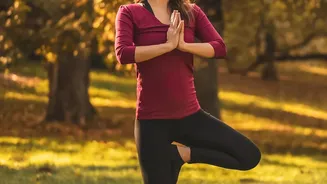
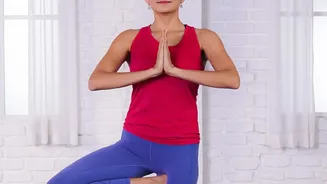
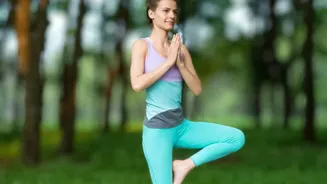
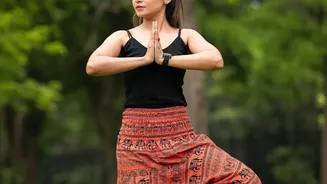
This is the classic and most common expression of Tree Pose. With your balancing leg rooted, bring your palms to touch in Anjali Mudra (prayer position) at the centre of your chest. This variation is grounding and meditative. Pressing the palms together creates a subtle engagement that helps to centralise your energy and improve focus, making it easier to find and maintain your balance. It encourages a tall spine and relaxed shoulders, reminding you to find calm within the challenge.
The Beginner's Friend: Hands on Hips
For those new to balance poses or feeling a bit wobbly, placing your hands firmly on your hips is an excellent modification. This position provides tactile feedback, helping you to keep your hips level and squared to the front. Often, the hip of the lifted leg tends to hike up; having your hands here gives you a direct way to feel and correct that misalignment. This allows you to concentrate purely on the action of the standing leg and finding a steady gaze (drishti) without the added complexity of arm placement.
The Growth Spurt: Arms Reaching Overhead
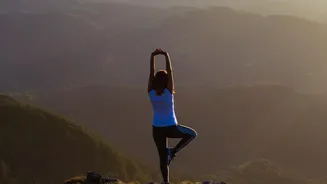
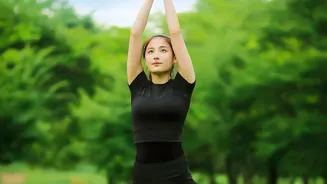
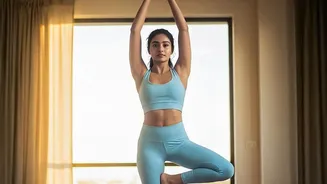
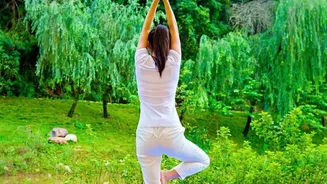
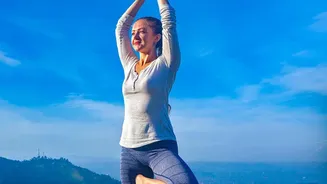
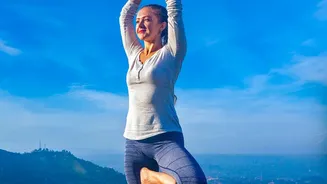
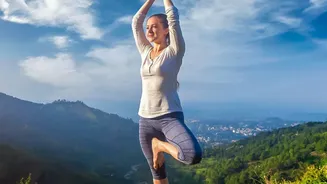
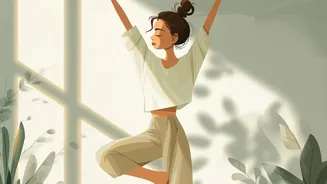
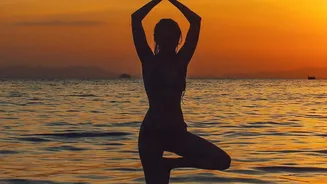
To feel the full 'tree-like' expression of the pose, extend your arms straight up towards the sky, like branches reaching for sunlight. You can keep your palms facing each other or press them together. This variation significantly raises your centre of gravity, making it more challenging to balance. The benefits are a wonderful lengthening of the entire spine, a stretch across the shoulders and side body, and a boost of energy through the whole body. It builds greater strength and postural awareness.
The Open Heart: Arms in a T-Shape
Extending your arms straight out to the sides, parallel to the floor, creates a 'T' shape with your body. This variation is fantastic for opening up the chest and shoulders. It offers a different balance challenge, as the wide arm position requires subtle adjustments to stay centred. For an added layer of difficulty and to work on your proprioception, you can try slowly turning your head to gaze over one set of fingertips, and then the other.
The Meditative Touch : Gyan Mudra on the Knee
For a more introspective and calming variation, you can rest the back of one hand on your bent knee, with the thumb and index finger touching in Gyan Mudra (the mudra of knowledge). The other hand can rest on your hip or also be in Gyan Mudra by your side. This variation removes the arms as a balancing tool, forcing your core and standing leg to take full responsibility. It encourages a deep sense of inner focus and is a beautiful way to turn the physical posture into a standing meditation.
The Deep Stretch : Reverse Prayer Hands
An advanced variation for those with open shoulders is Paschima Namaskarasana, or Reverse Prayer Pose. Behind your back, bring your palms to touch with the fingertips pointing upwards along your spine. Combining this deep shoulder and chest opener with the balance of Tree Pose is a powerful expression of stability and flexibility. It intensely stretches the wrists and forearms while demanding significant focus to keep the torso upright and the balance steady. If full prayer is inaccessible, simply grabbing opposite elbows behind your back provides a similar chest-opening benefit.