




A New Frontier for Rocky Worlds
For decades, astronomers have dreamed of studying the skies of Earth-like planets orbiting distant stars. While water and other atmospheric gases have been detected on gas giants similar to Jupiter, finding any trace of an atmosphere on a rocky planet has
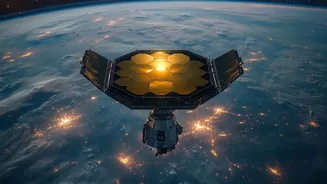
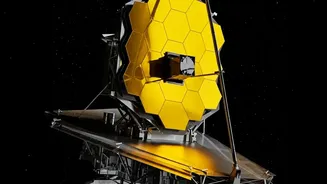
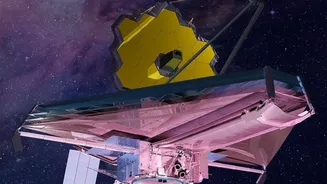
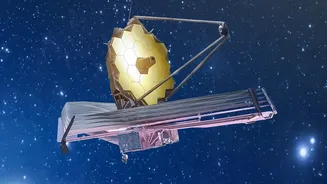
remained an elusive goal. These smaller worlds present a much greater challenge, as their thin atmospheric signals are incredibly faint. Recent findings from the James Webb Space Telescope represent a monumental leap forward. For the first time, scientists have gathered strong evidence for a substantial atmosphere around a “super-Earth,” a rocky planet larger than Earth but smaller than Neptune. This breakthrough doesn’t just concern one planet; it proves that our technology has finally reached the point where we can begin to characterize the environments of these alien worlds, transforming them from simple points of light into tangible places.
The Case of 55 Cancri e
One of the most compelling subjects of this new research is 55 Cancri e, a super-Earth located 41 light-years away. This planet is anything but hospitable; it orbits its star so closely that its surface is likely a molten ocean of rock with temperatures soaring to thousands of degrees. Conventional wisdom suggested that any primordial atmosphere would have been blasted away long ago by the intense stellar radiation. However, JWST's data tells a different story. By analysing the light from the planet's star as it passed behind it, a technique that reveals the planet's own thermal glow, scientists found evidence of a thick atmosphere rich in gases like carbon monoxide or carbon dioxide. This finding was revolutionary, suggesting the planet has a “secondary” atmosphere that is continuously replenished by gases bubbling out of its magma ocean. This process, known as outgassing, is what helped form Earth’s own atmosphere billions of years ago.
How the Telescope 'Sees' Air
Detecting an atmosphere from trillions of kilometres away sounds like science fiction, but JWST does it using a clever method called spectroscopy. When a planet passes in front of its star, a tiny fraction of the starlight filters through its atmosphere. Different gas molecules absorb specific colours, or wavelengths, of light, leaving behind a unique chemical fingerprint in the star's spectrum. By reading this “barcode” of light, astronomers can deduce which gases are present. For planets like 55 Cancri e, which don’t pass in front of their star from our viewpoint, Webb uses a different tactic. It measures the total light from the system and waits for the planet to swing behind the star. The dip in brightness reveals the light emitted by the planet itself, and a spectrum of that light can reveal the composition of its atmosphere.
The Complication of Water Vapour
The headline-grabbing molecule in the search for life is water. JWST has indeed detected tantalizing hints of water vapour in the vicinity of another rocky super-Earth, GJ 486 b. However, this is where the scientific process demands caution. The signal was faint, and scientists quickly realized it could have an alternative source: the star itself. Cooler stars, known as red dwarfs, can have large “starspots” that are cool enough for water molecules to form. The telescope may have been detecting the signature of a humid star, not a steamy planet. Follow-up observations have leaned toward the planet being bare, highlighting the immense difficulty in untangling these signals. This challenge doesn’t represent a failure but an essential part of the scientific method. It refines techniques and demonstrates the precision required to make such a profound discovery.
A Stepping Stone to Habitable Worlds
While 55 Cancri e is a scorching lava world and the water on GJ 486 b remains unconfirmed, these early results from JWST are incredibly encouraging. They prove that rocky exoplanets can possess and maintain significant atmospheres, even in hostile environments. This is a critical piece of the puzzle. Before we can find a planet with life, we must first find planets with the right conditions for life, and a stable atmosphere is non-negotiable. This breakthrough provides a roadmap for future observations. The telescope will now turn its gaze to other, more temperate rocky worlds located in their star’s “habitable zone,” where temperatures could allow liquid water to exist on the surface. Now that we know what to look for and how to find it, the search for a true Earth 2.0 has begun in earnest.