






Why You Need More Than an Unspoken Understanding
Relying on unspoken rules for a shared fridge, whether at home with flatmates or in an office breakroom, is a recipe for frustration. What one person considers common courtesy, another might not even notice. Passive-aggressive notes, growing resentment
over spoiled food, and arguments about cleanliness can all be avoided with a simple, proactive conversation. A formal agreement isn’t about being difficult; it's about creating a fair, respectful, and predictable environment for everyone. It ensures that expectations are clear, reducing the chances of misunderstanding and conflict over everything from disappearing leftovers to month-old science experiments lurking in the back. By setting rules together, everyone has a stake in maintaining a clean and organised space.
Rule 1: Divide and Conquer the Space
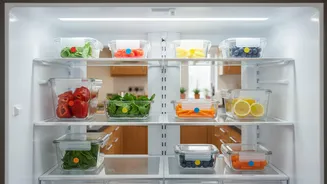
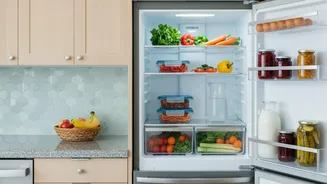
The first step to fridge harmony is assigning territory. In a shared living situation, the fairest method is often to give each person their own shelf or a designated drawer. This instantly clarifies what belongs to whom and prevents one person’s grocery haul from overwhelming the entire space. In an office setting, where usage is more transient, this might not be practical. Instead, the focus should be on not overloading the fridge. A universal rule should be to avoid placing entire lunch boxes or bulky grocery bags inside, which hampers air circulation and takes up unnecessary room. For all shared fridges, the door is often best designated as a communal space for shared condiments and drinks.
Rule 2: The Labelling System Is Your Best Friend
If there's one golden rule of shared fridges, it's this: label everything. This simple act prevents accidental food theft and makes it easy to identify the owner of any item. A roll of masking tape and a permanent marker kept near the fridge can solve most disputes before they start. Encourage everyone to label their items with their name and, for leftovers or opened packages, the date. This helps not only with ownership but also with knowing when something is past its prime and needs to be tossed out, which is crucial for hygiene.
Rule 3: Establish a Protocol for Communal Goods
While most items will be individually owned, it often makes sense to share certain staples to save space and reduce waste. Items that are used slowly, like ketchup, mustard, and butter, are good candidates for communal ownership. However, items that are used up quickly, such as milk or juice, are often better purchased individually to avoid fairness issues. The agreement should clearly state which items are shared and which are not. It's also wise to establish a system for replacing these communal items, such as a rotating schedule, to ensure the burden doesn't fall on one person.
Rule 4: The All-Important Cleaning Rota
A dirty fridge is not just unpleasant; it can be a health hazard, breeding bacteria and mould. Your agreement must include a cleaning plan. While everyone should be responsible for cleaning their own spills immediately, a deeper clean is needed regularly. Establish a schedule, perhaps weekly or bi-weekly, for a full wipe-down and a purge of old food. Creating a rota ensures that the task is shared equally and prevents the same one or two people from always getting stuck with the job. For offices, a designated person or team might be put in charge, with a clear rule that all unlabelled or expired food will be discarded every Friday afternoon.
Rule 5: Handling Expiry Dates and Leftovers
The agreement needs a clear policy on old food. No one wants to be responsible for someone else's fuzzy, forgotten meal. A common rule is that any food past its expiration date is fair game for the bin. For leftovers without a date, a 3-day or one-week rule is often effective. After that time, it's considered abandoned and can be thrown out during the weekly clean. This keeps the fridge from becoming a graveyard for forgotten food and minimises unpleasant odours. Open communication is still key; a quick text or message before tossing something can prevent misunderstandings.