



The Talent Stays Home
For decades, the creative industries were concentrated in bustling urban hubs. A graphic designer from a tier-2 or tier-3 city almost always had to relocate to Mumbai, Delhi, or Bengaluru to find high-profile work. That reality is rapidly changing. Improved
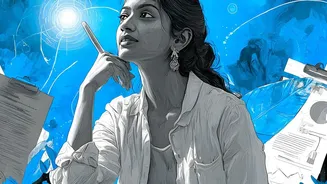
internet infrastructure and a global shift towards remote work have dismantled geographical barriers. Now, a designer in Jaipur or Kochi can compete for projects in New York or London without leaving their hometown. This shift allows them to stay connected to their roots, which is becoming their most significant competitive advantage. They are not just executing briefs; they are infusing their work with an authenticity and cultural depth that global brands are increasingly seeking.
Fusing Heritage with Code
The true innovation lies in the fusion of centuries-old artistic traditions with cutting-edge technology. Designers are drawing inspiration from the rich visual library of Indian regional art—the intricate line work of Madhubani from Bihar, the geometric simplicity of Warli from Maharashtra, or the vibrant narratives of Pattachitra from Odisha. Instead of just copying these styles, they use them as a creative springboard. This is where Artificial Intelligence becomes a powerful co-creator, not a replacement for human skill. AI tools can analyse these traditional patterns and help generate countless variations, explore complex colour palettes, or seamlessly digitise hand-drawn motifs, bridging the gap between a physical craft and a scalable digital asset.
The AI-Powered Toolkit
So, what does this AI assistance look like in practice? It's less about a single 'art button' and more about a suite of intelligent tools that accelerate the creative process. Generative AI platforms like Midjourney or Adobe Firefly can help designers brainstorm and visualise concepts at lightning speed. A designer might use a prompt to see how a Kalamkari-inspired pattern would look as a website background or on product packaging. AI-powered software can also handle repetitive tasks, such as converting a rough sketch into a clean vector graphic or generating multiple colour options for a logo. This efficiency frees up the designer to focus on the most crucial parts: the core concept, cultural accuracy, and storytelling. It democratises the tools, but as designer Kanika Goyal notes, it doesn't democratise taste—the artist's eye remains paramount.
From Local Roots to Global Reach
This unique blend of authenticity and modernity has found a receptive global audience. International brands, weary of generic, homogenised visuals, are actively seeking designs that tell a story and have a distinct point of view. Designers from non-metro India are perfectly positioned to meet this demand. They leverage platforms like Instagram, Behance, and global freelance marketplaces to showcase their portfolios and connect directly with clients worldwide. Their work stands out precisely because it is not generic; it is rooted in a specific cultural context—a quality that is hard to replicate and highly valued in a crowded market. This creates a win-win: the designer builds a global career from their hometown, and the client receives a unique design infused with genuine cultural heritage.
Navigating the New Frontier
This new path is not without its challenges. The debate around AI in art is complex, raising valid concerns about authenticity, the potential for cultural dilution, and intellectual property. Responsible designers are navigating this by using AI as an assistive tool to enhance their own, human-led creativity, rather than as a generator of final work. There is a clear distinction between using technology to explore ideas and allowing it to replace the human hand and soul of the craft. The most successful creators are those who treat AI as a collaborator—a powerful assistant that helps them scale their unique vision without sacrificing the cultural integrity that makes their work so compelling in the first place.