








What Exactly is an AI Simulation Hub?
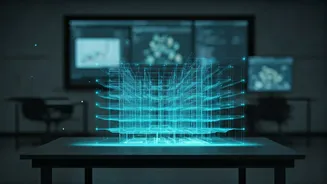
Forget the image of a dusty lab. An AI simulation hub is a powerful software environment where engineering students can create a 'digital twin' of a building. This isn't just a 3D model; it's a dynamic, data-rich replica that behaves exactly like the real-world
structure would. Using sophisticated algorithms and machine learning, this virtual hub allows students to apply extreme conditions to the blueprint—forces that would be impossible or catastrophically expensive to test in reality. It’s like a hyper-realistic video game for architectural designs, but the goal is to find every potential weakness before construction even begins.
From Blueprint to Virtual Breaking Point
The process begins when students upload their designs, often created in Building Information Modeling (BIM) software, into the AI platform. The AI then gets to work. It analyses the structural geometry, the properties of the specified materials (like steel reinforcement and concrete grades), and the connections between different elements. Students can then define a series of 'what-if' scenarios. What if a 7.5 magnitude earthquake hits? What if the structure has to withstand wind speeds of 200 km/h? The AI simulates the impact of these forces over time, visualising stress points, potential material fatigue, and where the design is most likely to fail. The results are often displayed in colour-coded heat maps, making it easy to see which parts of the building are under the most strain.
The Ultimate Stress Test
These simulations go far beyond simple calculations. They test for a multitude of factors critical for India’s diverse geography and climate. For coastal cities, students can simulate the relentless force of cyclone winds and storm surges. For regions in high seismic zones, they can model ground-shaking events to ensure the building can withstand and dissipate energy safely. The AI can also simulate long-term issues like material degradation over decades, the effect of soil settlement under the foundation, or even the load distribution from thousands of people moving through a stadium or a shopping mall. It’s a comprehensive pre-mortem that identifies fatal flaws while the project is still just data on a screen.
More Than Just Finding Flaws
The true power of this technology isn't just in destruction, but in optimisation. Once a weakness is identified, students can tweak the design in real-time. Perhaps adding a shear wall improves seismic resistance, or changing the type of glass makes the building more energy-efficient. The AI provides immediate feedback, allowing for rapid iteration. This process helps create not only safer structures but also more efficient ones. By precisely calculating the required material strength, engineers can avoid over-engineering, which saves on steel, concrete, and overall project costs. It leads to smarter, leaner, and greener buildings.
Training India’s Future Engineers
For engineering students at institutions like the IITs and NITs, access to these tools is a game-changer. It bridges the gap between theoretical textbook knowledge and the complex, dynamic challenges of modern construction. Instead of learning from static formulas, they gain an intuitive understanding of structural behaviour. This hands-on experience with cutting-edge technology makes them incredibly valuable to employers. They graduate not just with a degree, but with practical skills in digital twinning, predictive analysis, and risk mitigation—the exact expertise the modern infrastructure industry is desperate for.