





A 14-Day Deep Freeze
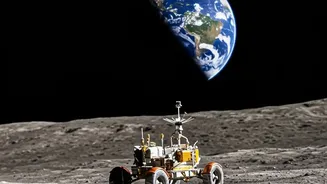
The Moon has virtually no atmosphere to trap heat. When the Sun disappears over the lunar horizon, temperatures plummet dramatically. For roughly 14 Earth days, surface temperatures can dip to an astonishing -173° Celsius, and in some permanently shadowed
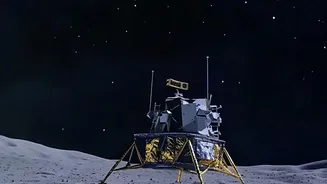
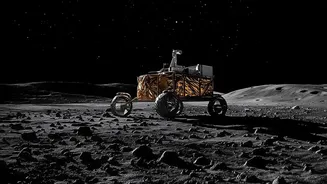
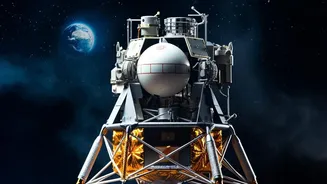
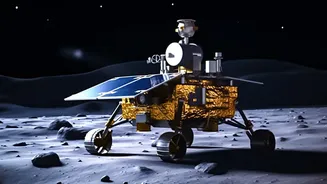
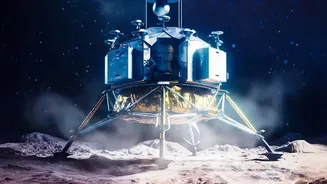
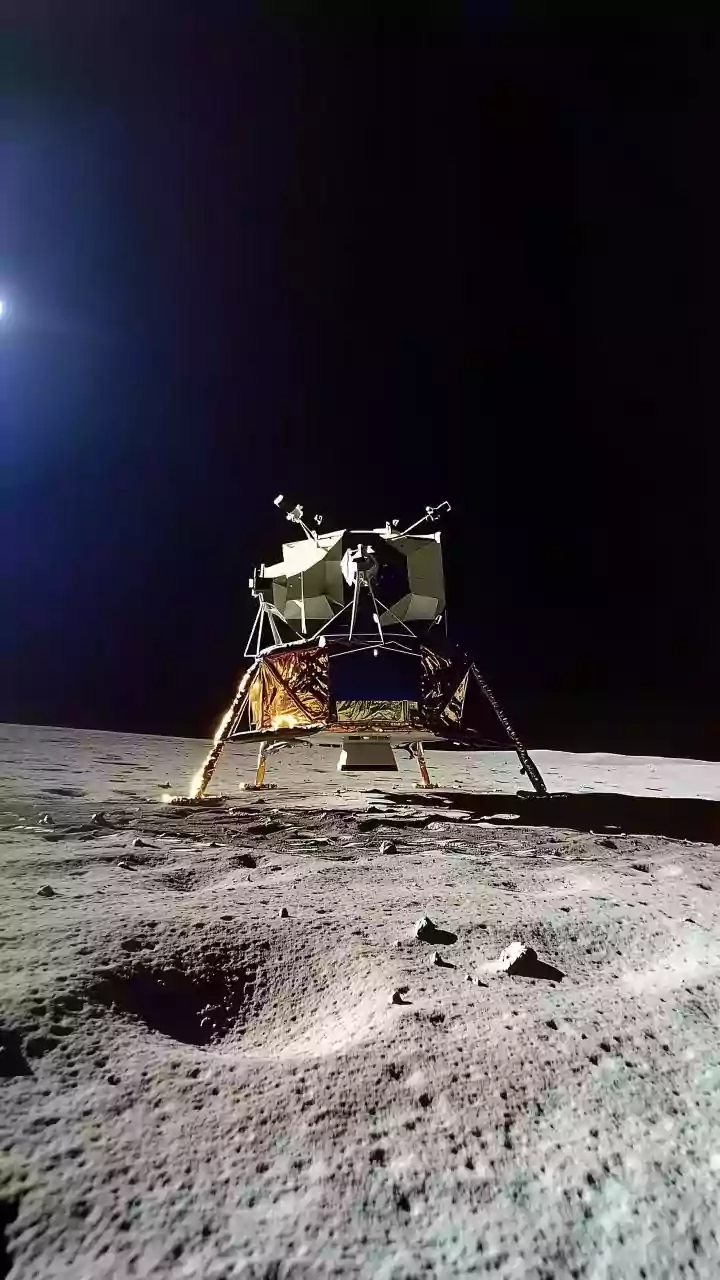
craters near the poles, it gets even colder, reaching -250° C. For robotic explorers, this is a death sentence. Standard electronics, batteries, and even soldered metal joints are not designed to withstand such cryogenic conditions. This is why many lunar missions, including India's successful Chandrayaan-3 lander, were designed to operate for only a single lunar day. Once night fell, their solar panels were useless, and the extreme cold eventually silenced them forever. Overcoming this hurdle is the single most critical step toward long-term exploration and establishing a permanent presence on the Moon.
The Race for a Reliable Hand Warmer
The problem isn't new, and engineers have long relied on a solution called Radioisotope Heater Units, or RHUs. These are small, simple devices that use the natural radioactive decay of an element like Plutonium-238 to generate a steady, passive heat output. Think of them as tiny, nuclear-powered hand warmers for spacecraft components. Each unit produces only about one watt of heat, but by strategically placing several of them inside a lander, they can keep critical systems like computers and batteries within their survivable temperature range without needing any power from solar panels. This technology has a long history, first used by the Apollo 11 astronauts in 1969 and subsequently on missions to Mars and beyond. However, the isotopes used are rare and require complex handling, pushing space agencies and private companies to develop more advanced and varied solutions.
India's Push for Lunar Endurance
India's Space Research Organisation (ISRO) is actively working on technology to conquer the lunar night. Following the historic success of Chandrayaan-3, ISRO, in collaboration with the Department of Atomic Energy (DAE), is developing its own artificial heating systems. ISRO Chairman V. Narayanan has stated that the goal is to create landers that can survive for 100 to 200 days, a massive leap from the current 14-day lifespan. This capability, planned for missions like Chandrayaan-5, would enable long-duration scientific experiments, such as monitoring long-term environmental changes on the lunar surface. Surviving multiple day-night cycles is considered the next great leap for India's space program, paving the way for more complex missions like sample returns and, eventually, a sustained human presence.
New Innovations on the Horizon
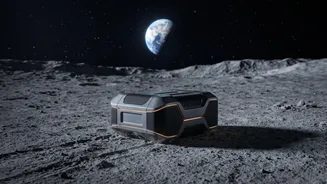
Beyond traditional RHUs, a host of new ideas are being tested. NASA is backing companies like Zeno Power, which is developing RHUs that use a different isotope, Americium-241. A demonstration unit is scheduled to fly to the Moon on a Firefly Aerospace Blue Ghost lander as soon as 2028 to test its capabilities. Other concepts move away from nuclear sources entirely. One NASA team is developing a system using advanced thermal blankets and a smarter way of charging lithium-ion batteries to help them endure the cold. The idea is to create an insulated box where the internal temperature remains relatively stable even as the outside freezes, allowing the hardware to function continuously. Researchers are also exploring 'heat-switch' devices that can actively dissipate heat during the hot lunar day and then insulate components during the cold night, offering a more dynamic thermal management solution.