


From Data, Not Photographs
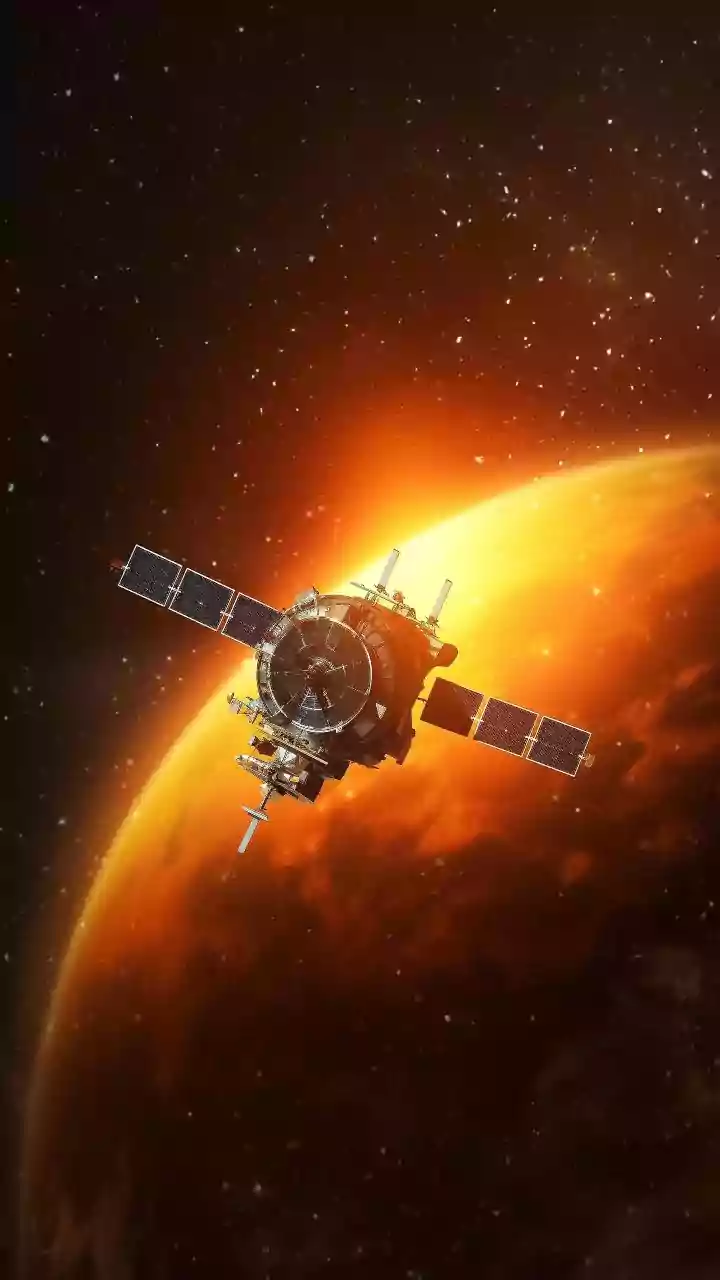
The first thing to understand is that telescopes like the JWST don't take 'photos' in the way a smartphone does. Instead, they are powerful light collectors. Their detectors capture photons from celestial objects, but they do so in monochrome, or black
and white. These raw images often look almost entirely black or like a faint, noisy grey smudge. The vibrant colours we see in the final product are not captured directly but are added later in a meticulous process. Every stunning space picture begins its life as a stream of binary code—just ones and zeroes representing the brightness of light hitting a sensor.
Shooting Through Filters
To create a colour image, astronomers take multiple exposures of the same object, each time using a different filter. These filters are designed to let only specific wavelengths, or colours, of light pass through. For a 'natural' colour image, they might use red, green, and blue filters, similar to how a digital camera works. However, for many deep-space objects, they use 'narrowband' filters. These isolate very specific wavelengths emitted by chemical elements like hydrogen, sulphur, and oxygen. This technique allows them to see the chemical makeup of a nebula and cut through light pollution, even from suburban backyards.
Stacking for Ultimate Clarity
A single exposure, even a long one, is often full of random digital 'noise' that can obscure faint details. To solve this, astrophotographers take many exposures—sometimes hundreds—of the same object with the same filter. They then use specialized software to align and 'stack' these individual frames on top of each other. This process averages out the random noise, which fades into the background, while the consistent signal from the stars and nebula gets stronger and clearer. The result is a single, incredibly clean and detailed master image for each filter used.
The Art of Assigning Colour
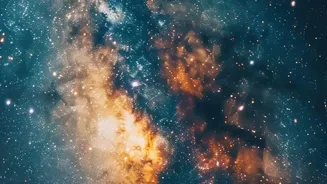
Here is where science meets art. The astrophotographer now has several master monochrome images—one for each filter. To create the final colour composite, they assign a colour to each of these images in processing software like Photoshop. For example, the data from the red filter is assigned to the red colour channel, green to green, and blue to blue. For narrowband images, a popular technique is the 'Hubble Palette', where the data from sulphur is assigned to red, hydrogen to green, and oxygen to blue (known as SHO). This 'false colour' mapping isn't fake; it’s a way of translating invisible light and chemical data into a visual format that reveals the object's intricate structure.
Stretching, Sharpening, and Final Touches
The combined colour image is often still dark and lacks contrast. The final stage involves carefully 'stretching' the data to brighten the faint areas without blowing out the bright stars. This reveals the delicate wisps of gas and dust that were previously hidden. Further adjustments to colour balance, saturation, and sharpness are made to enhance details and achieve the desired aesthetic. This part of the process is highly subjective and where the artist's eye becomes just as important as the scientific data. Different artists can take the exact same raw data and produce remarkably different, yet equally beautiful, final images.