




The Challenge of City Skies
The primary obstacle for any urban astronomer is light pollution. The glow from streetlights, buildings, and vehicles washes out all but the brightest celestial objects. While it's true that faint nebulae and distant galaxies are mostly hidden from city-dwellers,
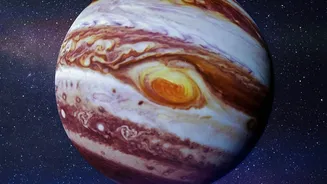
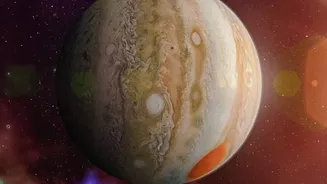
the giants of our own solar system—Jupiter and Saturn—are often bright enough to pierce through the haze. You don't need a remote mountaintop to see them; you just need to know exactly where and when to look. This is where modern technology offers a brilliant solution, turning a seemingly impossible hobby into an accessible urban adventure.
Your Phone Is Now a Planetarium
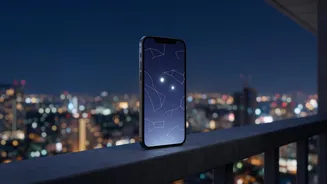
Mobile astronomy apps are the urban stargazer's single most important tool. These applications use your phone's GPS and internal compass to create a real-time map of the sky above you. Simply point your phone towards any part of the sky, and the app will identify the stars, constellations, and planets in that direction. Many feature an augmented reality (AR) view, overlaying this information onto your camera's live feed, making it incredibly intuitive to find what you're looking for. For city use, look for apps with a 'red light mode,' which preserves your night vision as your eyes adjust to the dark.
Essential Apps for Urban Astronomers
Not all stargazing apps are created equal, but a few stand out for their user-friendly design and powerful features. Star Walk 2 is widely regarded as a great option for beginners, offering a beautiful interface and reliable object identification. Stellarium Mobile, which has a very capable free version, provides a realistic and detailed sky map that is perfect for learning the celestial layout. For those seeking more advanced features, SkySafari offers multiple tiers with vast databases and even the ability to control telescopes, though its free or basic versions are more than enough to get started. Another popular choice, SkyView, also excels at using your camera to help you spot objects in the sky, day or night.
How to Spot Jupiter and Saturn
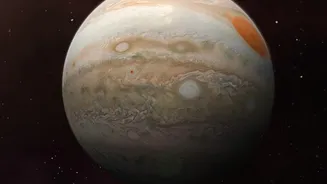
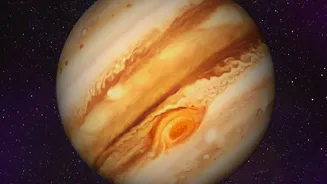
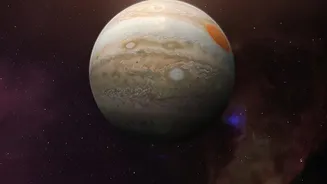
Jupiter and Saturn are the two most rewarding targets for beginners. To the naked eye, they appear as exceptionally bright, steady 'stars' that don't twinkle as much as actual stars do. Jupiter is often the brightest object in the night sky after the Moon and Venus. Saturn is also distinctly bright, with a typically yellowish-white glow. For September 2026, both planets are prime for viewing. Saturn is visible for most of the night, while Jupiter appears as a brilliant point of light in the hours before sunrise. Using an app like Stellarium or Sky Tonight, you can use the search function to locate 'Jupiter' or 'Saturn'. The app will then guide you, often with an arrow, to point your phone in the correct direction until the planet is centred on your screen.
Tips for a Successful Viewing
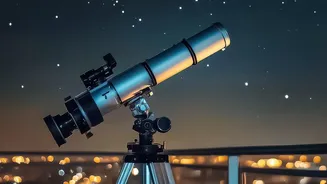
To maximize your chances of a good sighting, a little preparation goes a long way. First, check the app's calendar or a website like Time and Date for the planets' rise and set times. Find the darkest possible spot available to you—a rooftop, a park, or even a balcony that faces away from direct streetlights can make a difference. Give your eyes at least 15-20 minutes to adapt to the darkness; avoid looking at your bright phone screen during this time unless it's in red-light mode. Finally, even a basic pair of binoculars can dramatically enhance the view. With binoculars, you might even glimpse Jupiter's four largest moons, appearing as tiny pinpricks of light in a line on either side of the planet.