


The Urban Oven Effect
Anyone who has walked barefoot on dark pavement on a sunny day understands its ability to absorb and store heat. In cities, this effect is multiplied across thousands of kilometres of roads, parking lots, and other dark surfaces. This phenomenon is known
as the Urban Heat Island (UHI) effect. These surfaces absorb huge amounts of solar radiation during the day and then slowly release it back into the atmosphere at night. This process keeps urban areas significantly warmer than surrounding rural landscapes, sometimes by several degrees, preventing cities from cooling down after sunset. This sustained heat increases energy consumption for air conditioning, worsens air pollution, and poses health risks to vulnerable populations.
A Simple, Cool Idea
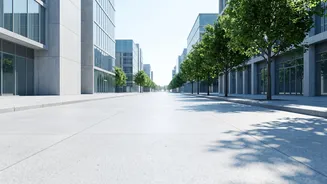
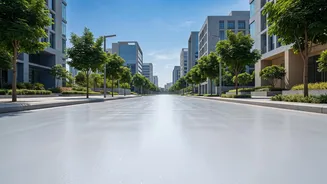
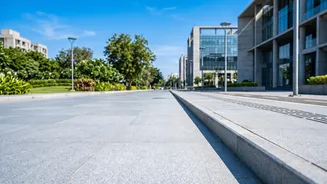
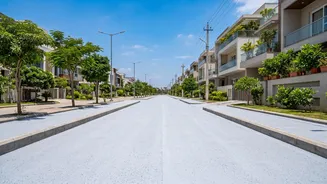
The core idea behind reflective, or 'cool', pavements is simple: if dark surfaces absorb heat, lighter surfaces must reflect it. By changing the colour and properties of the pavement, we can increase its ability to reflect sunlight back into the atmosphere instead of absorbing it as heat. This property is known as solar reflectance, or albedo. A higher albedo means less heat is absorbed, leading to a cooler surface. These pavements are not necessarily stark white; they can be made using lighter-coloured aggregates in the initial mix, applying a reflective coating or sealant to existing asphalt, or using entirely different materials like concrete. The goal is to turn our streets from heat sinks into heat reflectors.
Real-World Results
This isn't just a theoretical concept. Cities around the world, particularly in hot climates, have been experimenting with cool pavements and seeing measurable results. In Phoenix, USA, a large-scale pilot program found that streets treated with a reflective coating had surface temperatures up to 6.7 degrees Celsius lower than traditional asphalt in the afternoon. A project in Los Angeles saw similar reductions in surface temperature and even recorded a slight drop in the surrounding ambient air temperature. These studies show that cool pavements can make a tangible difference at the street level, potentially reducing energy bills by lowering the need for air conditioning in nearby buildings and even extending the life of the pavement itself by reducing thermal stress.
Challenges and Considerations
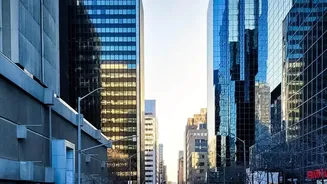
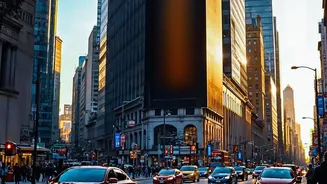
Despite the promising results, reflective pavements are not a simple fix for urban heat. One of the main challenges is that the reflected solar radiation has to go somewhere. In dense urban canyons, this can mean bouncing off the street and onto pedestrians or the facades of buildings, potentially increasing human discomfort and the cooling load on those structures. Glare can also be a concern for drivers on very bright days. Furthermore, the effectiveness of reflective coatings can diminish over time as they get dirty from traffic and pollution. The initial cost can also be higher than traditional asphalt, though some of this may be offset by a longer lifespan and reduced maintenance.
A Tool, Not a Cure-All
For a country like India, with its rapidly growing cities and intense summer heat, the potential of cool pavements is enormous. Imagine the relief in a bustling city market or a dense residential colony if street surface temperatures were several degrees lower. However, implementation would require careful consideration of local conditions. The high levels of dust and pollution in many Indian cities could quickly reduce the reflectivity of these surfaces, requiring more frequent cleaning and maintenance. The cost remains a significant barrier for widespread adoption. Therefore, reflective pavements are best seen as one important tool in a larger toolbox for urban cooling. They should be integrated with other strategies, such as increasing green cover with trees and parks, designing for better airflow, and using reflective materials on rooftops.