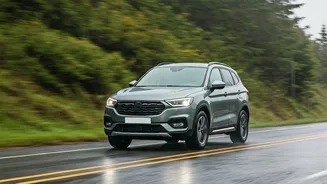






Rule 1: Pre-Trip Vehicle Check is Non-Negotiable
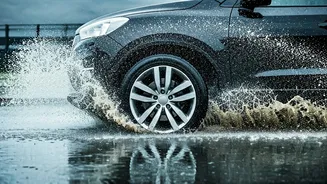
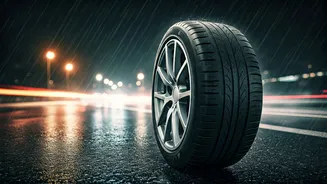
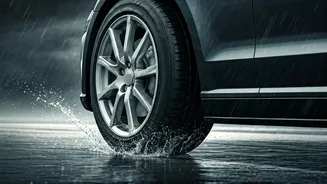
Your car is your trusted companion on this journey, so ensure it’s in top condition. Don't leave this for the last minute. First, check your tyres. The tread depth should be adequate (at least 3mm is recommended for wet conditions) to provide a good grip
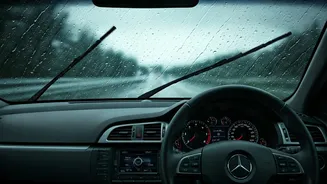
on slippery roads. Ensure they are inflated to the manufacturer's recommended pressure. Second, inspect your wiper blades. If they leave streaks or make squeaking noises, replace them. A clear windscreen is your first line of defence in a downpour. Finally, test all your lights – headlights, tail lights, and especially fog lamps. Visibility drops dramatically in the rain, and you need to see and be seen.
Rule 2: Master the Art of Wet-Weather Driving
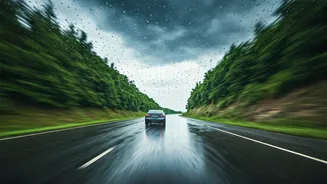
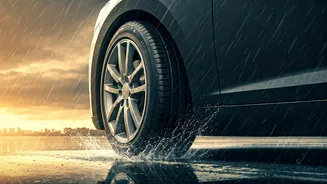
Driving in the rain isn’t just about going slower; it’s about being smoother. Abrupt acceleration, sudden braking, and sharp turns can cause you to lose control. The most important technique is to increase your following distance. On a wet road, braking distance can more than double. Maintain at least a five-to-six-second gap between your car and the one ahead. Be wary of the first rain after a dry spell, as it mixes with oil and dirt on the road to create an exceptionally slippery surface. If you feel the car starting to hydroplane (skid on a layer of water), do not panic and slam the brakes. Gently ease your foot off the accelerator and steer straight until the tyres regain traction.
Rule 3: Plan Your Route, But Expect Detours
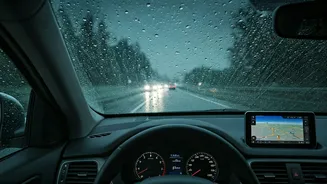
Monsoon travel requires smart planning. While you may have a favourite route, check for real-time updates before you start and during your journey. Use apps like Google Maps or Waze for live traffic and road closure information. Hilly areas are prone to landslides, and low-lying plains can experience severe waterlogging. It’s wise to have an alternate route in mind. Inform a family member or friend of your intended route and estimated arrival time. Share your live location with them for added safety. It's also best to avoid driving after dark if possible, as potholes and other hazards are much harder to spot.
Rule 4: Pack a Monsoon-Specific Emergency Kit
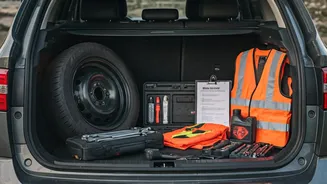
Your standard car kit needs a few monsoon-specific upgrades. Besides the first-aid box, torch, and puncture repair kit, add a few extra items. Pack a tow rope, as getting stuck in mud is a real possibility. Include a waterproof tarpaulin sheet. A powerful, fully-charged power bank is a must-have, as you might need your phone for navigation and communication for extended periods. Also, pack extra drinking water and non-perishable snacks like energy bars and nuts. You never know when a blocked road might turn a short delay into a long wait. A few old newspapers can also be surprisingly useful for drying out wet shoes and floor mats.
Rule 5: Navigating Waterlogged Roads Safely
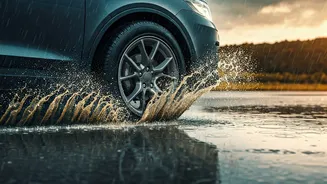
Encountering a flooded street is common during heavy rains. The golden rule is: if you can't see the road surface beneath the water, don't risk it. It’s impossible to know the water's depth or if there are open manholes or deep potholes hidden underneath. If you must proceed and the water level is low (well below the bottom of your car doors), drive through slowly and steadily in a low gear to prevent your engine from stalling. Avoid creating a large bow wave. Once you are through to the other side, tap your brakes gently a few times to dry them out and ensure they are working effectively.