







The Allure of the Urban USB Bag
Let’s be honest: the concept of a backpack with a built-in USB port is clever. For the daily commuter, student, or city-hopper, it offers a seamless way to keep devices topped up without fumbling for a power bank. These bags look sleek, promise convenience,
and cater to our digitally-driven lives. They are designed for predictable environments—offices, cafes, and airports—where the biggest threat is a spilled coffee. In these settings, they excel. The problem arises when we mistake this urban convenience for outdoor readiness. A bag designed for pavements and power outlets is fundamentally different from one built for monsoons, mountain trails, and the unpredictable chaos of the great outdoors.
Where Tech Meets Trouble on the Trail
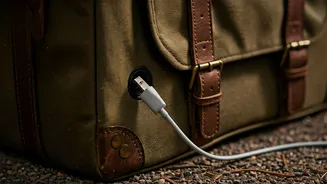
On a rugged trek, a bag's integrated electronics are its weakest point. That convenient USB port is an entry point for three of your gear’s worst enemies: water, dust, and impact. One sudden downpour during a Himalayan trek or a slip into a stream in the Western Ghats can short-circuit the internal wiring, rendering the port useless and potentially damaging your connected power bank. Fine dust and grit from dry trails can clog the port, making a connection impossible. Furthermore, the constant jostling and occasional drops that are part and parcel of a trek can easily damage the delicate soldering and internal components. Instead of a feature, the USB port becomes a point of failure you simply don't need when you're relying on your gear for safety and comfort.
The Non-Negotiable: Truly Waterproof Gear
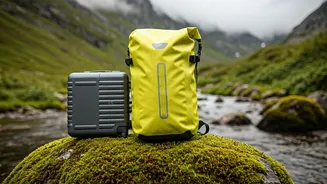
The single most important job of a trekking bag is to keep its contents dry. Your sleeping bag, spare clothes, electronics, and food are your lifeline on the trail. A bag that compromises its water resistance for a non-essential tech feature is a bad trade-off. Proper trekking rucksacks use materials like ripstop nylon or polyester coated with polyurethane (PU) and often feature taped seams and roll-top closures to create a watertight seal. They are rated for water resistance, ensuring that even in a relentless monsoon storm, your essentials remain protected. A USB port, by its very nature, creates a breach in this protective shell. Even with a flimsy rubber flap, it’s a vulnerability that experienced trekkers are unwilling to accept. A separate, fully waterproof dry bag for your electronics inside a sturdy pack is a far more reliable system.
Why Every Gram Counts
When you’re trekking for hours or days, every gram on your back matters. The mantra of any seasoned trekker is to pack light. The internal wiring, plastic housing for the port, and the cable itself all add unnecessary weight to your pack. While it may only be a couple of hundred grams, this 'parasitic weight' adds up. A high-quality, lightweight trekking pack is engineered to strip away every non-essential component to maximize comfort over long distances. The focus is on a robust suspension system, durable but light fabrics, and ergonomic design. Adding a gimmick like a USB port goes against this core philosophy of minimalist efficiency. You're carrying extra weight for a feature that is both fragile and easily replaced by a better, separate solution.
The Smarter, Modular Alternative
So, how do you keep your phone charged on the trail? The answer is simple and far more rugged: a high-quality, portable power bank. A modern 10,000mAh or 20,000mAh power bank is compact, relatively lightweight, and can charge a smartphone multiple times. More importantly, it’s a self-contained unit. You can tuck it safely inside a waterproof pouch or a dedicated electronics case deep within your pack, protected from the elements. This modular approach is superior in every way: if your power bank fails, you only need to replace that one item, not your entire backpack. It’s more durable, more waterproof, and you can choose a power bank with the exact capacity and features (like fast charging) that you need, rather than being stuck with the generic hardware built into a bag.