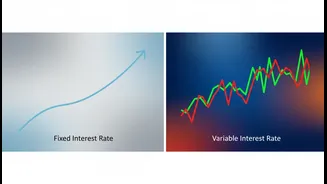









The Predictable Path: Fixed Interest Rates
A fixed interest rate is exactly what it sounds like: the rate is locked in for the entire duration of your loan. This means your Equated Monthly Instalment (EMI) remains the same from the first payment to the last, offering a high degree of predictability.
For students and parents who prefer stable, easy-to-budget payments, this is a significant advantage. You know precisely what your financial outflow will be each month, which simplifies long-term planning without any surprises from market fluctuations. However, this stability comes at a price. Lenders typically charge a premium for fixed rates, meaning they are often 1% to 2% higher than the initial floating rate offered. You also won't benefit if the market rates fall during your loan tenure; you'll continue to pay the higher, locked-in rate.
The Flexible Route: Floating Interest Rates
A floating interest rate, also known as a variable rate, is linked to a benchmark rate, such as the Reserve Bank of India's (RBI) repo rate. This means your loan's interest rate can change periodically as the benchmark shifts. Most education loans offered in India fall under this category. The primary appeal of a floating rate is that it usually starts lower than a fixed rate, which can mean smaller EMIs initially. If the central bank cuts rates, your loan becomes cheaper, and your EMI could decrease or your tenure could shorten. The downside is the uncertainty. If market rates go up, so will your interest payments, making it harder to budget. This option is generally suited for those who have a higher risk tolerance and believe that interest rates are likely to fall or remain stable over their loan period.
The Economic Climate of 2026
So, why does this choice matter so much today? The decision hinges on the current interest rate environment and its future direction. As of mid-2026, the RBI has held the benchmark repo rate steady at 5.25% for several consecutive policy meetings. This period of stability followed a series of rate cuts in 2025. However, the RBI's current stance is 'neutral', meaning it hasn't committed to either cutting or hiking rates next. Future decisions will be data-dependent, with a close watch on inflation, which is projected to be around 5.1% for the fiscal year 2026-27. With inflation concerns and global economic uncertainty, some market analysts forecast potential rate hikes by the end of the fiscal year. This context is crucial: locking into a fixed rate now could protect you from future hikes, while opting for a floating rate might be a gamble that the current stability continues or that rates eventually fall.
How to Make Your Choice
There is no single correct answer; the best choice depends on your personal financial situation and risk appetite. If you prioritise budget certainty and have a low tolerance for risk, a fixed rate might be worth the slightly higher cost for the peace of mind it provides. This is especially true if you are taking out a very large loan for a long tenure, where even small rate increases can significantly impact your total repayment. On the other hand, if you are comfortable with some level of fluctuation and anticipate that interest rates might decline in the medium to long term, a floating rate could result in substantial savings. It's also a more flexible option if you plan to prepay the loan, as floating rate loans typically have no prepayment penalties. Consider the loan tenure as well. For shorter-term loans, the risk of rate fluctuations is lower, making a floating rate more attractive. For longer tenures of 10-15 years, the stability of a fixed rate becomes more appealing.