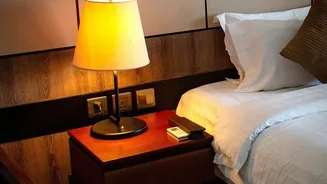








For some travellers, a stunning city view or a balcony overlooking the sea is the ultimate prize. For others, the greatest luxury is far simpler: a room where you can actually get a good night's sleep. Here's how to secure a quiet stay.
Become a Hotel Detective Before Booking
Your quest for
quiet begins long before you arrive. Start by researching the hotel's immediate surroundings. Is it located in a bustling nightlife district or on a major road? Satellite and street view maps are your best friend here. Next, dive into guest reviews, but read them strategically. Search reviews for keywords like 'noise', 'loud', 'thin walls', 'bar', and 'street'. One or two complaints might be an anomaly, but a recurring pattern is a major red flag. Also, check if the hotel is popular for large events or weddings, as these can bring late-night music and crowds. Finally, a quick call to the hotel to ask if any renovations are planned during your stay can prevent you from waking up to the sound of construction.
Master the Art of the Specific Request
A vague 'quiet room, please' note in your booking is easy for a busy hotel to overlook. To increase your chances, you need to be specific. During booking, and again with a direct call to the hotel a day or two before arrival, make a polite and precise request. The gold standard request sounds something like this: 'a room on a high floor, in the middle of a hallway, away from elevators and ice machines, with no connecting door'. Understanding why this works is key. Higher floors are generally quieter, distancing you from street noise and lobby activity. The middle of the hall avoids the foot traffic and chatter that congregates near elevators, stairwells, and housekeeping closets. And a room without a connecting door eliminates the paper-thin barrier that often separates you from your neighbours' conversations.
Know the Hotel's Noise 'Hot Zones'
Every hotel has a geography of noise. Your goal is to avoid the hot zones. Steer clear of rooms directly above or below the lobby, hotel bar, restaurant, or kitchen, where noise can travel through the floors. Rooms facing the pool are also a gamble; what looks like a serene oasis by day can become a noisy gathering spot at night. Be wary of rooms that face the front of the hotel or a busy street, which bring traffic noise and early-morning garbage collection. An interior-facing room overlooking a courtyard might lack a spectacular view, but it's often dramatically quieter. Don't be afraid to trade the vista for tranquility.
Your Check-In Strategy
The front desk is your final and best opportunity to secure a peaceful room. When you check in, politely reiterate your request for a quiet room, mentioning your specific preferences again. Front desk staff have the most up-to-date knowledge of the hotel's layout and which rooms are genuinely the quietest. If the hotel uses an app that allows you to choose your own room from a floor plan, use it. This gives you the power to see exactly where you'll be, letting you avoid that dreaded spot right next to the elevator shaft. A friendly and specific conversation is much more effective than a last-minute demand.
What to Do When Noise Strikes Anyway
Even with perfect planning, you can end up with a noisy neighbour or an unexpected disturbance. Do not suffer in silence. Your first move should be to call the front desk immediately. Be specific and calm: explain the type of noise and where it's coming from. Most hotels have a protocol for this, which usually starts with a courtesy call to the offending room. If the noise continues after 15-20 minutes, call back. Persistent complaints signal to the staff that the issue is serious. If the problem can't be resolved, it is perfectly reasonable to ask to be moved to another room. Hotels would rather relocate a guest than have them endure a sleepless night and leave a negative review.
Your Personal Quiet Kit
For the truly noise-sensitive, a small 'quiet kit' is a non-negotiable travel essential. A good pair of earplugs is the most obvious and effective tool. You can also download a white noise app on your phone or bring a small, portable white noise machine to help drown out intrusive sounds. In a pinch, you can even use a rolled-up towel or blanket to block the gap under the door, a common entry point for hallway noise. Having a backup plan ensures that even if the hotel's walls are thinner than you'd like, you can still create your own bubble of peace.