

A Sweet Find in the Cosmos
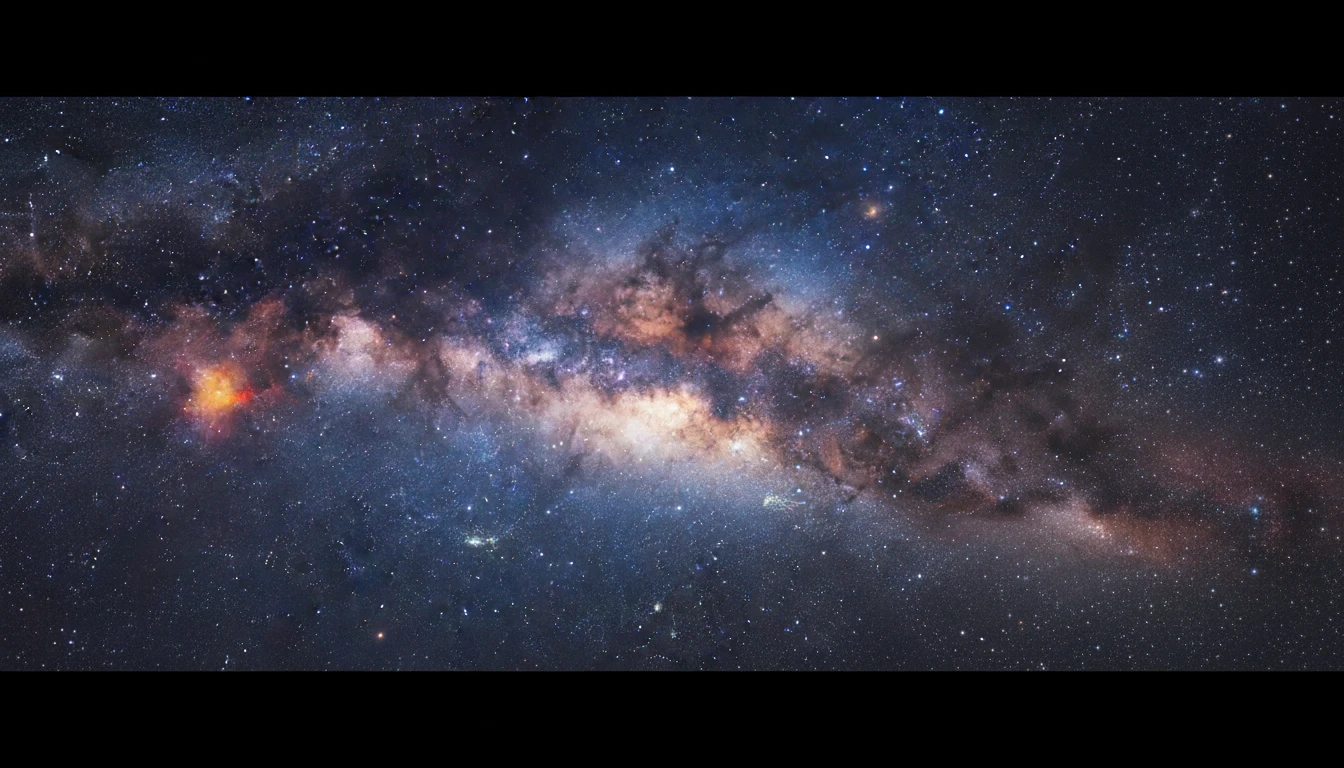
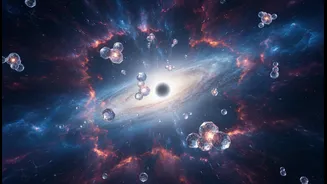
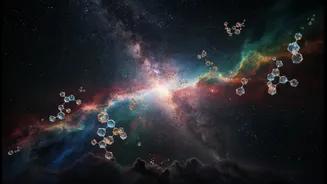
Using powerful radio telescopes in Spain, an international team of researchers has identified a sugar called erythrulose swirling within a massive cloud of gas and dust near the center of our Milky Way galaxy. This molecule, a 'true sugar' with a backbone
of four carbon atoms, is the first of its kind to be definitively detected in the interstellar medium — the sparse material that exists between star systems. While you might find a similar type of sugar in raspberries here on Earth, discovering it some 27,000 light-years away is profoundly significant. This isn't just a cosmic curiosity; it's a critical piece of evidence showing that the building blocks for life are not unique to our planet.
What is Prebiotic Chemistry?
To grasp the importance of this discovery, we need to talk about prebiotic chemistry. Think of it as the study of life's chemical prologue — the sequence of events that transformed simple, non-living molecules into the complex structures necessary for life. Before cells, before DNA, there was a period on the young Earth when a 'primordial soup' of chemicals reacted with each other, eventually forming molecules like amino acids, and importantly, sugars. These are the fundamental components of proteins and genetic material. Scientists have long debated whether all these ingredients were cooked up on Earth or if some were delivered from space. This latest finding provides strong support for the idea of a cosmic delivery service.
The Recipe for Life
Sugars are absolutely essential to life as we know it. The most famous is ribose, the sugar that forms the structural backbone of RNA (ribonucleic acid), a molecule many scientists believe was a precursor to DNA in early life forms. While the newly discovered erythrulose isn't ribose, it's a close chemical relative and a plausible ingredient in the complex reactions that could lead to it. Finding simpler sugars like glycolaldehyde has happened before, but detecting a more complex, four-carbon sugar like erythrulose suggests that cosmic chemical factories are more capable than previously thought. It shows that key ingredients in the recipe for life can form naturally in the harsh environment of space, long before planets are even born.
From Stardust to Your DNA
So how could sugar from a distant gas cloud be relevant to life on Earth? The prevailing theory involves comets and asteroids. The very gas clouds where these sugars are forming are also the birthplaces of stars and their planetary systems. As our solar system formed, these organic molecules would have been incorporated into the asteroids and comets that were swirling around the young Sun. For hundreds of millions of years, early Earth was bombarded by these celestial bodies. This cosmic bombardment could have 'seeded' our planet with a ready-made supply of essential ingredients, including water and organic compounds like sugars, kick-starting the prebiotic chemical processes that ultimately led to the first living organisms.
The Next Frontier in Astrochemistry
This discovery has energized the field of astrochemistry and opened up new avenues for research. Scientists are eager to see if they can find even more complex sugars, and perhaps other key molecules like amino acids, in these interstellar nurseries. The detection of erythrulose was unexpected because it challenges some models of how molecules grow in space, suggesting there may be multiple pathways for forming complex organics. With increasingly powerful instruments, including the James Webb Space Telescope, astronomers will continue to scan the cosmos, looking for more clues not only about the origins of life on Earth, but also about the potential for life to arise elsewhere in the universe.