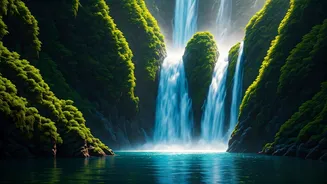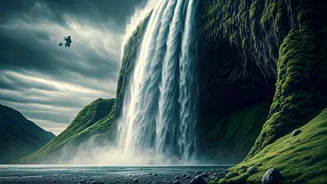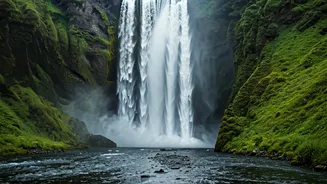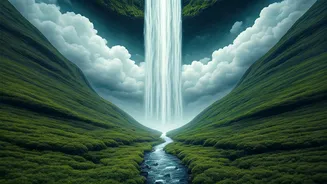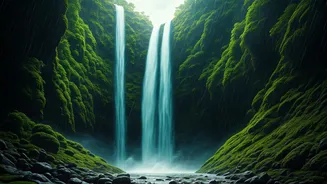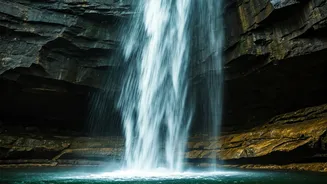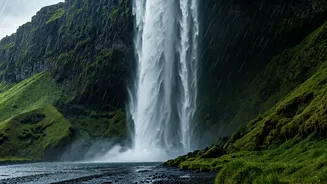



What Exactly Is a Reverse Waterfall?
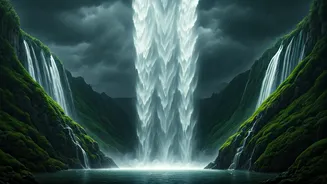
A reverse waterfall is a stunning optical illusion and a very real meteorological phenomenon. It occurs when a regular waterfall, cascading down a cliff face, is met with wind gusts so powerful that the water is blown upwards and back over the cliff from
which it fell. Instead of plummeting downwards, the spray and streams of water are atomised and pushed skyward, creating a mesmerising effect that seems to bend the laws of physics. It's not that the entire river is flowing backwards, but rather that the force of the wind is stronger than the gravitational pull on the falling water, creating a misty, upward-flowing spectacle.
The Simple Science Behind the Magic
The secret ingredient for a reverse waterfall is wind—very, very strong wind. This phenomenon typically happens during peak monsoon season in specific locations, primarily in India's Western Ghats. As moisture-laden monsoon winds travel across the plains, they are suddenly forced upwards when they encounter steep cliffs or mountains. This creates a powerful updraft. If a waterfall happens to be flowing over that same cliff edge, the wind, gusting at speeds often exceeding 60-80 km/h, is forceful enough to catch the falling water and push it back up, creating a reverse flow. The topography of the region, with its deep valleys and sheer escarpments, acts as a natural wind tunnel, concentrating the wind's force and making these events possible.
The Western Ghats: A Monsoon Hotspot
The Western Ghats mountain range in Maharashtra is the epicentre of this phenomenon in India. During the monsoon months of July through September, several spots become pilgrimage sites for nature lovers and thrill-seekers hoping to witness this marvel. The most famous of these is at Naneghat, a mountain pass near Pune, where the sight is almost a guaranteed spectacle during heavy rains and windy days. Other popular locations include Samrad village, home to the famous Sandhan Valley trek, and various viewpoints in Malshej Ghat, Lonavala, and Satara. Each location offers a slightly different experience, but all share the same core ingredients: a dramatic cliff, a seasonal waterfall, and the raw power of the monsoon winds.
From Natural Wonder to Viral Sensation
While reverse waterfalls have been known to locals for generations, they have exploded in popularity in recent years thanks to social media. A quick search for #ReverseWaterfall on Instagram or YouTube reveals thousands of reels and videos of people getting drenched by the upward spray, their hair and clothes blown wildly by the wind. The dramatic, almost unbelievable visuals are perfectly suited for short-form video, turning these remote spots into bucket-list destinations. This viral fame has driven a surge in tourism, with crowds flocking to these viewpoints, especially on weekends. It's a testament to how social media can transform a little-known natural event into a mainstream attraction.
A Word of Caution: Safety First
As captivating as these sights are, they come with significant risks. The conditions that create reverse waterfalls—heavy rain and extremely high winds—also make the locations hazardous. Cliff edges become slippery and slick with mud and moss. The powerful gusts can easily knock a person off balance, and the dense fog that often accompanies the rain can reduce visibility to near zero. Tragically, there have been incidents of tourists falling after getting too close to the edge for a photo or a video. Authorities often issue warnings and, in some cases, restrict access to the most dangerous points. If you plan to visit, always prioritise safety: wear sturdy, non-slip footwear, stay far back from the edge, and never underestimate the power of the wind.