



The Serene Riverfront at Prinsep Ghat
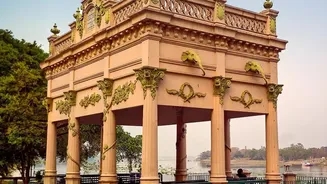
Begin your exploration on the banks of the Hooghly at Prinsep Ghat. Built in 1841 during the British Raj, its stunning white Palladian porch is a monument to James Prinsep, an Anglo-Indian scholar who deciphered ancient scripts. This spot is less a functional
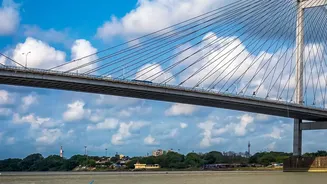
ghat and more a beautifully maintained promenade, perfect for quiet contemplation. Locals and travellers alike gather here, especially during the golden hours of sunrise and sunset. The view, with the majestic Vidyasagar Setu (Second Hooghly Bridge) in the background, is one of Kolkata's most iconic and photogenic scenes. You can take a leisurely stroll, enjoy street food from nearby stalls, or hire a traditional wooden 'nouko' for a boat ride on the river, offering a unique perspective of the cityscape.
Under the Howrah Bridge: Mullick Ghat Flower Market
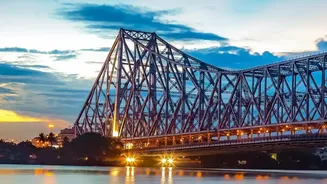
No trip along the Hooghly is complete without witnessing the beautiful chaos of the Mullick Ghat Flower Market. Situated directly beneath the iconic Howrah Bridge, this is one of Asia's largest and oldest wholesale flower markets, operating for over 130 years. For the best experience, you must arrive at dawn. Between 4 a.m. and 8 a.m., the market is a dizzying spectacle of colour and activity, as vendors trade mountains of marigolds, roses, jasmine, and countless other blooms. The air is thick with fragrance, and porters rush through the lanes with giant baskets of flowers on their heads. It’s a sensory overload in the best possible way and a photographer's dream. Be sure to wear sturdy shoes, as the ground can be slippery with discarded petals and water.
New Market: The Grand Dame of Kolkata Bazaars
From the river, we move inland to Sir Stuart Hogg Market, universally known as New Market. Established in 1874, this sprawling Victorian Gothic complex is the city’s quintessential shopping destination. With over 2,000 stalls, it feels like you can buy almost anything here, from clothing and leather goods to spices, electronics, and Bengali sweets. The market is organised into sections, making navigation slightly easier, but the real joy lies in getting lost in its labyrinthine alleys. Don’t miss the legendary Jewish bakery, Nahoum & Sons, for its iconic plum cakes. Bargaining is expected and part of the experience in many stalls, so be prepared to negotiate politely. The market is closed on Sundays and is best visited on a weekday morning to avoid the biggest crowds.
College Street: A Paradise for Book Lovers
A short journey from New Market brings you to a different kind of commerce—the trade of knowledge. College Street, affectionately known as 'Boi Para' or 'Book Town', is the world's largest second-hand book market. For nearly a kilometre, the street is lined with makeshift stalls and established bookshops selling new and used books on every conceivable topic. The area gets its name from the numerous prestigious academic institutions located here, including Presidency University and the University of Calcutta. You can find rare first editions, academic textbooks, and popular fiction, often at incredibly low prices. Even if you're not a bibliophile, the atmosphere is captivating. Be sure to stop by the iconic Indian Coffee House, a historic haunt for the city's intellectuals, artists, and revolutionaries, where you can soak in the ambience over a cup of coffee.
Burrabazar: The Wholesale Heartbeat
For a truly immersive and unfiltered market experience, head to Burrabazar. As one of the city's largest wholesale markets, it's a hectic, crowded, and utterly fascinating place. This is where many of Kolkata's smaller retailers source their goods. The market is divided into specialized sub-markets, or 'kattras', each focusing on different products like textiles, spices, hardware, and decorative items. Navigating Burrabazar can be an intense experience, with narrow lanes crowded with porters, hand-pulled carts, and shoppers. It's not a typical tourist stop, but for the adventurous traveller, it offers a raw and authentic glimpse into the commercial engine that has powered Kolkata for centuries.