
The First Line of Defence: Two Pilots
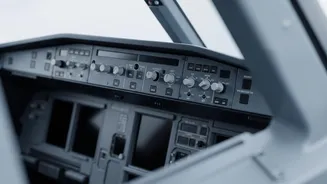
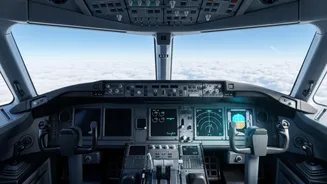
The most fundamental safety feature in a commercial cockpit is that there are two fully qualified pilots: the Captain and the First Officer, often called the co-pilot. They work as a team, but both are completely capable of flying and landing the aircraft
alone. Before each flight, their duties are defined, with one acting as the “pilot flying” and the other as the “pilot monitoring.” The monitoring pilot handles communications, checks instruments, and cross-checks the actions of the flying pilot, ensuring continuous oversight. This division of labour is standard practice, but they often swap roles on different legs of a journey. The presence of a second skilled pilot is the first and most critical backup, safeguarding against any single human point of failure.
Recognising the Crisis: The Incapacitation Checklist
Pilot incapacitation can be sudden and obvious, like a heart attack, or subtle and gradual, where a pilot becomes unresponsive or confused. The other pilot is trained to recognise these signs. Their first and most immediate action is to take full control of the aircraft, often stating aloud, “I have control.” This step is crucial to maintain a safe flight path and stabilise the plane. The next step is to engage the autopilot to manage the workload. The pilot will then run through a specific checklist for pilot incapacitation. This procedure involves securing the affected pilot by moving their seat back and using the harness to ensure they cannot interfere with the controls. At this point, the mission becomes a single-pilot operation.
More Than a Co-Pilot: The Fully Trained First Officer
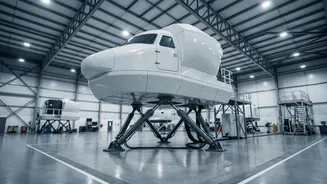
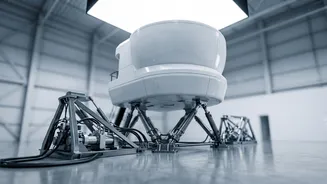
One of the biggest misconceptions is that a First Officer is an apprentice. In reality, they are a fully licensed commercial pilot who has undergone extensive training, including countless hours in simulators practicing emergency scenarios just like this. A First Officer’s responsibilities include everything from pre-flight checks and route planning to communicating with air traffic control and, most importantly, flying the aircraft. When a Captain becomes incapacitated, the First Officer is trained and prepared to assume command, handle all flight duties, and land the plane safely. Their role is not just to assist, but to be a redundant commander, ready to take over at a moment's notice.
Automation to the Rescue: The Autopilot and Autoland
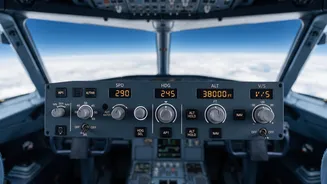
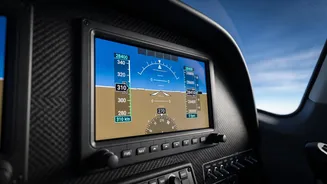
Modern aircraft are equipped with sophisticated technology that can significantly reduce a single pilot’s workload in an emergency. Once in control, the pilot will heavily rely on the autopilot to manage the aircraft’s heading, altitude, and speed. This frees them up to focus on other critical tasks, like communicating and preparing for landing. In certain situations, such as low visibility, many modern airliners can even perform an “autoland.” This system uses ground-based radio signals (the Instrument Landing System) and the aircraft's flight computers to guide the plane all the way to the runway, flare for landing, and touch down without pilot input. While not used for every landing, it serves as another powerful backup.
A Lifeline on the Ground: Air Traffic Control
The moment a pilot is incapacitated, the situation becomes an emergency. The remaining pilot will contact Air Traffic Control (ATC), typically declaring a “Pan-Pan” (urgency) or “Mayday” (distress) call. This immediately gives their flight priority over all other air traffic. ATC becomes a vital part of the emergency response team. Controllers will clear the airspace around the aircraft, provide vectors to the nearest suitable airport, give weather updates, and coordinate with emergency services on the ground to be ready for the plane's arrival. This communication link ensures the pilot is not alone, but supported by a team of experts on the ground.
The Final Layer: Cabin Crew and A Safe Conclusion
The pilot will also alert the cabin crew, usually the senior purser, to the situation in the cockpit. Cabin crew are trained to assist by providing first aid to the incapacitated pilot and, if necessary and possible, removing them from the flight deck. A flight attendant may even be asked to sit in the empty pilot seat to help read checklists, but they will not touch the flight controls. Their main role is to manage the cabin and prepare passengers for an emergency landing. This entire system—from the second pilot to automation and ground support—is designed to ensure that even a serious cockpit crisis ends with a safe landing.