

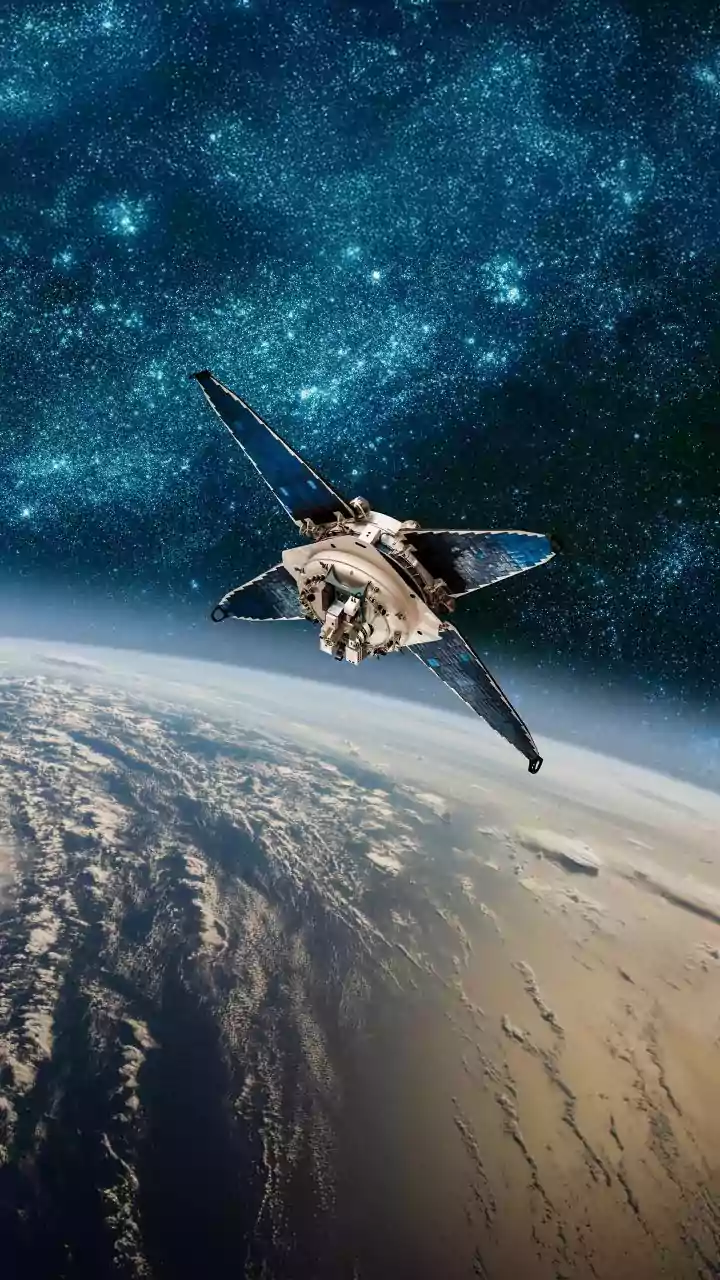




A Junkyard Above Our Heads
Low Earth Orbit (LEO), the crucial highway for satellites and the International Space Station, is becoming dangerously crowded. Decades of launches have left behind a halo of debris. This isn't just a few stray items; we're talking about over 40,000 tracked
objects larger than 10 cm, and potentially over 100 million fragments too small to track. These objects, ranging from defunct satellites and spent rocket stages to tiny paint flecks, travel at speeds up to 28,000 km/h. At that velocity, even a 1 cm object can strike with the force of a hand grenade, capable of destroying a multi-million-dollar satellite. This growing cloud of debris raises the risk of a chain reaction of collisions, a scenario known as the Kessler syndrome, which could render entire orbits unusable for generations.
The Urgent Need for a Cleanup Crew
For years, space agencies have focused on mitigating the creation of new debris. But studies show that even if all launches stopped tomorrow, the amount of junk in orbit would continue to increase from existing objects colliding with each other. This has shifted focus to Active Debris Removal (ADR), the concept of sending missions to capture and remove the most dangerous pieces of junk. The main targets are large, defunct satellites and rocket bodies, which act as massive 'time bombs'. Removing just a few of these large objects each year could significantly stabilize the debris environment. A variety of ingenious solutions are being explored, including giant nets, robotic arms, and even lasers designed to nudge debris out of orbit.
Enter the Harpoon
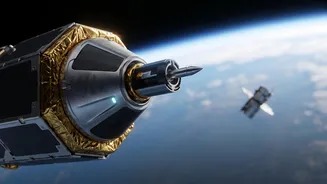
Among the most promising capture methods is a technology humans have used for millennia: the harpoon. The concept is straightforward, robust, and effective. A 'chaser' spacecraft would approach a piece of tumbling debris, fire a tethered harpoon into it, and then use the connection to either drag the junk into Earth's atmosphere to burn up or move it to a safer orbit. The headline's term 'Laser Harpoon' is slightly misleading; the technologies are generally separate. While ground-based lasers are being developed to vaporize or push smaller debris, the harpoon itself is a physical projectile. Developed by companies like Airbus, these space harpoons are designed to pierce the target's hull and deploy barbs to ensure a secure grip, all without creating significant new debris.
From Concept to In-Orbit Success
This isn't just a concept on a whiteboard. The technology was successfully tested in space as part of the RemoveDebris mission, a consortium project co-funded by the European Union. In February 2019, the RemoveDebris satellite fired a harpoon at 20 meters per second into a target panel extended on a boom. The test was a complete success, with the harpoon penetrating the target and its barbs deploying correctly to secure it. This demonstration proved the viability of using a harpoon to capture an uncontrolled object in the vacuum of space, marking a major step forward for ADR technologies. The mission also successfully tested other key technologies, including a net and advanced navigation systems.
The Path to a Cleaner Orbit
Despite the successful tests, cleaning up space is a monumental challenge. The technical hurdles of capturing fast-moving, tumbling objects are immense. There are also significant legal and financial questions. Who pays for the cleanup? And who is liable if a removal mission goes wrong? The market for debris removal is growing, expected to be worth billions in the coming decade, but it is currently driven almost entirely by government agencies rather than commercial clients. As missions like Japan's ADRAS-J2 prepare to remove actual large debris objects, the world is moving from demonstration to operation. Technologies like the space harpoon are critical tools in the effort to ensure that low Earth orbit remains a safe and sustainable resource for the future.