

The Trouble with Martian Soil
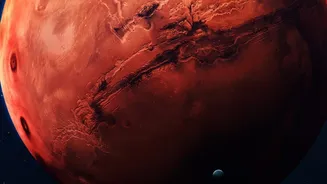
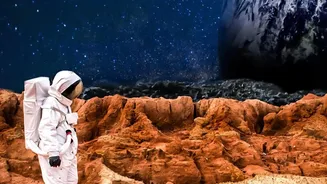
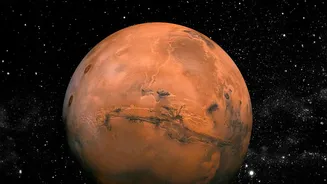
The ground on Mars isn't really 'soil' as we know it. It's regolith—a layer of crushed rock and dust with no organic matter or beneficial microbes. While experiments using simulated Martian regolith have shown that some plants can germinate and grow,
the real deal presents significant hurdles. The primary issue is the presence of toxic compounds called perchlorates, which are harmful to both plants and humans. These salts would need to be washed out of the regolith or neutralized, possibly by using specialised bacteria that can consume them. Furthermore, Martian regolith lacks key nutrients essential for plant growth, particularly nitrogen, which is scarce in both the ground and the thin atmosphere. This means any farming attempt would require substantial treatment and fertilisation.
Atmosphere, Water, and Sunlight
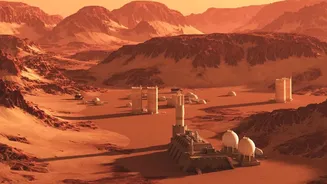
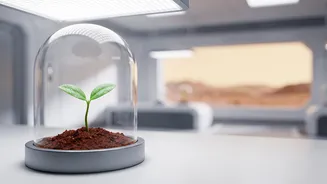
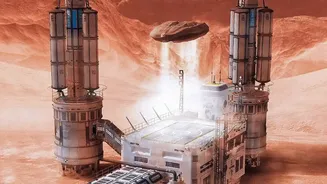
Even if the soil problem is solved, colonists would face environmental challenges. Mars has a very thin atmosphere, composed mostly of carbon dioxide, with pressures so low that liquid water would quickly boil away. The planet is also bombarded with high levels of cosmic and UV radiation, which is harmful to most life from Earth. While there is water on Mars, it's mostly locked away as ice, making extraction a necessary first step. Because of these harsh conditions, open-air farming is impossible. Any Martian farm would need to exist inside a pressurised, shielded greenhouse that could maintain Earth-like temperature, pressure, and air quality while protecting plants from radiation. This structure would also need to manage the weaker Martian sunlight, which provides only about half the energy of sunlight on Earth.
Bypassing the Soil with Technology
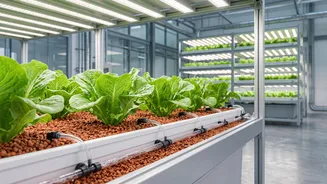
Given the issues with Martian regolith, many scientists believe the most viable path forward is to abandon soil altogether. Hydroponics (growing plants in a nutrient-rich water solution) and aeroponics (misting plant roots with nutrients) are promising alternatives. These controlled environment agriculture (CEA) techniques are already used on the International Space Station (ISS) to grow fresh greens for astronauts. Systems like NASA's Veggie and the Advanced Plant Habitat have successfully grown lettuce, chili peppers, and other crops in space. These methods eliminate the soil problem, dramatically reduce water usage through closed-loop recycling systems, and allow for precise control over nutrient delivery. Projects like XROOTS are specifically testing how these systems can be scaled up for future long-duration missions.
The Martian Menu: What Could We Grow?
Early experiments have identified several crops that show promise. In trials using Mars soil simulants, researchers have successfully grown crops like lettuce, tomatoes, peas, carrots, wheat, and cress. Some studies suggest that leafy greens, onions, and garlic may fare particularly well. The focus is often on plants that are nutrient-dense, grow quickly, and are relatively resilient. However, crop failures on Mars would be catastrophic, as there's no option to import food from another region. To improve yields and plant health, scientists are also exploring techniques like intercropping—growing complementary plants together—and using bacteria to help fix nitrogen in the soil, a process vital for creating a more sustainable agricultural system.
More Than Just Food
Growing plants on Mars offers benefits beyond nutrition. The process of photosynthesis would naturally produce oxygen and help filter the air inside a sealed habitat. Furthermore, the psychological impact of seeing, tending to, and eating fresh, living plants in an otherwise sterile and isolated environment could be a major morale boost for astronauts on long missions. Some researchers are even exploring how plants could be genetically engineered to serve double duty, such as producing compounds that could be used for medicine to treat ailments on-site. This vision transforms a Martian greenhouse from a simple garden into a critical part of a bioregenerative life support system, making a colony more self-sufficient.