





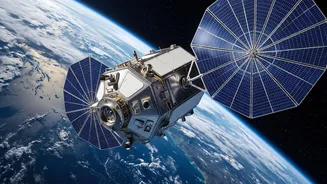
The Data Traffic Jam Above Earth
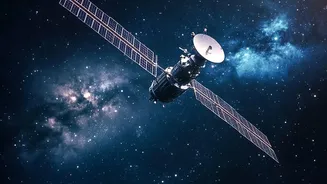
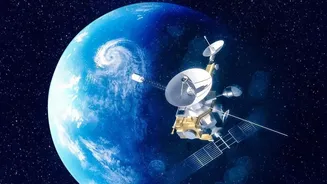
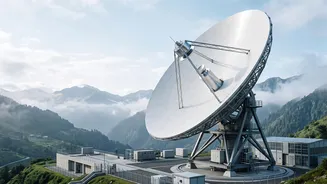
For decades, the model for Earth observation has been simple: satellites act as cameras in the sky, collecting vast quantities of raw data and beaming it down to ground stations. This has given us everything from daily weather forecasts to detailed maps.
However, this model is hitting its limits. Modern satellites can capture terabytes of information daily, but they can only transmit it when they pass over a ground station. This creates significant delays, often hours long, between when data is captured and when it can be analyzed. In situations like a fast-moving wildfire or a flood, that delay can be critical. Much of the downloaded data is also unusable—think of images completely obscured by clouds. This traditional 'bent-pipe' approach is becoming increasingly inefficient, consuming precious bandwidth and power to send back data that ultimately gets discarded.
Giving Satellites a Brain with AI
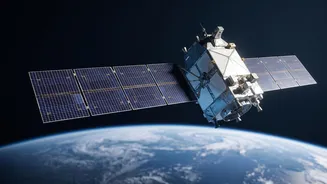
The solution is to stop treating satellites like simple cameras and start turning them into intelligent computers. This is the core idea behind on-board processing, or space edge computing. By equipping satellites with powerful, compact processors and running artificial intelligence algorithms directly in orbit, they can analyze data as soon as it's collected. Instead of sending a massive, high-resolution image of a coastline, an AI model can scan the image, identify an object of interest—like a ship engaged in illegal fishing or an early sign of an oil spill—and transmit only a small, targeted alert with the relevant details. This shift from downlinking raw data to downlinking actionable insights is a fundamental change, reducing the volume of data sent to Earth by up to 80% and slashing the time it takes to get critical information into the hands of decision-makers from hours to mere minutes.
From Theory to Orbit
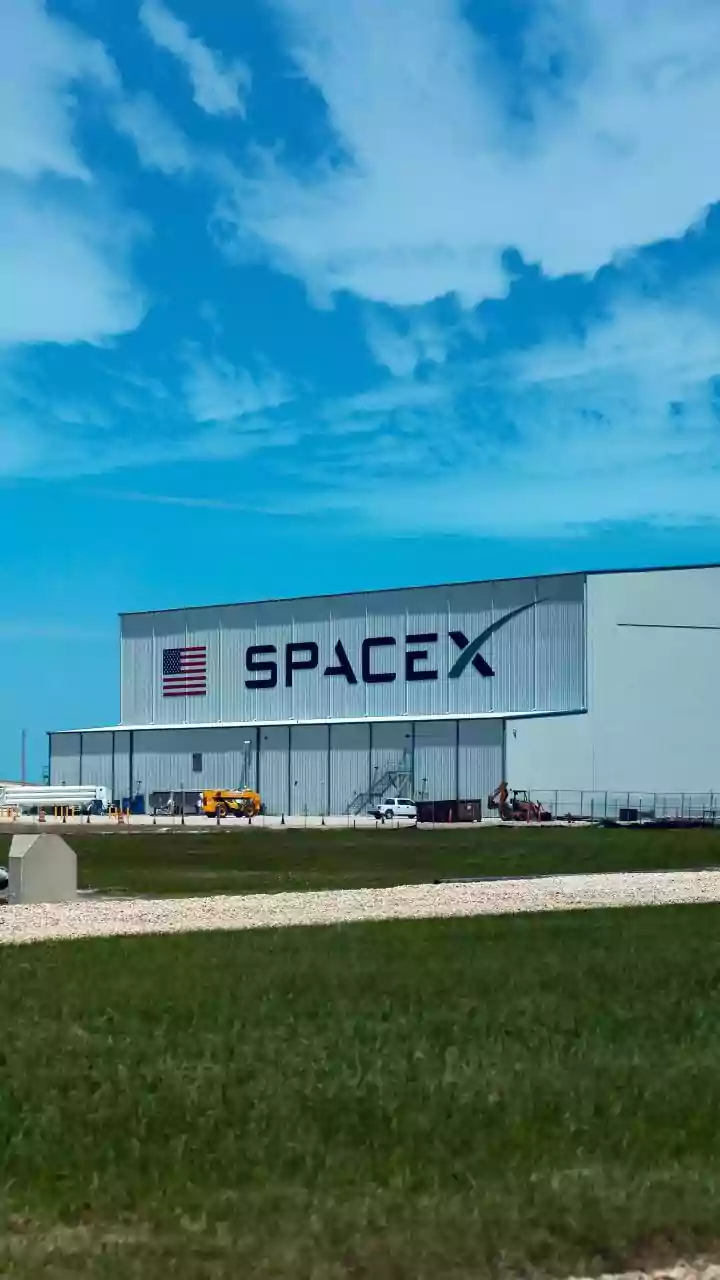
This technology is no longer science fiction. Major players in the tech and aerospace industries are actively deploying and testing these systems. The European Space Agency's Φsat-2 mission, for instance, uses on-board AI for a range of tasks, including detecting cloud cover to ensure only clear images are sent back, identifying maritime vessels, and generating street maps directly from imagery. Similarly, tech giants like Google are entering the fray with initiatives like Project Suncatcher, which recently launched a prototype satellite to test how its AI-powering Tensor Processing Units (TPUs) perform in the harsh environment of space. Companies like SpaceX and startups such as Starcloud are also developing orbital data centers, envisioning a future where massive AI computations can be powered by the sun, far from Earth's energy grids.
Real-World Impact and Applications
The potential applications for faster, smarter satellite data are immense. For disaster response, AI-powered satellites can autonomously detect signs of floods or wildfires and send alerts almost instantly, allowing emergency services to react more quickly and save lives. In agriculture, on-board analysis can spot crop disease or monitor soil moisture with greater precision, helping to improve yields and conserve water. For national security, it enables real-time monitoring of borders and maritime activity. The technology also stands to revolutionize climate science, enabling more efficient tracking of deforestation, polar ice melt, and atmospheric changes. By filtering out the noise and delivering only the crucial information, AI satellites make space-based data more accessible and useful across dozens of industries.
Challenges and the Road Ahead
Putting sophisticated computers in orbit is not without its hurdles. The space environment is incredibly harsh, with extreme temperature swings and constant radiation that can damage sensitive electronics. Engineers are developing innovative solutions, such as specialized radiation-hardened components and novel cooling systems that work in a vacuum, but these add complexity and cost. There is also the challenge of updating AI models once they are in orbit, a process far more complex than updating an app on your phone. Despite these difficulties, the momentum is undeniable. The convergence of smaller, more powerful processors, advanced AI algorithms, and decreasing launch costs is creating a perfect storm for innovation. This new generation of smart satellites promises to not only speed up data processing but fundamentally change how we interact with information from space.