



Egypt's Divine Skincare
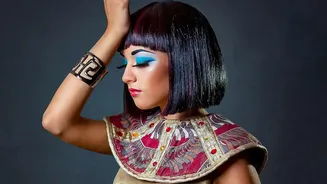
Perhaps no royal is more famous for her beauty regimen than Cleopatra. The Egyptian queen’s legendary baths in donkey's milk were more than just indulgence; they were a sophisticated skincare treatment. The lactic acid in milk acts as a gentle exfoliant,
a principle still used in modern chemical peels today. She combined this with honey, a natural humectant and antibacterial agent, and Dead Sea salts for exfoliation. Ancient Egyptians saw beauty as intertwined with spirituality and power. Cleopatra portrayed herself as the reincarnation of the goddess Isis, and her meticulous routines helped solidify this divine, authoritative image, which was a potent tool in a world dominated by men. Ingredients like moringa, castor, and olive oils were also used to protect the skin from the harsh desert climate.
The Rose-Scented World of Mughal India
In Mughal India, beauty rituals were a symphony of fragrant botanicals and precious ingredients. Empresses like Nur Jahan, renowned for her beauty, were said to have discovered rose oil during one of her lavish baths filled with rose petals. This 'rooh gulab' became a staple, used as a refreshing facial spray and perfume. Royal baths often included milk and rosewater, a tradition designed to soften and scent the skin. Skincare also featured pastes, or 'ubtaan', made from ingredients like chickpea flour, turmeric, and sandalwood mixed with milk cream. Sandalwood was sometimes blended with powdered pearls and turquoise for use as eye makeup. These practices were part of a refined culture where beauty, hygiene, and self-care were signs of sophistication and imperial grandeur.
The Power of Pale in Elizabethan England
During the Renaissance in Europe, a pale complexion was the ultimate status symbol, signifying a life of leisure indoors, away from the sun-drenched toil of the lower classes. Queen Elizabeth I became the icon of this ideal, with her fair hair and stark white skin. To achieve this look, she and other noblewomen used a cosmetic called Venetian ceruse, a dangerous mixture of white lead and vinegar. While it effectively hid blemishes and the scars left from a bout with smallpox, it was also toxic, leading to skin damage, hair loss, and other health problems over time. To counteract the damage, some women would apply a glaze of raw egg white to create a smooth, marble-like finish on their skin. Lips were reddened with vermilion (mercuric sulphide), and eyebrows were plucked into high, thin arches to complete the aristocratic look.
East Asia's Heritage of Harmony
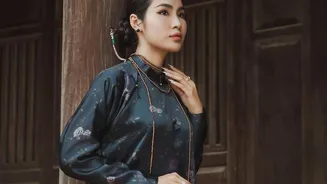
In the royal courts of East Asia, beauty was deeply connected to principles of health and natural harmony. For centuries, women in China and Japan have used rice water, the milky liquid left after washing rice, as a facial rinse and toner. Rich in vitamins and minerals, it was prized for its ability to soften the skin and brighten the complexion. In Korea, this practice was part of royal beauty routines during the Joseon era, forming the foundation of what is now known as K-beauty. Traditional Korean herbal medicine, or 'hanbang', also played a crucial role, incorporating ingredients like ginseng for its firming properties and green tea for its antioxidant benefits. In Japan, geishas and court ladies used camellia oil to moisturize their skin, a testament to a philosophy that valued working in harmony with nature.