
The Moon's Hidden Treasure
For decades, the Moon was largely considered a dry, desolate world. Samples returned by the Apollo missions seemed to confirm this, showing a surface baked by billions of years of solar radiation. But a series of discoveries, starting with probes like
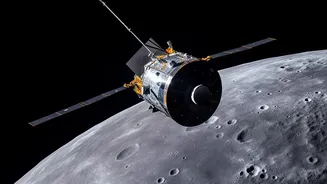
India's Chandrayaan-1 in 2009 and NASA's Lunar Reconnaissance Orbiter (LRO), have completely overturned that notion. These missions provided strong evidence that the Moon holds significant quantities of water, primarily in the form of ice hidden within permanently shadowed regions (PSRs) at its poles. These are craters so deep that their floors haven't seen direct sunlight in billions of years, creating incredibly cold traps where temperatures plummet low enough to preserve ice indefinitely.
Why Water is the Oil of Space
Finding water on the Moon isn't just about giving future astronauts something to drink. Its true value lies in its chemical components: hydrogen and oxygen. Using a process called electrolysis, which involves passing an electric current through water, the H2O molecules can be split. The oxygen can be used for breathable air in habitats, but the real prize is the combination of liquid oxygen and liquid hydrogen, which is a powerful and efficient rocket propellant. The ability to generate rocket fuel on the Moon—a concept known as in-situ resource utilization (ISRU)—would revolutionize space travel. It could reduce the cost of a mission to Mars by billions of dollars, as spacecraft would no longer need to launch from Earth with all the fuel required for their entire journey. The Moon would effectively become a cosmic gas station, a critical stepping stone for humanity's expansion into the solar system.
From Theory to High-Resolution Maps
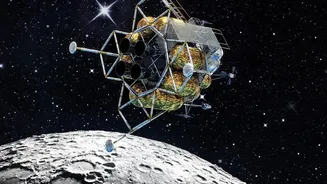
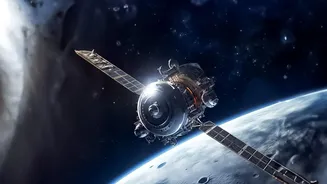
While we've known about the potential for lunar ice for years, the key challenge has been pinpointing its exact location and concentration. Early maps were broad, but recent and ongoing missions are providing the high-resolution data needed for mission planning. Probes like NASA's ShadowCam, flying on the Korea Pathfinder Lunar Orbiter, are designed to peer into the dark craters with unprecedented clarity. However, recent findings suggest the ice might not be in thick, easy-to-access sheets, but rather mixed in with the lunar soil (regolith) or in smaller, patchy deposits. To get a clearer picture of what lies beneath the surface, scientists have developed new methods. A recent breakthrough involves using seismic waves—the same kind of vibrations from earthquakes—to detect buried ice. Models show that these waves travel at different speeds through dry soil versus ice-rich regolith, allowing researchers to create a 3D map of subsurface deposits.
Zeroing In On Prime Real Estate
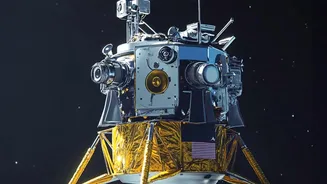
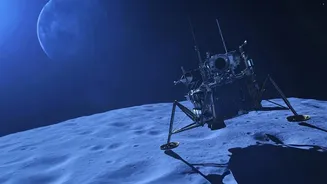
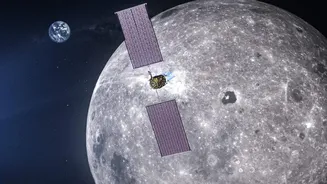
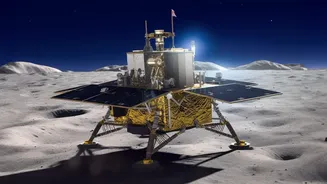
With this new data, space agencies and private companies are identifying the most promising real estate for a future lunar base. The consensus points overwhelmingly to the Moon's South Pole. This region offers a unique combination of resources: the eternal darkness of craters like Shackleton, which are believed to hold vast quantities of ice, and nearby ridges that are in near-perpetual sunlight, perfect for solar power generation. A specific location gaining significant attention is the ridge between Shackleton and de Gerlache craters. It provides consistent access to solar energy and communications with Earth, while also being close enough to the shadowed craters for robotic miners to access the ice. These prime locations are central to the plans for NASA's Artemis program and China's lunar exploration goals, both of which aim to establish a sustained human presence on the Moon.
The Challenges of Lunar Mining
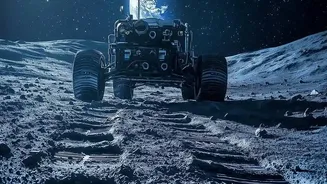
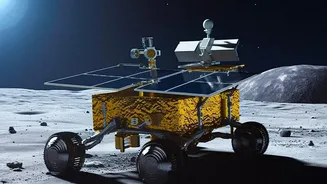
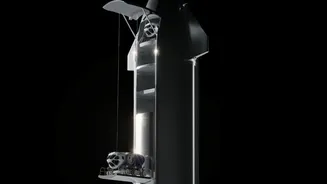
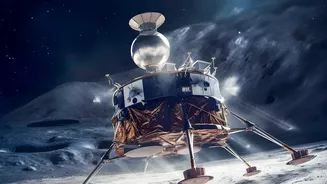
Despite the promise, harvesting lunar ice is a monumental engineering challenge. The permanently shadowed craters are among the coldest places in the solar system, posing a severe threat to robotic equipment. Furthermore, the ice is not pure; it's mixed with abrasive lunar dust and other volatile compounds that would need to be filtered out. The process of extracting the ice, heating it to release water vapor, capturing and purifying it, and then electrolyzing it into fuel requires a significant amount of energy and complex infrastructure. Companies are designing innovative solutions, from towering solar arrays called "Sun Flowers" that would beam power into dark craters to fleets of robotic rovers that would excavate the icy regolith. The main hurdle remains a lack of ground-truth data, which is why upcoming robotic missions from multiple nations are critical to confirming the commercial viability of these cosmic wells before humans arrive to stay.