



What Makes Cold-Pressed Special?
Before we dive into specific oils, let's understand what “cold-pressed” means. Unlike refined oils, which are processed with high heat and chemicals, cold-pressed oils are extracted by mechanically crushing seeds at low temperatures. This gentle process,
often known as 'Kachi Ghani' or 'Marachekku' in India, preserves the oil's natural flavour, aroma, and nutritional profile. While refined oils are neutral in taste and have a longer shelf life, they lose many of the beneficial antioxidants and vitamins during processing. Cold-pressed oils, in contrast, retain these nutrients and carry the distinct taste of their source, making them an ingredient that adds character to your food rather than just being a cooking medium.
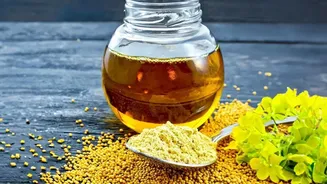
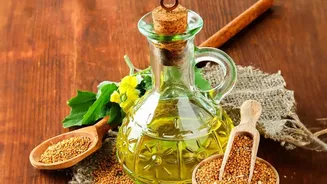
Mustard Oil: The Pungent Powerhouse
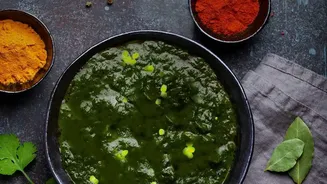
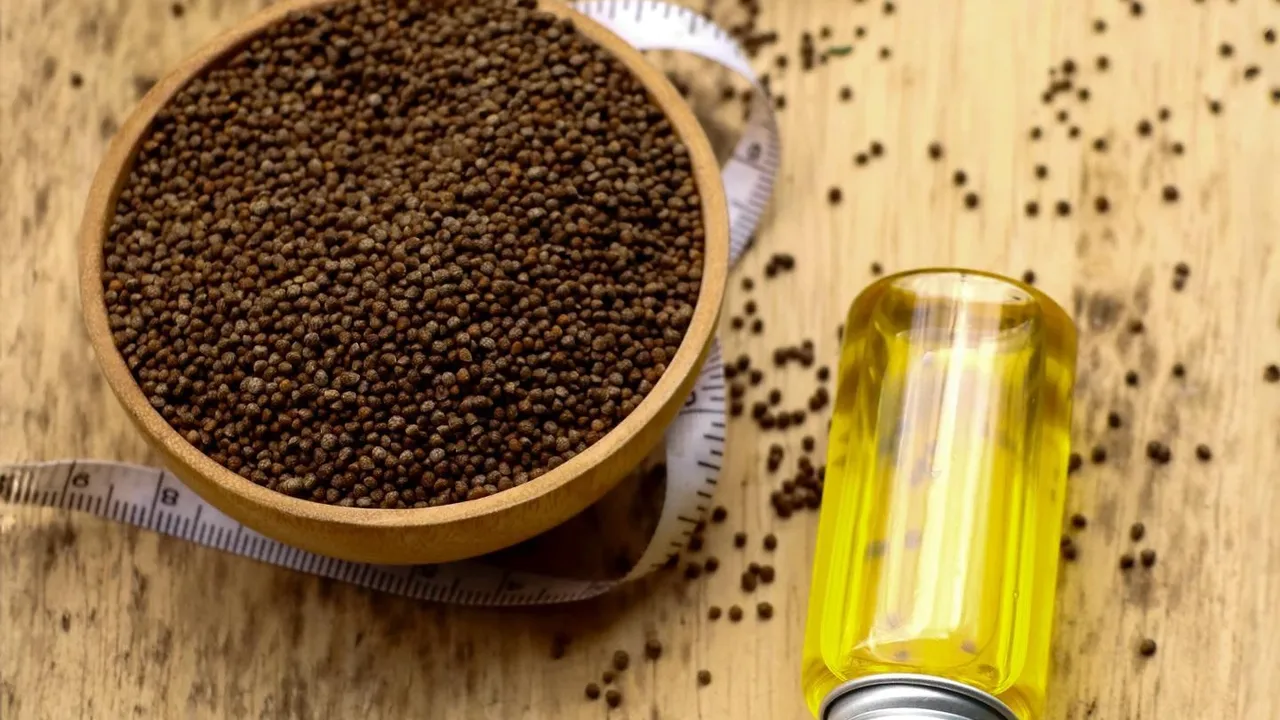
Known for its sharp, pungent aroma and flavour, cold-pressed mustard oil is a cornerstone of North and East Indian cooking. It's the soul of Bengali cuisine, essential for dishes like fish curries (macher jhol) and traditional pickles. In Punjabi and Rajasthani food, its robust character enhances everything from marinades to vegetable preparations like sarson da saag. With a moderate to high smoke point, it's suitable for tempering (tadka), sautéing, and frying. Beyond its bold taste, mustard oil is rich in monounsaturated fats and contains beneficial omega-3 and omega-6 fatty acids. Its natural antimicrobial properties also make it a popular choice for preserving pickles. When you open a bottle, a strong, spicy fragrance is a sign of its purity.
Sesame Oil: The Soul of the South
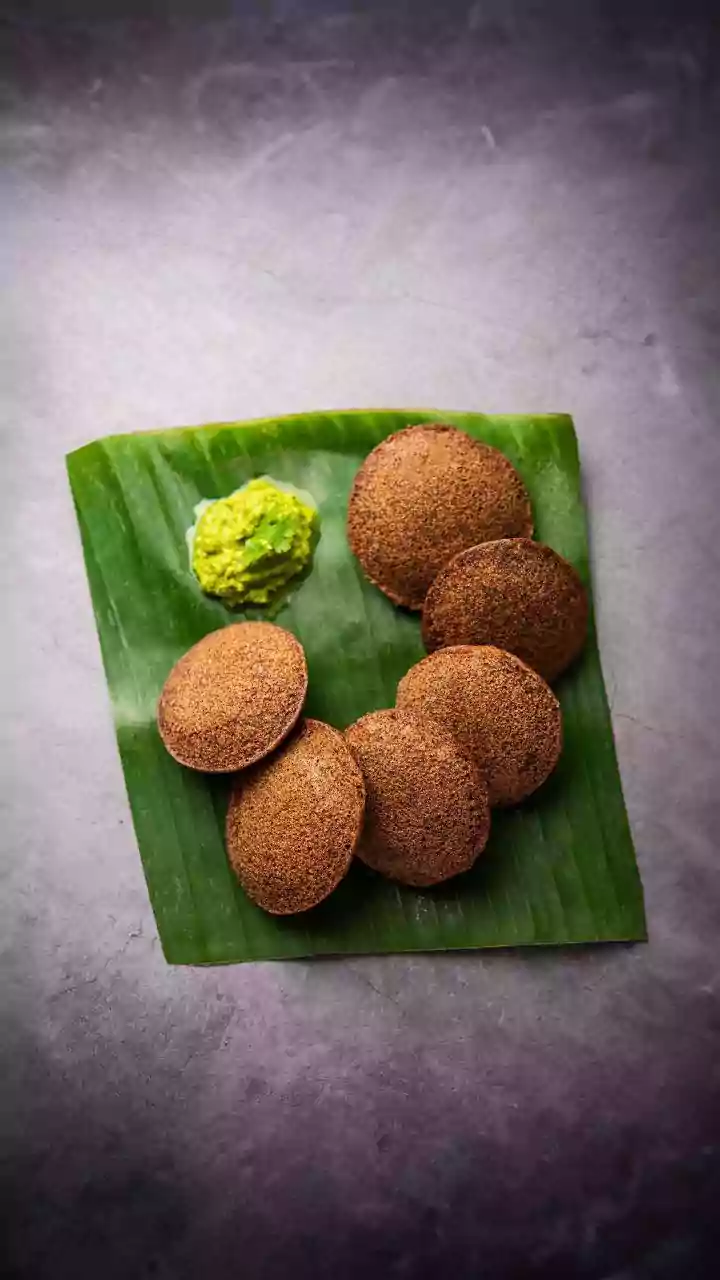
Often called 'gingelly oil' or 'til ka tel', cold-pressed sesame oil is a staple in South Indian kitchens. With its rich, nutty flavour, it is integral to the taste of dishes like tamarind rice (puliyogare), various chutneys, and the spice powders (podi) served with idli and dosa. It's also the traditional choice for tempering spices for sambar and rasam. Sesame oil is rich in antioxidants like sesamol and sesamin and has been valued in Ayurveda for centuries for its warming properties and health benefits, including supporting heart and bone health. While its smoke point is suitable for sautéing and tempering, it truly shines when used as a finishing oil, drizzled over dishes to add a final layer of aromatic flavour.
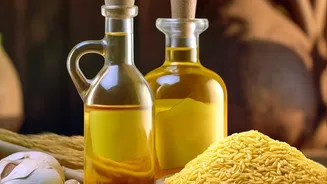
Groundnut Oil: The Everyday Essential
Cold-pressed groundnut oil is perhaps the most versatile of the three, making it an excellent all-purpose cooking oil for many Indian households. Its mild, nutty flavour complements a wide variety of dishes without overpowering them, from everyday sabzis and dals to snacks. It is particularly popular in Western and Southern India, forming the base for many Gujarati, Maharashtrian, and Andhra preparations. With a relatively high smoke point, cold-pressed groundnut oil is well-suited for sautéing, shallow frying, and even deep-frying snacks like pakoras and bhajis at home. It is a good source of heart-healthy monounsaturated fats and Vitamin E. Its balanced profile makes it the easiest cold-pressed oil to switch to if you're moving away from refined oils.
Tips for Buying and Storing Your Oils
When choosing a cold-pressed oil, look for those sold in dark glass bottles, as this protects them from light, which can cause spoilage. A genuine cold-pressed oil will have a distinct colour and aroma characteristic of the seed it came from. Because they don't contain preservatives, these oils have a shorter shelf life than refined versions. It's best to buy them in smaller quantities that you can finish within a few months. Always store your oils in a cool, dark cupboard away from the heat of the stove, and make sure the cap is tightly sealed after each use to prevent oxidation. Some oils, like flaxseed, benefit from refrigeration, but mustard, sesame, and groundnut oils are generally fine in a pantry if used regularly.