





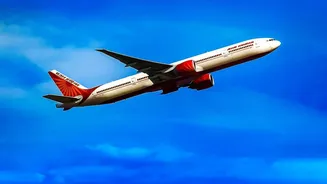

A Sobering Financial Update
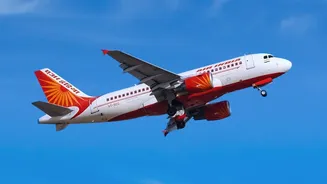
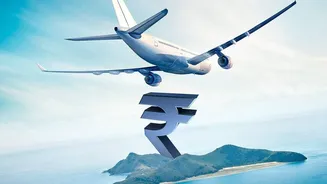
In its latest financial disclosures, Singapore Airlines (SIA) revealed that the carrying value of its investment in Air India has been reduced. As of September 30, 2026, the value of its holding stood at approximately S$799.9 million, a significant drop
from S$1.13 billion just six months prior. This S$334.7 million reduction isn't a direct cash loss but an accounting adjustment that reflects Air India's ongoing financial performance. For the first half of the 2026-27 financial year, SIA recognised S$361.7 million as its share of Air India's losses. While this figure is slightly lower than the S$429.5 million from the previous year, the reduction was attributed to the reversal of prior provisions, not a fundamental improvement in Air India's profitability. This move serves as a stark reminder of the immense financial undertaking involved in the ambitious turnaround.
The Price of a Strategic Partnership
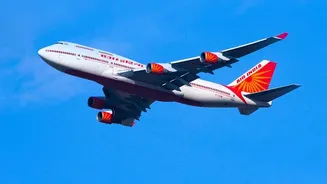
SIA's stake in Air India is a direct result of the landmark merger between Air India and Vistara, which was completed in November 2024. By folding its successful joint venture, Vistara, into the larger Air India group controlled by the Tata Group, SIA secured a 25.1% share in the consolidated entity. This was a strategic masterstroke designed to give SIA a significant foothold in India's massive and fast-growing aviation market. The merger created a dominant full-service carrier in India, combining Vistara's reputation for premium service with Air India's extensive international network and fleet. However, integrating the two airlines—along with the low-cost carriers Air India Express and the former AirAsia India—is a monumental task, fraught with operational and financial challenges. The recent write-down reflects the higher-than-anticipated costs associated with this complex integration.
The Everest of Corporate Turnarounds
When the Tata Group reacquired Air India in 2022, it inherited an airline burdened with decades of underinvestment, outdated systems, and a complex work culture. The transformation, dubbed 'Vihaan.AI', is one of the most challenging in global aviation history. The effort involves modernising a massive fleet, overhauling obsolete IT infrastructure, retraining thousands of employees, and integrating the cultures of four different airlines. These deep-rooted issues have made the path to profitability far more expensive and longer than initially projected. Reports from earlier in 2026 noted that Air India was seeking substantial fresh capital from its owners to fund the transformation, with losses for the financial year ending March 2026 more than doubling from the previous year. The airline's turnaround timeline has reportedly been extended from five years to potentially a decade, highlighting the depth of the challenge.
A Long-Term Bet on India
Despite the significant short-term financial pains, Singapore Airlines' leadership remains publicly optimistic about the long-term potential of its investment. SIA's CEO, Goh Choon Phong, has expressed confidence in the Indian aviation market and the new leadership at Air India, which is implementing measures to control costs and boost revenue. The partnership continues to deepen, with the airlines launching codeshare agreements and reciprocal frequent flyer benefits to leverage their combined network. The write-down is less a sign of waning commitment and more a pragmatic acknowledgement of the current reality. For both Tata and SIA, the investment in Air India is a long-haul flight, not a short sprint. The bet is that a consolidated, world-class airline group will eventually deliver immense value, even if the journey there is turbulent and expensive.