



The Planets That Shouldn't Exist
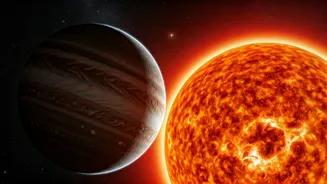
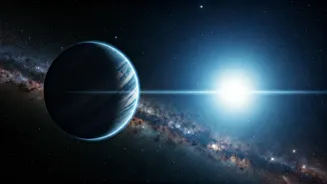
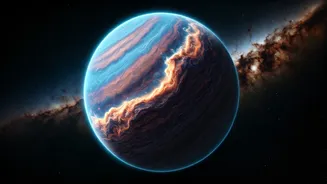
Imagine a cosmic object the size of Jupiter, our solar system's largest planet, but with only a tiny fraction of its mass—so little, in fact, that its density is comparable to cotton candy. NASA's Transiting Exoplanet Survey Satellite (TESS) recently
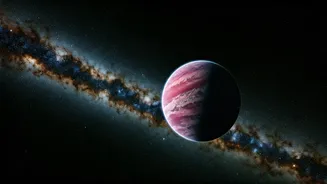
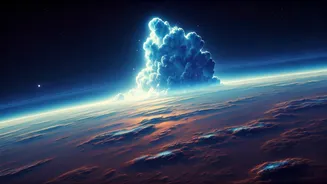
discovered not one, but two of these bizarre worlds, orbiting a star over 1,100 light-years away. Named TOI-791 b and TOI-791 c, they are so large and yet so light that scientists have dubbed them "super-puffs." TOI-791 b is about the same size as Jupiter but has just 3% of its mass, while its sibling, TOI-791 c, is even larger than Jupiter with only about 6% of its mass. According to Jon Jenkins, a science lead at NASA's Ames Research Center, these planets are puzzling because scientists didn't expect to see them at all. They are unlike anything in our solar system and challenge our conventional understanding of planetary formation.
Why Weird Is a Good Thing for Science
Discovering something that completely contradicts existing theories is one of the most exciting things that can happen in science. These "super-puff" planets are a perfect example. For decades, astronomers have been building and refining models of how planets form from the dust and gas disks surrounding young stars. These models successfully explain the rocky inner planets and gassy outer planets in our own solar system. But the existence of TOI-791 b and c throws a wrench in the works. They are so low-density that they defy easy explanation. Finding them is useful precisely because it's so weird; it forces scientists to go back to the drawing board. As one lead author of the study noted, their extremely low densities make them fascinating targets for understanding how planetary systems form and evolve. These cosmic oddities are a puzzle that, once solved, could unlock a much deeper understanding of the universe.
The Tools That Make It Possible
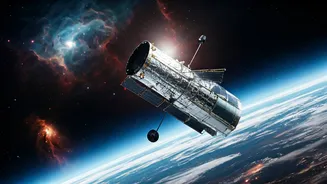
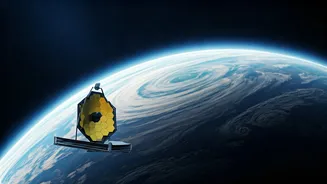
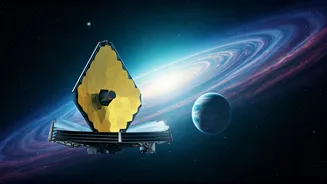
So how do you find a cotton-candy planet light-years away? The discovery was made using the transit method, where telescopes like TESS stare at a star and watch for tiny, periodic dips in its brightness. These dips are the telltale sign of a planet passing in front of its star. But confirming the nature of these planets required a tremendous amount of data and patience. Because they have unusually long orbits, TESS had to observe the star for over 1,100 days to confirm their existence and properties. Further analysis of how the two planets gravitationally tug on each other allowed scientists to calculate their masses and confirm their extraordinarily low densities. The next step will likely involve the James Webb Space Telescope (JWST), which can analyze the light passing through their atmospheres to figure out what they're made of, offering more clues about how such strange worlds came to be.
Redrawing the Cosmic Map
Every new type of exoplanet discovered adds another piece to the grand puzzle of the cosmos. For a long time, our only model for a planetary system was our own. But discoveries of "Hot Jupiters"—gas giants orbiting incredibly close to their stars—and now "super-puffs" have shown that nature is far more imaginative. These findings suggest that the processes of planet formation are more varied and chaotic than previously thought. If planets can be this diverse, it fundamentally changes the way astronomers search for worlds beyond our own, including those that might be habitable. Each weird planet forces us to broaden our definition of what a planet can be and where we might find them. It's a reminder that the universe is filled with wonders we haven't even begun to imagine, from planets with clouds made of rock minerals to worlds orbiting the remnants of dead stars.