






First, Let's Be Clear: Is UPI Still Free for You?
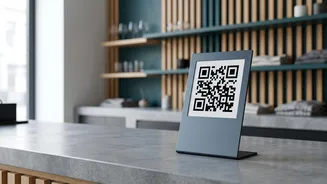
Yes, for the overwhelming majority of everyday users, nothing has changed. Sending money to a friend or family member, known as a person-to-person (P2P) transaction, remains completely free, regardless of the amount. Likewise, when you scan a QR code
at your local shop for a small purchase, that payment, called a person-to-merchant (P2M) transaction, also remains free for amounts up to ₹2,000. The government and the National Payments Corporation of India (NPCI) have repeatedly clarified that individual consumers will not be charged for using UPI. The changes are happening behind the scenes and are designed to affect a specific slice of the digital payments ecosystem.
So, What Exactly Is the New Fee?
The change involves the introduction of a Merchant Discount Rate (MDR) or an interchange fee. This is not a new concept; it's a standard charge in the world of credit and debit card payments. Effective October 15, 2026, a fee will be applied to specific merchant UPI transactions. There are two main types. One is an interchange fee of up to 1.1% on UPI transactions over ₹2,000 that are made using a Prepaid Payment Instrument (PPI), like a digital wallet. The other, more recent framework, introduces a 0.4% MDR on certain P2M transactions exceeding ₹2,000. For very large transactions of ₹75,000 or more, this fee is capped at a maximum of ₹300. This fee is paid by the merchant's bank to the payment service provider and other parties in the ecosystem. The merchant's bank may then recover this cost from the merchant.
Why Was This Fee Introduced?
The UPI system has seen explosive growth, processing over 24.5 billion transactions in August 2026 alone. Running an infrastructure of this scale—including servers, cybersecurity, and constant innovation—costs a significant amount of money. Until now, the model has largely been free for merchants to encourage adoption. However, this has made it difficult for payment service providers to generate revenue and invest back into the system. The introduction of a calibrated MDR is intended to create a sustainable economic model for the long term. The revenue is distributed among the ecosystem participants to cover their operational costs and to continue expanding and securing the network, especially in smaller towns and rural areas.
The Real Impact on Merchants
This is where the headline's claim holds true. While consumers are shielded, merchants who process higher-value transactions will feel the pinch. A 0.4% or 1.1% fee might seem small, but for businesses operating on thin margins, it adds up. For example, on a ₹10,000 sale, a 0.4% MDR translates to a ₹40 charge. For businesses that handle hundreds of such transactions, this becomes a noticeable operational cost. The Retailers Association of India (RAI) has warned that this could disincentivize digital payment acceptance, potentially pushing some small retailers back towards cash, especially ahead of busy festive seasons. However, the government has specifically exempted many small merchants. Those receiving up to ₹1 lakh per month via UPI QR codes will continue to have zero MDR, protecting a large segment of the unorganised retail sector. It's estimated that over 95% of merchant transactions will remain unaffected by the new charge.
Can Merchants Pass the Cost to Customers?
Officially, no. The NPCI and the government have been clear that merchants are not permitted to pass the MDR on to customers by adding a surcharge for UPI payments. The price of the goods or services should be the same whether you pay by cash or UPI. Banks have been advised to ensure merchants comply with this rule. However, there are concerns that some businesses might try to discreetly factor these new costs into their overall pricing over time. Regulators have stated that they will be monitoring the situation to prevent this from happening. For now, if a shop asks you to pay extra for using UPI, you can raise the issue with your bank or payment provider.