



What Makes the Harvest Moon Special?
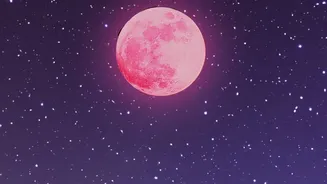
Not all full moons are created equal. The Harvest Moon is the name given to the full moon that occurs closest to the autumnal equinox, the official start of autumn in the Northern Hemisphere. This year, the equinox falls around September 22, making the September 26
full moon the designated Harvest Moon. What truly sets it apart is its behaviour. For several nights in a row around this time, the moon rises just a little later each evening, typically soon after sunset. Historically, this provided farmers with extra hours of bright moonlight to bring in their crops before the onset of winter, lending the moon its famous name. This phenomenon happens because the moon's orbital path makes a narrow angle with the horizon at this time of year.
When and Where to Watch in India
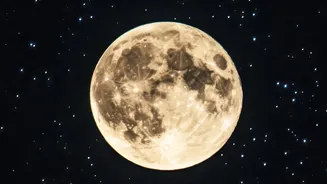
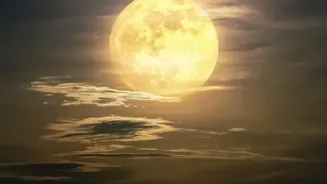
For sky-gazers in India, the Harvest Moon will reach its peak fullness on the night of Saturday, September 26, 2026. The exact moment of maximum illumination is at 10:19 PM India Standard Time (IST). Since this happens well after dark, the entire country is perfectly positioned for a prime view. The moon will appear full and bright for the entire night. To get the most dramatic view, try to watch the moon as it rises on the eastern horizon around sunset. At this point, it often appears larger and glows with a warm, orange-red hue due to an effect called the 'Moon illusion' and its light passing through more of Earth's atmosphere. As it climbs higher, it will transition to its familiar brilliant white.
Finding the Perfect Viewing Spot
You don’t need any special equipment to enjoy the Harvest Moon; its beauty is easily visible to the naked eye. The key to a great experience is finding a good location. For the best view, try to get away from the bright lights of the city, which can wash out the night sky. A park, a rooftop, or a spot with an unobstructed view of the eastern horizon is ideal. Give your eyes about 15-20 minutes to adjust to the darkness. This will help you see not only the moon in all its glory but also the surrounding stars. This month, the moon will be situated in the constellation of Pisces, and you’ll have a celestial bonus: the planet Saturn will appear as a bright, star-like object near the moon, visible without a telescope.
Tips for a Better Viewing Experience
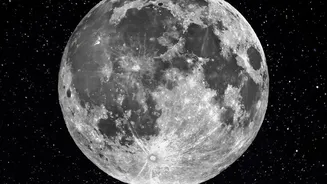
While you can simply look up and enjoy, a little preparation can make the night more memorable. Consider bringing a pair of binoculars or a basic telescope to get a closer look at the lunar surface, revealing craters and seas in stunning detail. If you're interested in photography, a tripod is your best friend. It will keep your camera or smartphone steady, preventing blurry shots. Use your camera’s timer or a remote shutter to avoid shaking the device when you take the picture. Many smartphone apps can help you pinpoint the exact moonrise time for your city and identify other celestial objects like Saturn. And don't forget to check the weather forecast; a clear sky is essential for a perfect moon-gazing night.
A Moon of Harvest and Remembrance
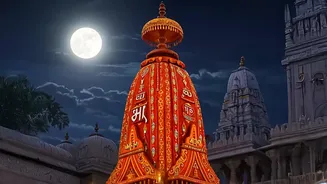
The Harvest Moon carries deep cultural significance across the globe. It is widely seen as a symbol of abundance, gratitude, and the natural cycles of life. In China and other parts of East Asia, it marks the Mid-Autumn Festival, a time for family reunions and sharing mooncakes. Many Native American cultures have also traditionally celebrated it with feasts and ceremonies giving thanks for the harvest. Interestingly, for many in India, this full moon period aligns with Pitru Paksha, a time in the Hindu calendar dedicated to remembering and honouring one's ancestors. This adds a layer of local resonance to the global astronomical event, blending the themes of harvest, reflection, and family heritage under the same bright moon.