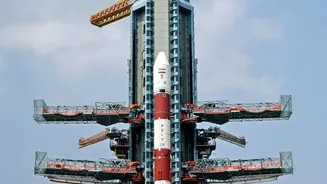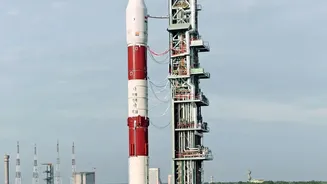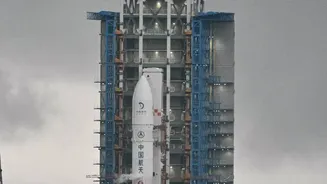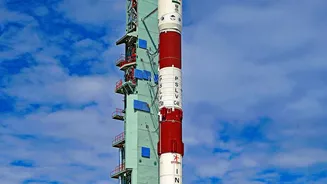







A New Space Race Has Begun
The Indian space landscape is undergoing a monumental shift. Spurred by landmark government policies since 2020, including the establishment of the Indian National Space Promotion and Authorisation Centre (IN-SPACe), the private sector has been unlocked.
What was once a field dominated by a single government agency has transformed into a bustling ecosystem. The number of space startups has skyrocketed from a handful to over 400, attracting significant investment. Cumulative funding has crossed the $870 million mark, with individual companies like satellite-data firm Pixxel securing record-breaking rounds of $100 million. This financial confidence is built on tangible success. In a historic moment, Skyroot Aerospace became the first private Indian company to launch a rocket into orbit, proving that non-government entities can build and fly complex hardware. This is not just about a few companies; it’s about building a national industry projected to be worth $44 billion by 2033.
From a Single Destination to a Constellation of Choices
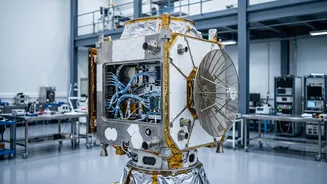
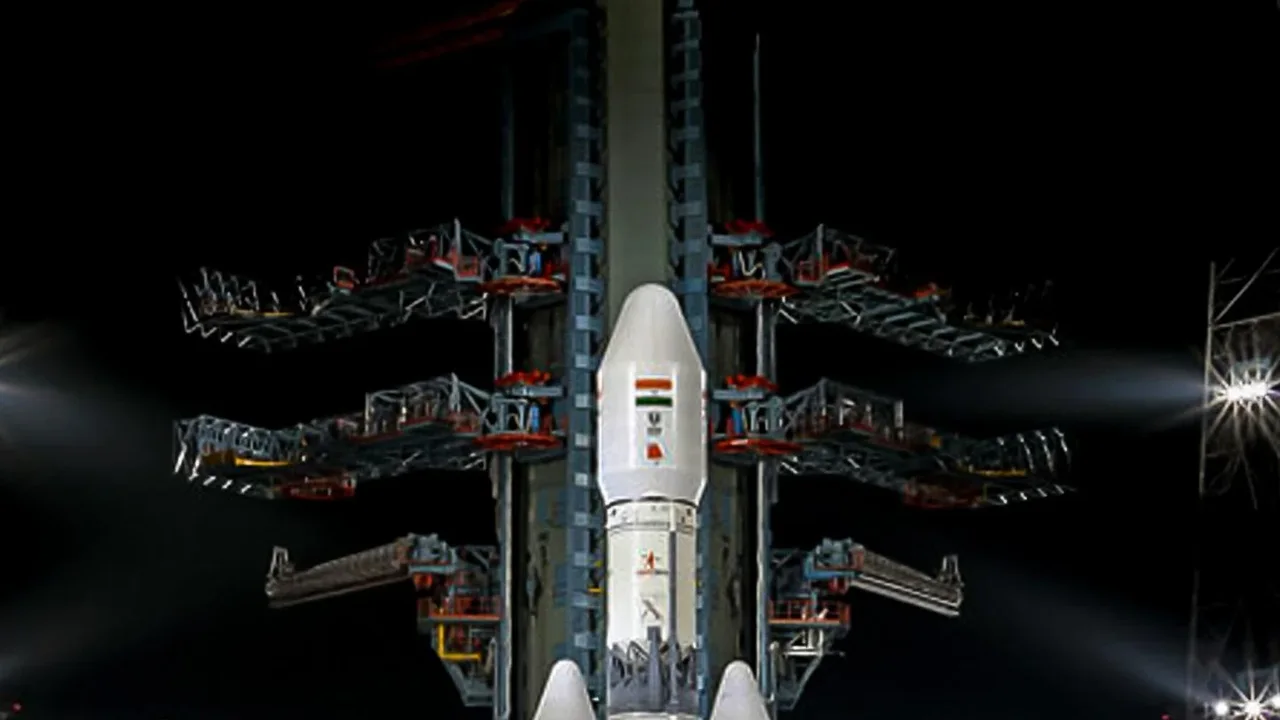
For generations of engineers, the ultimate dream was to pass the highly competitive exams for the Indian Space Research Organisation (ISRO). While ISRO remains the bedrock of India's space programme, focused on advanced research and national missions, the career path is no longer a single trajectory. Today, engineers can choose between the stability and prestige of a government role and the dynamic, fast-paced environment of a startup. The new ecosystem includes companies building everything from launch vehicles (Skyroot, Agnikul Cosmos) and satellite platforms (Dhruva Space) to those providing cutting-edge data from space (Pixxel, SatSure). This diversification means a wider variety of missions and roles. While an ISRO engineer might contribute to a large-scale national project like Gaganyaan, a startup engineer could be one of a small team building a 3D-printed engine or designing a novel satellite constellation for a specific commercial client.
The In-Demand Engineering Skillset
The growth of the private space sector is redefining the skills that are most valuable. While a foundation in aerospace or mechanical engineering remains crucial, startups are aggressively hiring for a much broader range of expertise. Software engineering is at the forefront, with needs for flight software, ground systems, and data processing platforms. The explosion in Earth observation startups like Pixxel and GalaxEye Space has created immense demand for data scientists, remote sensing specialists, and AI/ML engineers who can turn terabytes of satellite imagery into actionable insights for agriculture, finance, and climate monitoring. Beyond that, there is a need for experts in electronics, avionics, robotics, materials science, and propulsion. Unlike traditional roles, startups value interdisciplinary skills and an ability to learn quickly, as engineers are often expected to work across different subsystems and contribute beyond their core specialisation.
Culture, Compensation, and Career Velocity
The choice between a government job and a startup role is also a choice between different cultures and reward structures. ISRO offers unparalleled job security, pension benefits, and the immense pride of working on missions of national importance. However, it comes with government pay scales and a more hierarchical, process-driven environment. In contrast, space startups offer a high-risk, high-reward proposition. Salaries for early to mid-career engineers are highly competitive, often ranging from ₹10 lakh to ₹25 lakh per annum, with the added allure of stock options that could yield significant wealth if the company succeeds. The work culture is typically faster, more agile, and offers greater ownership and faster career progression. The trade-off is a lack of long-term security and the intense pressure that comes with venture-funded growth targets.