


Your Open-Air Gym Awaits
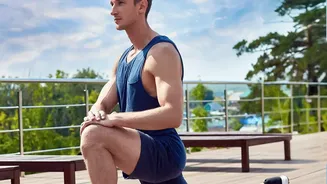
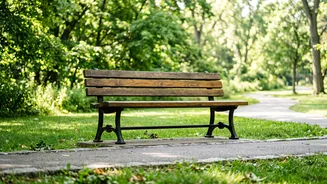
Forget expensive gym memberships and crowded fitness classes. The local park offers fresh air, open space, and one of the most versatile pieces of exercise equipment you could ask for: a sturdy bench. Using a bench for your workout provides an elevated
platform that allows you to modify exercises, making them more or less challenging to suit your fitness level. For example, placing your hands on a bench for a push-up creates an incline, which is a great starting point if you're building upper body strength. Conversely, elevating your feet on the bench for a decline push-up increases the difficulty. This simple piece of public furniture can help you build muscle, improve balance, and get your heart rate up, all while enjoying the outdoors.
First, A Crucial Safety Check
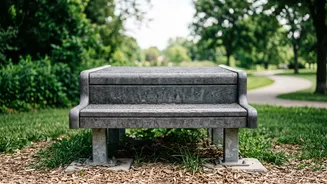
Before you jump into your first set, it's vital to ensure the bench is safe and stable. Not all benches are created equal, and your safety is the top priority. Start with a visual inspection. Look for any signs of damage like cracks, deep rust, or splintered wood. Check that the bench is firmly anchored to the ground. Give it a firm push and a shake from different angles to see if it wobbles or moves. An unstable bench can shift during an exercise, leading to a fall or injury. Also, ensure the ground around the bench is level and clear of any obstacles like rocks or litter that could cause you to trip. If the bench feels even slightly unstable, find another one. It's not worth the risk.
Upper Body Power Moves
The bench is perfect for sculpting your chest, shoulders, and arms. Two classic moves are incline push-ups and triceps dips. For incline push-ups, place your hands slightly wider than shoulder-width apart on the seat or backrest. Walk your feet back until your body forms a straight line from head to heels. Lower your chest towards the bench, keeping your elbows relatively close to your body, then press back up. For triceps dips, sit on the edge of the bench with your hands placed next to your hips, fingers pointing forward. Slide your hips forward off the bench. Lower your body by bending your elbows to about a 90-degree angle, then push back up to the starting position. To make it easier, keep your knees bent; to make it harder, straighten your legs out in front of you.
Lower Body and Glute Sculpting
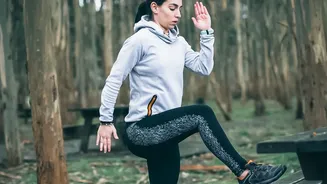
Now, let's target the legs and glutes. Step-ups are a fantastic, low-impact exercise for building leg strength. Face the bench and place one entire foot firmly on the seat. Press through that heel to lift your other foot up onto the bench, then step back down. Alternate your lead leg with each repetition. For a more advanced challenge, try Bulgarian split squats. Stand a few feet in front of the bench, facing away from it. Extend one leg back and place the top of your foot on the seat. Lower your body down until your front thigh is nearly parallel to the ground, ensuring your front knee doesn't go past your toes. This exercise is a powerful tool for building single-leg strength and stability.
Core Strength and Cardio Bursts
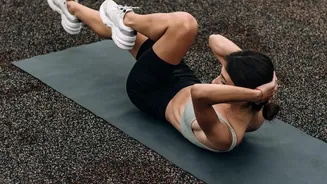
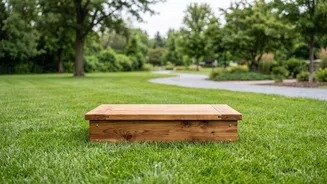
A strong core is the foundation of all movement, and a bench can help you build it. Try incline mountain climbers by placing your hands on the bench in a push-up position and driving your knees toward your chest one at a time, as if you're running in place. You can also perform seated crunches by sitting on the edge of the bench, leaning back slightly while holding on for support, and pulling your knees into your chest. To get your heart rate up, add in some box jumps. Stand facing the bench and jump with both feet, landing softly on the seat. If jumping feels like too much, stick with quick step-ups or toe taps on the edge of the bench for a great cardio boost.
Putting It All Together in a Workout
To create a balanced workout, combine moves from each category into a simple circuit. A great way to structure this is to perform each exercise for a set period or number of repetitions, then move to the next with minimal rest. For example, you could perform each chosen exercise for 40-45 seconds, rest for 15-20 seconds, and then start the next move. Once you've completed one round of all your selected exercises (e.g., push-ups, step-ups, triceps dips, and mountain climbers), rest for a minute. Then, repeat the entire circuit two to four more times, depending on your fitness level and available time. Always remember to warm up before you start and cool down with some light stretching afterward.