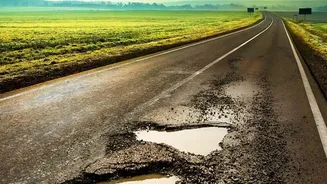








The Never-Ending Pothole Problem
For countless drivers and riders across India, potholes are more than just an inconvenience; they are a costly and dangerous reality. These craters cause significant vehicle damage, lead to traffic snarls, and contribute to tragic accidents, especially
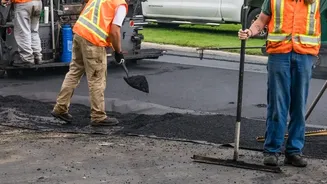
during the rainy season when they fill with water and become invisible. The traditional approach involves a constant cycle of reactive maintenance, where crews patch up holes only for new ones to appear elsewhere. This method is not only expensive and disruptive but also fails to address the root cause of pavement degradation. The sheer scale of India's vast road network makes this a monumental and seemingly endless task.
How Asphalt Can 'Heal' Itself
The concept of self-healing asphalt sounds like science fiction, but it is grounded in clever materials science. The core idea is to embed special agents within the asphalt mixture that can activate to repair damage. When tiny micro-cracks form due to traffic load and weather, these agents go to work, sealing the fissure before it can grow into a full-blown pothole. There are several methods being developed globally. One popular technique involves induction heating, where steel fibres or iron oxide nanoparticles are mixed into the asphalt. A special maintenance vehicle passes a magnetic field over the road, heating the metallic particles, which in turn softens the surrounding bitumen binder, allowing it to flow and seal the cracks.
The Secret of Bio-Engineered Binders
Another exciting approach, and one that aligns with the headline's 'bio-engineered' element, involves microcapsules. Researchers are embedding tiny capsules containing rejuvenating agents, like certain oils, into the asphalt mix. One project, for instance, uses sunflower oil in these capsules. When a crack forms, the pressure ruptures the capsules, releasing the oil. This oil softens the aged and brittle binder around the crack, effectively 'healing' the damage and restoring flexibility. In India, significant progress is being made with bio-bitumen, a green binder derived from processing agricultural waste through a process called pyrolysis. This not only offers a sustainable alternative to petroleum-based bitumen but also helps tackle issues like stubble burning.
From the Lab to Indian Roads
This technology is no longer confined to laboratories. The National Highways Authority of India (NHAI) is actively exploring these solutions. In a major step, India's first national highway stretch using bio-bitumen was inaugurated on NH-44 near Nagpur, Maharashtra, in late 2024. This project, a collaboration between Praj Industries and the CSIR-Central Road Research Institute (CRRI), used a mix containing 15% lignin-based bio-bitumen. Another successful trial stretch was laid on the Jorabat-Shillong Expressway in Meghalaya. These pilot projects are crucial for testing the materials' performance in diverse Indian climatic conditions and under heavy traffic loads, paving the way for wider adoption.
The Road Ahead: Costs and Benefits
The primary hurdle for widespread adoption is the higher initial cost. Self-healing asphalt can be more expensive to produce upfront due to the specialised additives like steel fibres or microcapsules. However, the long-term economic case is compelling. By extending a road's lifespan, potentially by double, and significantly reducing the need for frequent, disruptive repairs, the overall life-cycle cost can be much lower. Studies suggest these materials could extend pavement service life by 30-40% and cut maintenance costs dramatically. This shift from a reactive to a proactive maintenance strategy promises not only smoother and safer journeys but also significant environmental benefits through reduced carbon emissions and less consumption of raw materials.