


The Global Bleaching Crisis
Coral reefs, often called the rainforests of the sea, are in peril. These vibrant ecosystems support a quarter of all marine species, but they are incredibly sensitive to temperature changes. When ocean temperatures rise, corals become stressed and expel
the tiny algae (zooxanthellae) living in their tissues. These algae are the coral's primary food source and give them their brilliant colors. Without them, the coral's white skeleton becomes visible, an event known as bleaching. While a bleached coral is not yet dead, it is starving and vulnerable. Prolonged or severe heat waves can lead to mass mortality, threatening the collapse of entire reef ecosystems.
The Search for 'Super Corals'
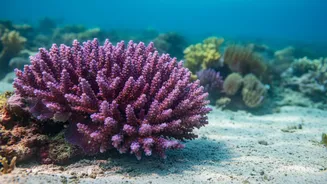
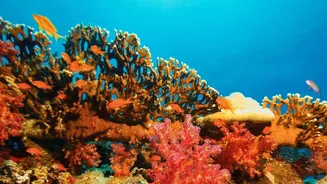
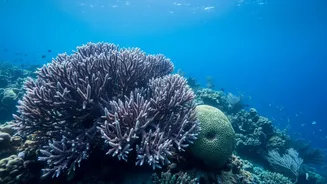
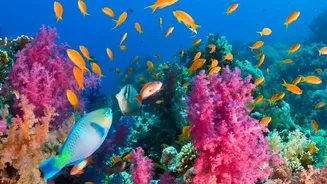
In the face of widespread bleaching, scientists have observed a remarkable phenomenon: not all corals succumb to the heat. Even in a sea of white, some individual corals or patches remain colorful and healthy. These resilient survivors are informally known as “super corals.” Marine biologists actively seek out these hardy specimens. They are often found in unusual environments where temperatures are naturally higher or more variable, such as shallow lagoons or areas like the Gulf of Aqaba in the Red Sea. These locations act as natural laboratories, pre-selecting for corals that have evolved a higher tolerance for thermal stress. By studying these survivors, researchers hope to unlock the secrets to their resilience.
Decoding the Genetic Blueprint
The core of the work lies in genetics. The process begins with collecting samples from both heat-resilient and heat-sensitive corals. Back in the lab, scientists extract and sequence the DNA from these samples. This allows them to read the entire genetic code of each coral. By comparing the genomes of the two groups, they can hunt for differences—specific genes or genetic markers that are consistently present in the resilient corals but absent in the vulnerable ones. It’s like comparing two instruction manuals to see which one has the extra chapter on surviving a crisis. Sometimes, the key isn't in the coral's genes, but in the genes of their symbiotic algae, as some algae are better at handling heat stress and avoiding the production of toxins that lead to bleaching.
Putting Genes to the Test
Identifying a potential resilience gene is only the first step; scientists must then prove its function. This is where advanced tools come into play. Researchers can conduct stress tests in advanced facilities like the National Sea Simulator, exposing different coral samples to elevated temperatures to see which ones bleach and which ones don't, then analyzing their genetic makeup. Another powerful technique is CRISPR-Cas9, a gene-editing tool that acts like a pair of molecular scissors. Scientists can use CRISPR to “turn off” a candidate gene in a lab-grown coral embryo. If that coral then loses its heat tolerance, it provides strong evidence that the edited gene is indeed crucial for resilience. This helps confirm which genes are most important for conservation efforts.
From Lab to Reef Restoration
The ultimate goal is to use this genetic knowledge to bolster coral populations in the wild. One of the most promising approaches is “assisted evolution.” This is not about creating genetically modified organisms in a lab and releasing them, but rather about giving nature a helping hand. It can involve selective breeding, where biologists cross-breed naturally resilient corals to produce offspring with enhanced heat tolerance. Early studies have shown that heat resistance can be passed down and improved in a single generation. This genetic information can also guide restoration efforts, helping managers decide which corals to cultivate in nurseries and outplant onto degraded reefs, ensuring that the new populations have the best possible chance of surviving future heat waves.
A Tool, Not a Silver Bullet
While genetic interventions offer significant hope, scientists are quick to caution that they are not a cure-all. The scale of the climate crisis is enormous, and the complexity of coral genomes presents significant challenges. Spreading these resilient traits across vast ocean ecosystems is a monumental task. Researchers emphasize that these techniques are meant to be tools in a much larger toolbox. They must be used in conjunction with traditional conservation efforts and, most importantly, aggressive global action to reduce the greenhouse gas emissions that are warming our oceans in the first place. Without addressing the root cause of the problem, even the most resilient corals will eventually reach their limit.