




A Major Celestial Event
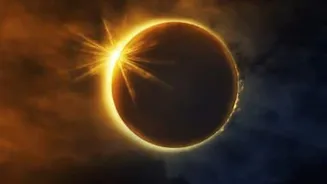
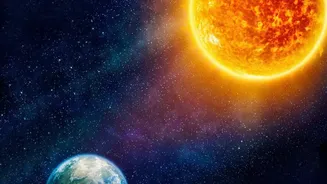
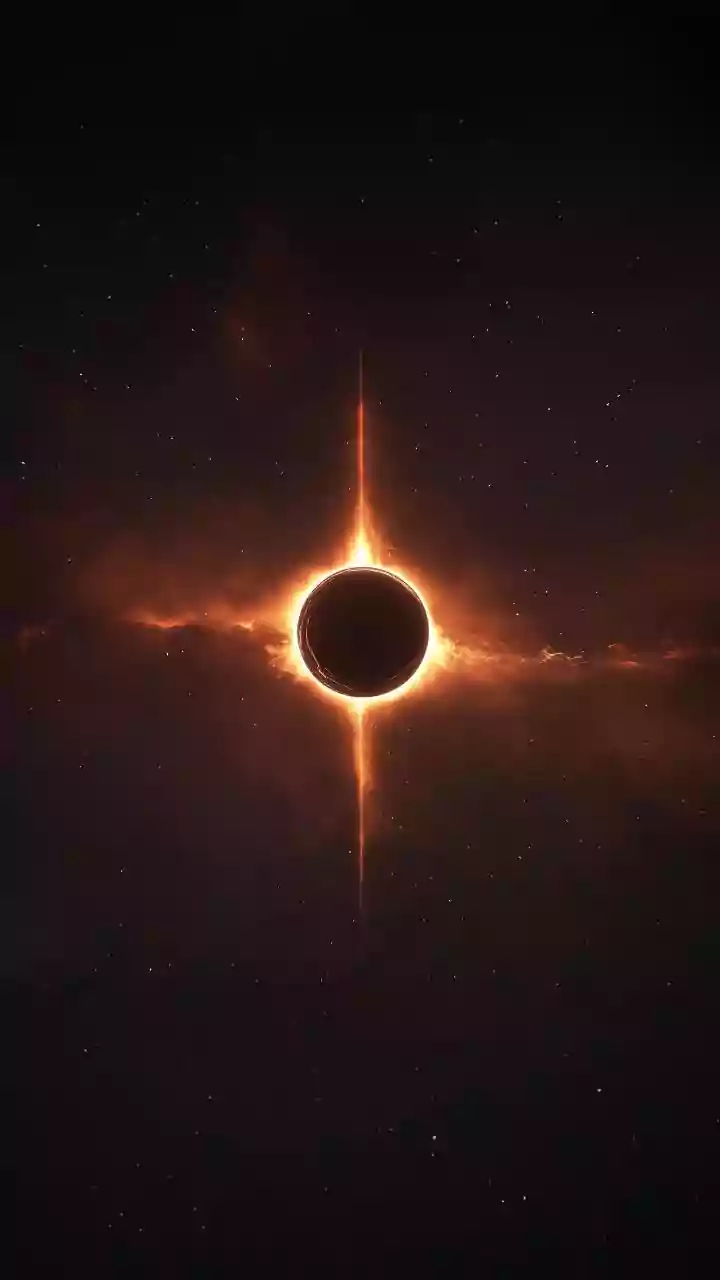
On August 12, 2026, a total solar eclipse will occur, a phenomenon where the Moon passes directly between the Sun and Earth, completely blocking the Sun's face. This brief alignment will cast a moving shadow, called the path of totality, across parts
of the globe, revealing the Sun's ethereal outer atmosphere, the corona. The path of totality for this event will primarily cross over Greenland, Iceland, the Atlantic Ocean, and northern Spain. While these regions experience a few minutes of midday darkness, much of Europe, northwestern Africa, and parts of North America will witness a partial eclipse. For sky-watchers, it is a rare and breathtaking spectacle.
Why India Won't See It Directly
Unfortunately, for enthusiasts in India, this celestial drama will unfold on the other side of the planet. The eclipse's path does not cross over the Indian subcontinent. According to Indian Standard Time (IST), the eclipse is set to begin late in the evening of August 12 and conclude in the early morning hours of August 13. Because the event happens during India's night, it will not be visible, meaning there is no opportunity for direct, in-person viewing from anywhere in the country. This geographic reality is what makes online viewing not just an alternative, but the only way for Indian fans to participate in this global event.
Your Official Front-Row Seat: NASA's Livestream
NASA is providing a free, accessible, and expert-guided way for everyone to witness the eclipse. The agency will host a live broadcast across its platforms, including NASA+ and its official website. Coverage is scheduled to begin at 1:15 p.m. EDT (which corresponds to 10:45 p.m. IST) on August 12. The stream will feature live telescope views from various points along the path of totality, including Iceland and Spain. What makes the official NASA feed the gold standard is the inclusion of commentary from scientific experts who will explain the phenomenon as it happens, answer questions from social media, and share insights from concurrent research projects, like the high-altitude jets chasing the Moon's shadow.
The Hidden Risks of Online Eclipse Watching
While watching an eclipse on a screen poses no direct physical risk to your eyes, the digital landscape has its own set of dangers. The popularity of such events attracts scammers. Beware of unofficial YouTube channels or social media pages that promise exclusive views. Many are simply rebroadcasting official feeds while running phishing scams in the chat or through links, aiming to steal personal information. Some fraudulent sites may request you to download special software or a mobile app to watch, which could be malware in disguise. Furthermore, these unofficial streams can spread dangerous misinformation, such as promoting unsafe direct-viewing methods, which could confuse viewers about general eclipse safety for future events. The key revelation for the modern astronomy fan is that media literacy is as crucial as a telescope.
Tips for a Safe and Superb Viewing Experience
To ensure your virtual eclipse experience is stellar and secure, follow a few simple steps. First and foremost, stick to official sources. Bookmark NASA's official website (nasa.gov/live) or the European Space Agency's (ESA) channels, as they are also providing a feed. Be wary of links shared on social media unless they point directly to these trusted domains. Never provide personal information or payment details to access a livestream; legitimate public broadcasts from agencies like NASA are always free. Prepare for the event by checking the livestream start time in your local timezone and ensuring you have a stable internet connection. For a more immersive experience, consider connecting your device to a larger screen like a TV.
Join the Community: Share the Experience in India
Watching alone is fun, but sharing the awe with fellow enthusiasts can elevate the experience. India has a vibrant community of amateur and professional astronomers. Many local astronomy clubs in cities like Bangalore, Delhi, Pune, and Mumbai plan to host virtual viewing parties or online discussions. Check the websites or social media pages of groups like the Astronomical Society of India, the Association of Bangalore Amateur Astronomers (ABAA), or Jyotirvidya Parisanstha (JVP) in Pune for any planned online events. These platforms offer a wonderful opportunity to ask questions, share excitement, and connect with a community that shares your passion for the cosmos, turning a distant event into a shared national moment.