






The Power of a Quick Circuit
Circuit training is a highly efficient workout style that combines strength and cardio exercises with minimal rest in between. By moving quickly from one exercise to the next, you keep your heart rate elevated, strengthening your cardiovascular system
and burning more calories in a shorter amount of time. Research shows that even short bursts of this kind of activity can build muscle, boost your metabolism, and improve your overall mood. During a busy festive period, a 15-minute full-body circuit is the perfect strategy to maintain your fitness momentum without sacrificing precious time. It’s an investment that pays off in energy, stress relief, and the ability to fully enjoy the celebrations.
Your 15-Minute Game Plan
This workout is designed as a circuit. You will perform each exercise for 45 seconds, followed by 15 seconds of rest before moving immediately to the next one. This creates a one-minute block per exercise. Complete all five exercises in the first circuit, rest for one minute, and then repeat the entire circuit one more time. Before you begin, spend two to three minutes warming up with light movements like arm circles, leg swings, and torso twists to prepare your muscles. The goal is to get the blood flowing and your body ready for action. You don't need any special equipment—just a small space and your own bodyweight.
The Full-Body Circuit Workout
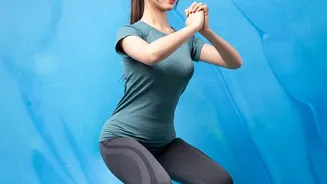
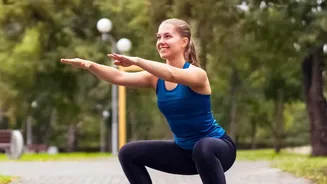
Here are the five exercises that make up your circuit. Focus on maintaining good form over speed. Remember, it's 45 seconds of work followed by 15 seconds of rest for each.1. Bodyweight Squats: Stand with your feet shoulder-width apart. Push your hips back and bend your knees as if you're sitting in a chair, keeping your chest up and back straight. Aim to get your thighs parallel to the floor before pushing through your heels to return to the start.2. Push-ups (or Knee Push-ups): Start in a plank position with your hands under your shoulders. Lower your body until your chest is just above the floor, keeping your back flat. Push back up to the starting position. For a modification, perform the exercise with your knees on the ground.3. Alternating Lunges: Step one foot forward and lower your hips until both knees are bent at a 90-degree angle. Ensure your front knee is directly above your ankle and your back knee hovers just off the floor. Push off your front foot to return to the start and alternate legs.4. Plank: Hold a position on your forearms with your body in a straight line from your head to your heels. Engage your core and glutes to prevent your hips from dropping. Keep your shoulders aligned directly over your elbows.5. Jumping Jacks: A classic cardio move to keep your heart rate up. Stand with your feet together and arms at your sides. Simultaneously jump your feet out to the sides while raising your arms overhead. Jump back to the starting position to complete one rep.
Make It Work for You
The beauty of a bodyweight circuit is its adaptability. If you're a beginner, don't be afraid to modify the movements. As mentioned, knee push-ups are a great alternative to standard ones. For squats and lunges, you can reduce the depth of the movement until you build more strength. If you find the pace too intense, you can extend the rest period to 30 seconds and reduce the work time to 30 seconds. Conversely, if you want more of a challenge, you can add an extra round of the circuit, aim for more repetitions within the 45-second window, or add explosive power, such as a small jump at the top of your squat.
Don't Forget the Cool-Down
After your final round, don't just stop moving. A cool-down is essential for helping your heart rate return to normal and improving flexibility. Spend three to five minutes performing static stretches. Hold each stretch for 20-30 seconds without bouncing. Focus on major muscle groups you just worked, such as a quadriceps stretch (holding your ankle and pulling your heel towards your glute), a hamstring stretch (sitting on the floor and reaching for your toes), and a chest stretch (clasping your hands behind your back and straightening your arms). This simple step aids in muscle recovery and can help reduce post-workout soreness, ensuring you’re ready for your next session.