






An Ambitious Plan for Protection
The Goa Forest Department has put forward a significant proposal to the Department of Environment and Climate Change, seeking to declare 24 beaches across the state as official turtle nesting sites. This list includes 10 beaches in North Goa and 14 in South
Goa. The move aims to bring these areas under the stringent Coastal Regulation Zone (CRZ) Notification, 2019, which would classify them as CRZ-I. This is the highest level of ecological protection, reserved for the most environmentally sensitive areas. The proposal dramatically expands beyond the four currently notified nesting sites of Morjim, Mandrem, Agonda, and Galgibag. The new list includes some of Goa's most popular tourist destinations like Calangute, Baga, Candolim, and Palolem, alongside lesser-known shores.
Why the Turtles Need a Lifeline
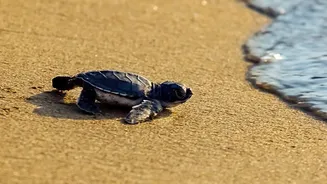
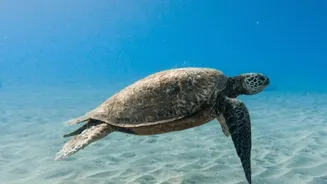
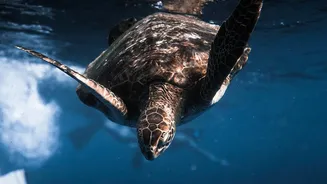
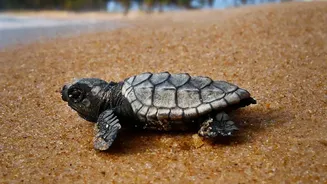
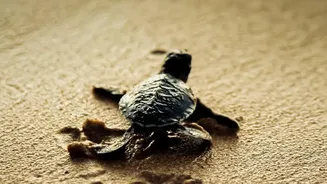
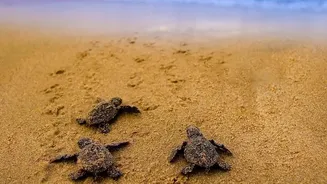
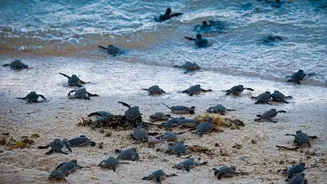
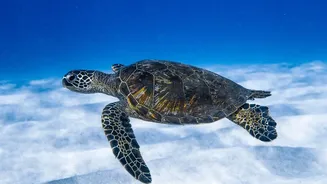
The driving force behind this proposal is the welfare of the Olive Ridley sea turtle, a species listed under the highest protection category of India's Wildlife (Protection) Act, 1972. These turtles arrive on Goan shores annually to lay their eggs, but their nesting habitats are under increasing pressure. Unregulated tourism, bright lights from beach shacks and resorts, loud music, and vehicle movement on the sand can disorient nesting females and emerging hatchlings, severely impacting their survival rates. Conservationists point to a recent decline in nesting numbers as a cause for alarm. For instance, while Morjim beach saw a significant number of nests and eggs, the overall count for the last season was lower than in previous years, highlighting the vulnerability of these ancient creatures. By designating these beaches as CRZ-I, authorities could impose stricter controls on activities that disrupt the natural nesting environment.
A Clash of Conservation and Commerce
The proposal has been met with significant concern from local communities whose livelihoods are deeply intertwined with beach tourism. Shack owners, hoteliers, and traditional fishermen worry that the new regulations could spell disaster for their businesses. John Lobo, Secretary of the Shack Owners Welfare Society, stated that declaring so many popular beaches as protected zones during the peak tourist season is not practical and could affect the entire tourism industry. Similarly, traditional fishing communities are concerned that restrictions could impact their age-old fishing practices. The core of their argument is not against protecting the turtles but a plea for a more balanced approach that allows for co-existence. Stakeholders are seeking clarity on the exact nature of the restrictions, whether they would be seasonal, and how existing activities might be managed rather than completely halted.
Understanding CRZ and What It Means
The Coastal Regulation Zone (CRZ) framework governs all development along India's vast coastline. CRZ-I, the category proposed for the turtle nesting sites, is the most restrictive. It applies to ecologically sensitive areas like mangroves, coral reefs, sand dunes, and the land between the high and low tide lines. Generally, no new construction is permitted in these zones. Activities like temporary tourism facilities, including beach shacks, may be allowed but are subject to strict regulation under an approved Coastal Zone Management Plan (CZMP). The proposed designation would give the Forest Department and the Goa Coastal Zone Management Authority (GCZMA) a stronger legal basis to regulate activities that could harm the nesting sites, such as controlling artificial lighting, noise levels, and construction.
The Path Forward: A Balancing Act
The Forest Department's proposal has been sent to the Environment Department for consideration. If it moves forward, it will likely be incorporated into Goa’s new Coastal Zone Management Plan (CZMP), a master document that maps and regulates coastal land use. The process involves navigating a complex web of environmental laws and stakeholder consultations. The GCZMA will play a crucial role in evaluating the proposal and making recommendations. The debate highlights a fundamental challenge for Goa: how to protect its precious ecological heritage while sustaining the tourism-driven economy that supports a significant portion of its population. The outcome will set a precedent for coastal management and wildlife conservation in one of India's most cherished destinations.