



Safety and Preparation First
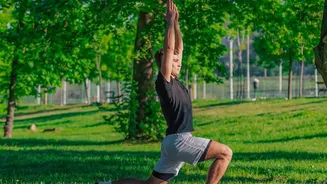
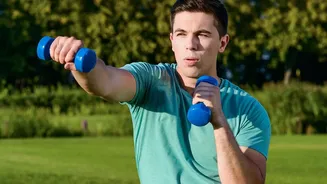
Before you jump in, take a moment to prepare. Always start with a dynamic warm-up for 5-10 minutes, including light jogging, jumping jacks, arm circles, and leg swings to get your muscles ready. Inspect any equipment before you use it; avoid anything
that is wet, broken, or feels unstable. Wear comfortable clothing without drawstrings that could get caught. And remember to be mindful of children playing—this is their space first and foremost, so always give them the right of way and work out during less busy hours if possible, like early mornings.
The Bench: Your All-in-One Station
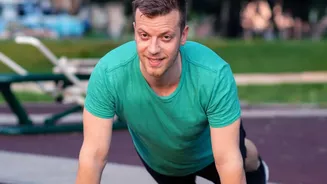
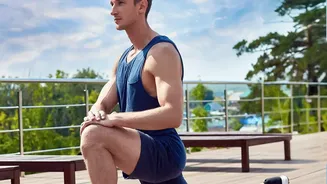
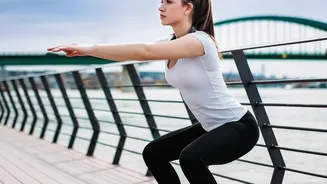
The humble park bench is one of the most versatile pieces of equipment available. Use it to target multiple muscle groups with these simple but effective exercises. 'Incline Push-Ups:' Place your hands on the seat of the bench and walk your feet back. This reduces the difficulty of a standard push-up, making it great for beginners. For a bigger challenge, place your feet on the bench and your hands on the ground for a decline push-up. 'Tricep Dips:' Sit on the edge of the bench and place your hands on either side of your hips. Slide your bottom off the bench and bend your elbows to lower your body, then push back up. To make it harder, straighten your legs and put your heels on the ground. 'Bulgarian Split Squats:' Stand a few feet in front of the bench and place the top of one foot on the bench behind you. Lower your hips until your front thigh is parallel to the ground, keeping your chest up. This is a fantastic exercise for leg strength and stability.
Monkey Bars for Upper Body Power
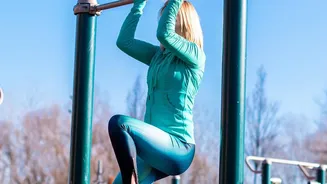
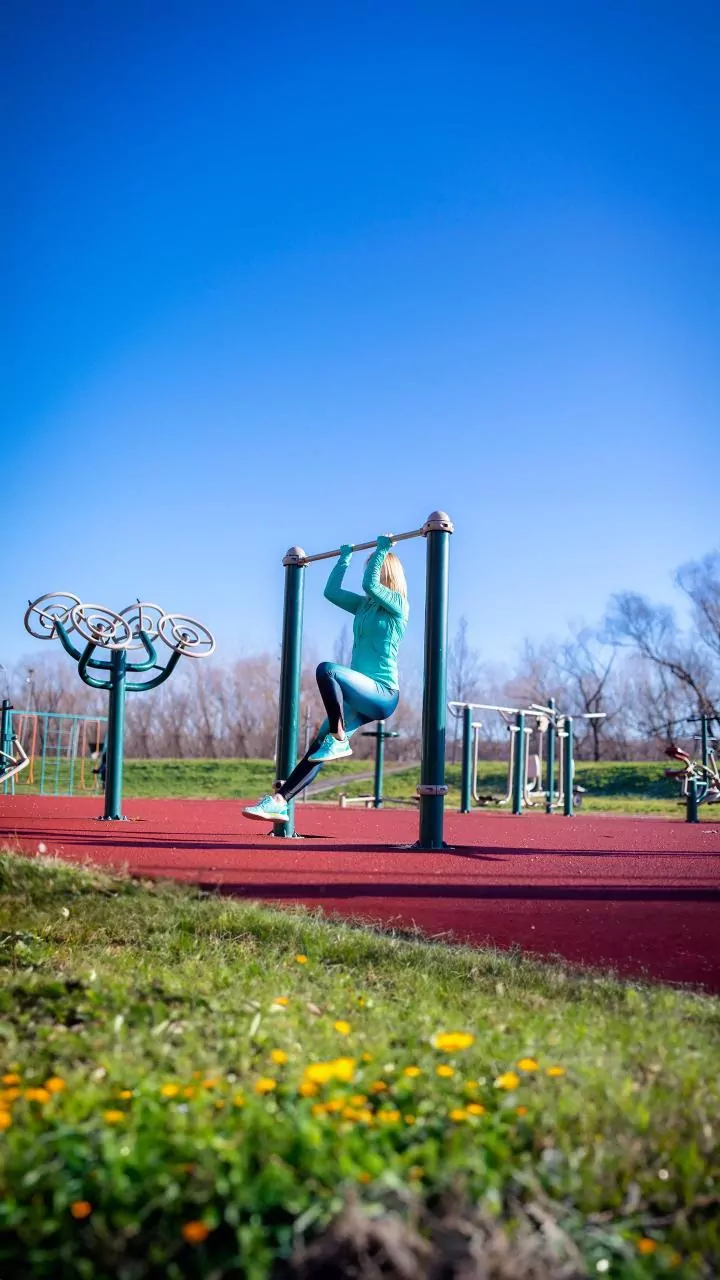
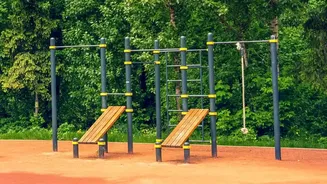
The monkey bars aren't just for kids. They are the perfect tool for building serious upper body and core strength. 'Pull-Ups:' A classic for a reason, pull-ups work your back and biceps. If a full pull-up is too difficult, start with a 'dead hang', simply hanging from the bar for as long as you can to build grip strength. You can also do 'negative pull-ups' by jumping to the top position and lowering yourself down as slowly as possible. 'Hanging Knee Raises:' While hanging from the bar, engage your core and slowly raise your knees towards your chest. This exercise is a powerful way to work your abdominal muscles without putting strain on your lower back. Lower your legs with control to complete the rep.
Swings for Core and Stability
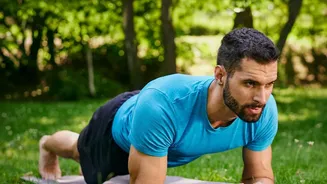
The instability of a swing makes it a surprisingly effective tool for challenging your core. The constant need to stabilize your body forces smaller, deeper muscles to engage. 'Plank Tucks:' Get into a plank position with your feet in the seat of a swing and your hands on the ground. Keeping your core tight, pull your knees in towards your chest, then extend them back out to the starting plank position. The movement of the swing will force your abs to work overtime to keep you balanced. 'Incline Push-Ups with a Twist:' Similar to the plank tuck, placing your feet in the swing during a push-up adds a significant stability challenge, engaging your core and shoulders more intensely.
Putting It All Together
Combine these movements into a circuit for a full-body workout. Try performing each exercise for 10-15 repetitions (or 30-60 seconds for holds like planks) and move from one to the next with minimal rest. After completing one full circuit of all the exercises, rest for 1-2 minutes, and then repeat the entire circuit 2-3 more times. Remember to cool down afterwards with a 5-10 minute walk and some static stretching, holding each stretch for 20-30 seconds. The key is consistency and listening to your body.