


A Prime Candidate for Life
For decades, Europa has captivated scientists. It is considered one of the most promising places in our solar system to find a currently habitable environment beyond Earth. The key lies in three essential ingredients for life as we know it: liquid water,
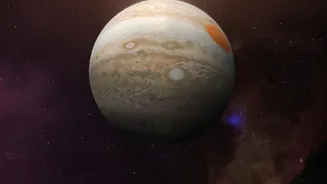
the right chemical elements, and a source of energy. Evidence strongly suggests Europa has all three. The Galileo spacecraft, which orbited Jupiter in the late 1990s, detected a magnetic field on Europa that is best explained by a global, salty ocean beneath its ice shell, which is estimated to be 100 km thick in total. This ocean is kept liquid not by the sun, but by heat generated from tidal flexing—the constant stretching and compressing of the moon by Jupiter's immense gravity. This internal heat could also drive chemical reactions on the seafloor, providing the energy needed for life.
Hunting for Habitability
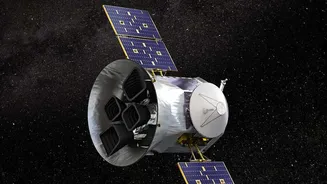
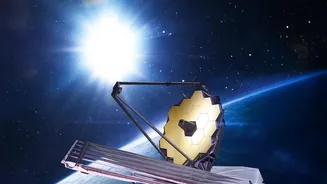
To investigate these tantalizing possibilities, NASA has dispatched the Europa Clipper spacecraft. Having launched in October 2024, its primary goal is not to find life itself, but to determine if Europa has environments that could support it. The spacecraft will enter a long, looping orbit around Jupiter and perform dozens of close flybys of Europa, some as low as 25 kilometres above the surface. It is armed with a sophisticated suite of nine instruments, including high-resolution cameras, spectrometers to determine the surface composition, and ice-penetrating radar to measure the thickness of the ice shell and search for subsurface lakes. By studying the moon's gravity and magnetic field, scientists hope to confirm the ocean's existence, depth, and salinity.
A Second Genesis?
The ultimate prize would be finding evidence of life, most likely microbial. If Europa has life, it would represent a second, independent origin of life from Earth's. This would be a monumental discovery, transforming biology from the study of a single example (life on Earth) into a comparative science. The key question is how these microbes might have evolved. On Earth, much of life relies on photosynthesis, but Europa's ocean is trapped in total darkness beneath kilometres of ice. Instead, life there would likely depend on chemosynthesis. This is a process where organisms derive energy from chemical reactions, similar to ecosystems found around hydrothermal vents on Earth's own deep ocean floors. These vents spew out chemical nutrients from the moon's rocky interior, which could fuel a biosphere.
Clues from an Alien Blueprint
Discovering Europan microbes would open a new window into evolution. Scientists would be desperate to know if they use DNA as their genetic material, like all known life on Earth. If they do, it might suggest that DNA is a universal standard for life, or perhaps that life was transferred between Earth and Europa billions of years ago. However, if these microbes have a completely different biochemistry—a novel way of storing information and building themselves—the implications would be even more profound. It would prove that there are multiple ways for life to emerge and evolve, dramatically expanding the range of environments we could consider habitable on exoplanets throughout the galaxy. Even the specific chemicals and metabolic pathways used by these microbes would offer a priceless blueprint for how life adapts to cold, dark, high-pressure ocean worlds.
The Meaning of an Empty Ocean
Of course, Europa Clipper might find that Europa's ocean is sterile. But even a null result would be incredibly valuable. If a world with abundant liquid water, essential chemical elements, and energy sources fails to produce life, it tells scientists that the spark of life might be rarer or require more specific conditions than previously thought. This would help refine our search for life elsewhere, forcing a re-evaluation of what makes a planet truly habitable. The mission could also uncover hazards, such as a highly acidic or excessively salty ocean, that could prevent life from starting or surviving. Either way, the answers hidden beneath Europa's ice will fundamentally shape our understanding of our place in the cosmos.