






Your Body’s Hidden Schedule
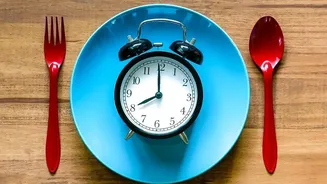
Deep inside your body, a master clock is ticking. Known as your circadian rhythm, this 24-hour internal cycle tells you when to feel sleepy and when to be alert. But it's not just in your brain. Nearly every organ, including your gut, liver, and pancreas,
has its own 'peripheral' clock. These clocks are programmed to be most active during the day, when your body is primed for digestion, nutrient absorption, and efficient metabolism. At night, these processes naturally slow down as the body prepares for rest and repair. This elegant system works beautifully until it’s forced to operate on a different schedule.
When Your Shift Fights Your Biology
Shift work creates a fundamental conflict between your work schedule and your body’s natural rhythm. When you eat a large meal at 2 a.m., your digestive system is essentially being woken from a slumber. At this time, your body’s production of digestive enzymes slows, your insulin sensitivity drops, and your metabolism is less efficient. This mismatch is why many shift workers experience a host of digestive issues, including heartburn, bloating, constipation, and gas. Your body isn't designed to process a heavy meal when it expects to be fasting, leading to discomfort and a cascade of metabolic consequences.
The Metabolic Price of Night Eating
The impact of eating out of sync with your circadian clock extends beyond immediate digestive upset. Studies show that shift workers have a higher risk of developing metabolic syndrome, a cluster of conditions that includes high blood pressure, elevated blood sugar, and weight gain. Eating late at night can disrupt appetite-regulating hormones, making you feel hungrier while simultaneously burning fewer calories. The same meal eaten at 2 a.m. can cause a much larger spike in blood sugar than if it were eaten in the evening, contributing to insulin resistance and a higher risk for type 2 diabetes over time.
The Power of Time-Restricted Eating
The most powerful strategy to counter these effects is aligning your eating schedule as closely as possible with a typical day-night cycle, a practice known as time-restricted eating (TRE). This doesn't mean you have to starve yourself during your shift. Instead, it involves consolidating your food intake into a consistent daily window and avoiding large meals during the biological night (especially between midnight and 6 a.m.). Research shows that even when sleep schedules are disrupted, restricting meals to daytime hours can reduce circadian misalignment and protect against the negative metabolic outcomes associated with night work.
A Practical Meal Plan for Night Shift
So, how do you apply this in real life? The key is to front-load your nutrition. Eat your largest, most balanced meal 1-2 hours before your shift begins. For a 7 p.m. to 7 a.m. shift, this would be your main dinner around 5 or 6 p.m. During your shift, especially after midnight, focus on smaller, lighter snacks. If you feel hungry, opt for something that’s easy to digest. A light meal before you go to sleep in the morning should be minimal to avoid disrupting your rest. Think of it as a small 'breakfast' before your main 'night' of sleep.
What to Eat During Your Shift
When you do eat overnight, quality matters as much as quantity. Your digestive system is sluggish, so choose foods that aren't a heavy lift. Focus on protein and fibre to stay full and maintain steady energy. Good options include Greek yogurt, hard-boiled eggs, a small handful of nuts, vegetable sticks with hummus, or a protein-rich soup. Avoid sugary snacks, fried foods, and heavy carbohydrates, which can cause energy crashes and digestive distress when your body is least equipped to handle them.