

Your Simple Stargazing Toolkit
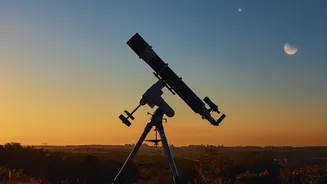
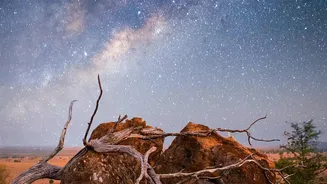
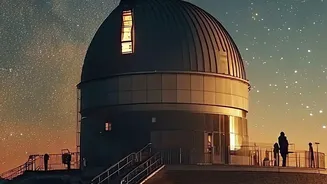
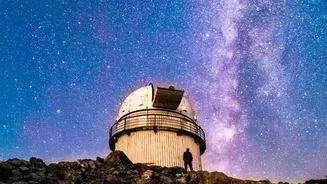
Forget complex equipment. Your best tools are your eyes, a little patience, and a few simple aids. Start by finding a location away from city lights. The darker the sky, the more you'll see. Allow your eyes 20-30 minutes to fully adapt to the darkness;
avoid looking at your bright phone screen. Many stargazing apps have a red-light mode to preserve your night vision. A pair of standard binoculars can dramatically enhance your view, revealing craters on the Moon and the moons of Jupiter. Finally, dress in warm layers. The best celestial shows often happen late at night when temperatures drop.
Planet-Spotting: Saturn Takes Center Stage
October 2026 is a fantastic month for planet watchers. The star of the show is Saturn, which reaches opposition on October 4. This means Earth is directly between Saturn and the Sun, making the ringed planet appear at its brightest and largest for the year. It will be visible all night long, rising around sunset. While you’ll need a telescope to see its famous rings, Saturn will be unmistakable to the naked eye as a bright, steady, yellowish point of light. Later in the night, look to the east for two other bright wanderers: reddish Mars and brilliant Jupiter, which rise in the early morning hours.
Catch a Shooting Star: Two Meteor Showers
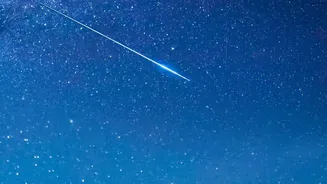
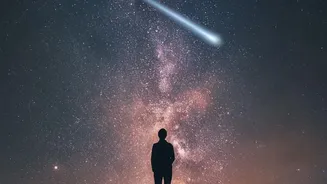
October offers two chances to see shooting stars. First up is the Draconid meteor shower, which peaks on the evening of October 8-9. This is a minor shower, but viewing conditions are excellent in 2026 with no bright moonlight to wash out the display. Unlike most showers, the Draconids are best viewed in the early evening, right after nightfall. Later in the month, look for the Orionids, which peak on the mornings of October 21-22. These are fast, bright meteors created by debris from Halley's Comet. A bright Moon will interfere in the evening, but it sets after midnight, creating a dark window for prime viewing in the pre-dawn hours. For either shower, find a dark spot, lie back, and look up; no special equipment is needed.
Connect the Dots: Legendary Constellations
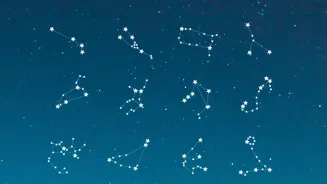
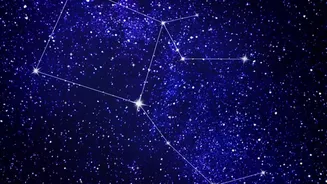
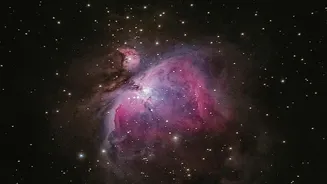
The autumn sky is filled with famous star patterns. One of the easiest to spot is Cassiopeia, which looks like a giant 'W' in the northern sky. It's visible all evening and is a great landmark for navigating. Another must-see is the 'Summer Triangle', still high overhead in the evening. It's not a constellation but an asterism formed by three brilliant stars from different constellations: Vega, Altair, and Deneb. As the night progresses, the iconic constellation Orion the Hunter will begin to rise in the east after midnight. Its most recognizable feature is the three bright stars that form Orion's Belt, a sight that has captivated stargazers for millennia.
Beyond the Full Moon
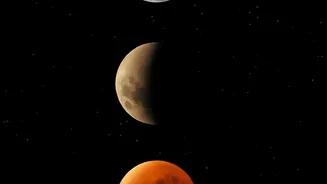
While the full Hunter's Moon on October 26 will be an impressive sight, the Moon is often more interesting to observe when it’s not full. During its crescent or quarter phases, sunlight hits the lunar surface at an angle, casting long shadows that make craters and mountains stand out in sharp relief, especially along the terminator—the line separating the lit and dark portions. With just a pair of binoculars, you can explore this rugged, three-dimensional landscape. Also, on the morning of October 5, early risers can see a beautiful pairing of the crescent moon with the planet Mars in the eastern sky.