

The Universe Our Eyes Can See
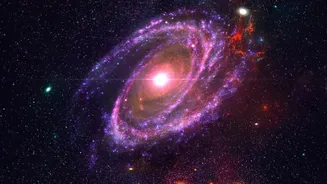
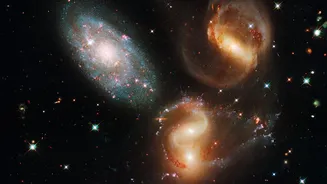
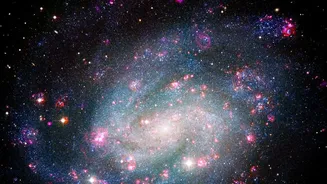
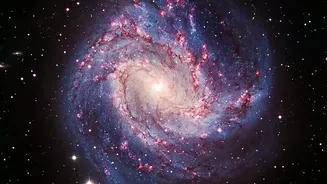
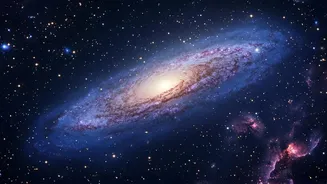
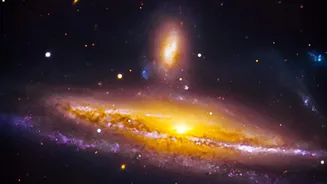
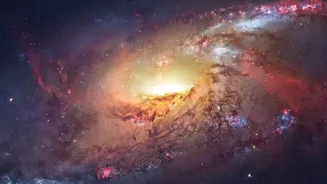
For centuries, our understanding of the cosmos was limited to what we could observe in visible light—the same spectrum of light our eyes detect. Telescopes like the Hubble Space Telescope have captured breathtaking images of spiral arms, bright galactic
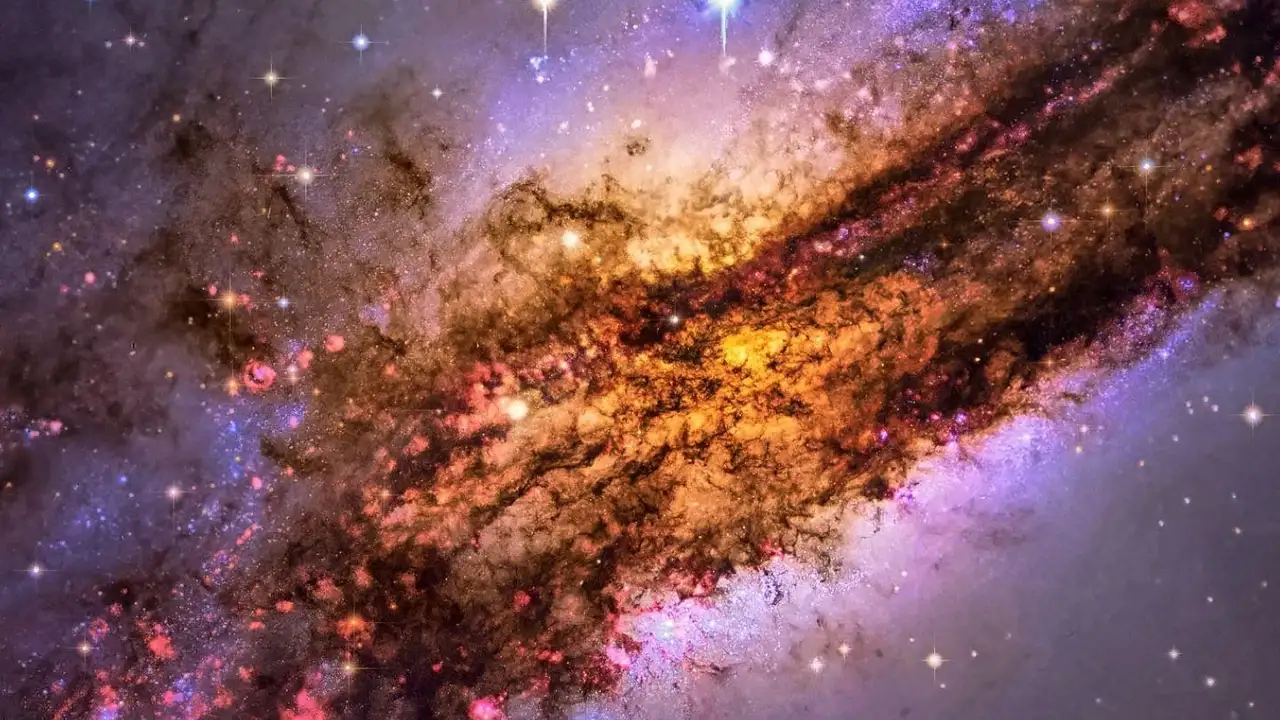
cores, and the distinct shapes of galaxies millions of light-years away. These images show us where the hot, young stars are blazing and give us a sense of a galaxy's overall form. However, this view is fundamentally incomplete. Much like how fog can obscure a landscape, vast clouds of cosmic dust and gas block our view, hiding crucial parts of the galaxy from sight. This dust, made of tiny particles, absorbs and scatters visible light, effectively drawing a curtain over some of the most dynamic regions in the universe.
Seeing Through the Cosmic Veil
This is where infrared light changes everything. Infrared is a form of light with longer wavelengths than visible light, which we experience as heat. Because of its longer wavelength, infrared radiation can pass through cosmic dust clouds that would otherwise appear opaque. This allows astronomers to peer into regions that are completely hidden in visible-light images. The effect is transformative. An area that looks like a dark, empty patch in a visible-light photo can, in an infrared image, resolve into a brilliant, glowing nursery of newborn stars. This capability doesn't just add missing details; it reveals entirely different processes and structures, offering a more complete narrative of how a galaxy lives and breathes.
Revealing the Galaxy's Engine Room
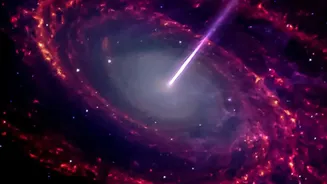
Some of the most dramatic revelations from infrared astronomy come from its ability to uncover star formation. Stars are born inside dense, cold clouds of gas and dust. These stellar nurseries are almost entirely invisible to optical telescopes. In infrared, however, the heat emitted by protostars and young, energetic stars makes these regions glow intensely. Instruments like those on the James Webb Space Telescope (JWST) can resolve individual stars forming within these dusty cocoons, showing jets of material being ejected and detailing the chemical makeup of the environment. Furthermore, infrared light allows us to see the glow of older, cooler stars that are less prominent in visible light, providing a better map of a galaxy's total mass and history. It can even help identify the telltale signs of a central supermassive black hole.
The Tools for a New Perspective
This new view of the universe is made possible by sophisticated space-based observatories. While some infrared astronomy can be done from high-altitude ground locations, our planet's atmosphere absorbs most infrared radiation, making space the ideal vantage point. Telescopes like the now-retired Spitzer Space Telescope and the incredibly powerful James Webb Space Telescope were specifically designed to operate in the infrared spectrum. JWST, with its massive mirror and advanced instruments, has provided the deepest and sharpest infrared images of the universe to date. By capturing light that has traveled for billions of years and passed through cosmic dust, it allows astronomers to study the earliest galaxies and understand the complete cycle of star and planet formation, from dusty cloud to mature solar system.