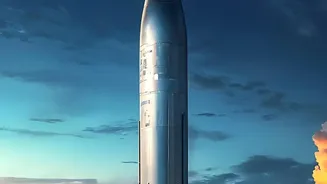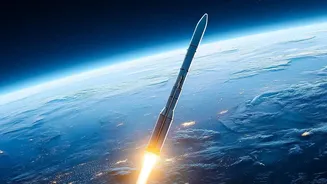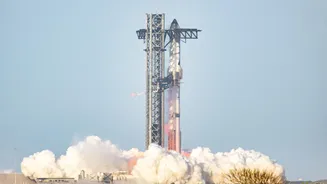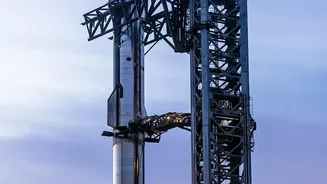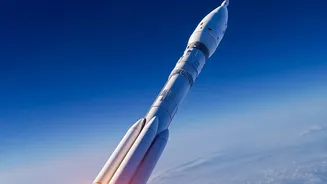

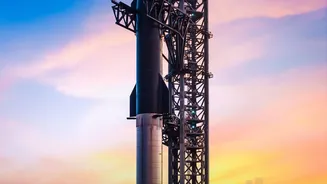
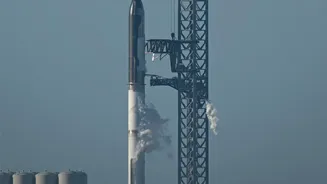
In a dramatic display of failure and success, SpaceX's latest Starship mission saw its massive booster rocket lost, yet ended with the historic first-ever catch of the orbital spacecraft, marking a pivotal moment for reusable rocket technology.
An Ambitious Double-Header
The mission
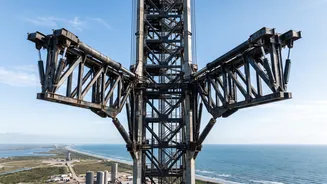
on November 13, 2026, known as Starship Flight 15, was one of SpaceX's most ambitious tests to date. The goal was nothing short of revolutionary: to launch the world's most powerful rocket, have both its giant first-stage booster and its upper-stage spacecraft return to the launch site, and catch both in mid-air using the mechanical arms of the launch tower, nicknamed 'Mechazilla'. A successful 'double-catch' would have been a world-first, demonstrating the complete reusability that is central to the company's long-term business model of dramatically lowering the cost of access to space. The flight plan involved the Super Heavy booster returning just minutes after launch, while the Starship spacecraft would complete 14 orbits of Earth over 22 hours before its own daring catch attempt.
The Booster's Final Flight
The first half of this ambitious plan went awry shortly after a spectacular liftoff from Starbase, Texas. The Super Heavy booster, designated Booster 22, successfully separated from the Starship upper stage and began its journey back to the launch site. However, an anomaly occurred during its return sequence. The rocket's guidance, navigation, and control (GNC) system detected that the booster was not in the correct position to ensure a safe catch by the tower. Acting as designed, the system automatically aborted the landing attempt and redirected the booster for a splashdown in the Gulf of Mexico, where it was intentionally destroyed just above the water's surface. This setback meant the dream of a full rocket recovery would have to wait for another day.
The Ship's Orbital Triumph
While the booster's fate was sealed, the mission for the Starship spacecraft, Ship 42, was just beginning. It successfully continued to its planned low-Earth orbit, a significant achievement in itself. During its nearly day-long journey in space, the spacecraft accomplished a key commercial objective by deploying 26 of SpaceX's next-generation Starlink V3 satellites. The vehicle completed 14 full orbits of the planet, the longest and most complex flight for a Starship to date, with all systems performing well enough to greenlight the unprecedented landing attempt. This flawless orbital performance set the stage for the mission's dramatic conclusion.
A Historic Catch
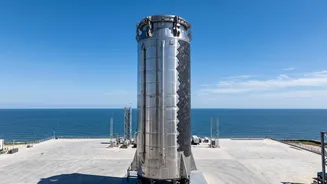
On the afternoon of November 14, after more than 22 hours in orbit, Ship 42 began its fiery descent through Earth's atmosphere. It flew across Mexico and the United States before aligning itself with the launch tower at Starbase. In a maneuver never before successfully completed in the history of spaceflight, the massive 171-foot-tall spacecraft descended precisely into the grasp of the tower's 'chopstick' arms. The successful catch marked the first time an orbital-class upper stage has been recovered in this manner, a monumental step toward making a rocket system fully and rapidly reusable. The moment was hailed as a landmark achievement, validating a core tenet of SpaceX's engineering philosophy.
Why This Partial Success Matters
In the world of iterative development, a test that ends with a mixed result can still be a massive leap forward. While the loss of the Super Heavy booster was a setback, the successful catch of the Starship upper stage is arguably the more critical and difficult achievement. Recovering the upper stage, which endures the extreme heat of atmospheric reentry from orbital velocities, is a far greater technical challenge than recovering the suborbital booster. This success provides SpaceX with invaluable data and proves that the most complex part of their reusability architecture is viable. It moves the company significantly closer to its goal of a transportation system that can launch, land, and relaunch in short order, a capability essential for its Starlink satellite business and NASA's plans to return astronauts to the Moon.