



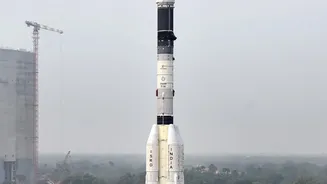

The Ultimate Safety Net
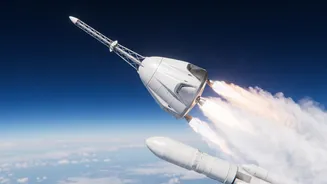
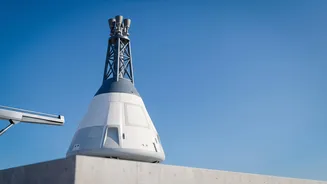
Before Indian astronauts, or 'Gaganauts', can launch into orbit, ISRO must be certain it can bring them back safely, especially if something goes wrong. This is the job of the Crew Escape System (CES) and the complex sequence of parachutes. The CES is essentially
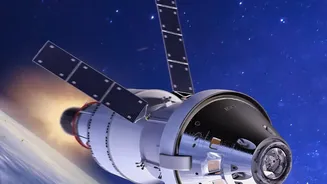
a powerful, quick-acting rocket motor system designed to pull the crew capsule away from the main rocket in case of an emergency during launch or ascent. Think of it as the most advanced ejection seat ever built. Once the capsule is clear, or after it completes its mission and re-enters the atmosphere, a sophisticated parachute system takes over to slow it down for a gentle splashdown in the ocean. Every part of this process must be flawless, and that’s why ISRO’s recent test successes are so significant.
A Gauntlet of Successful Tests
In recent months, ISRO has methodically tested several key components essential for astronaut safety. In July 2026, the agency successfully conducted a series of crucial qualification tests. One major achievement was the fifth Integrated Main Parachute Airdrop Test (IMAT-5), where a simulated crew module was dropped from an aircraft at an altitude of 2.5 kilometres to validate the main parachute's strength and deployment sequence under maximum expected loads. Other vital tests included a float inflation test for the Crew Module Up-righting System (CMUS), which ensures the capsule flips to the correct orientation after splashing down in the sea. Another confirmed that the umbilical cord connecting the crew and service modules separates cleanly before re-entry, a moment where any snag could be disastrous. ISRO also tested the capsule's structural strength to ensure it can withstand the force of the apex cover being jettisoned to deploy the parachutes.
Why Every Test Is a Milestone
Human spaceflight is exponentially more difficult than robotic missions. While a satellite failure is a financial loss, a human mission failure is a national tragedy. This is why the Gaganyaan program is built on a foundation of exhaustive testing. The deceleration system alone uses 10 parachutes of four different types, from small drogue parachutes that provide initial stability to three massive main parachutes that slow the capsule for a soft landing. Each airdrop test, like the recent IMAT-5, validates that this complex choreography works perfectly. These qualification trials are deliberately designed to push the hardware beyond the stresses of an actual flight. By surviving these brutal ground tests, the systems earn their right to fly, giving ISRO and the nation confidence in the mission's safety.
The Path Forward to Launch
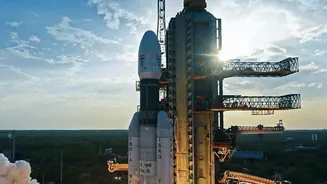
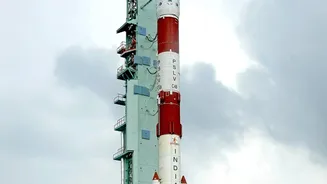
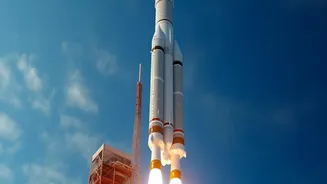
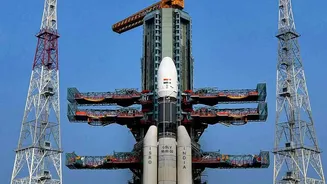
These successful tests are critical steps on the path to the first uncrewed Gaganyaan mission, known as G1, which ISRO aims to launch within the next few months. The G1 mission will be a full dress rehearsal without astronauts, testing the performance of the human-rated LVM3 rocket, the Crew Module's life support systems, and the re-entry and recovery procedures in real-world conditions. This will be followed by at least one more uncrewed mission. One of these flights will carry Vyommitra, a humanoid robot, to simulate human functions and monitor the cabin environment. Only after these uncrewed flights are completed successfully will ISRO proceed with the first crewed mission, which is tentatively scheduled for 2027.