
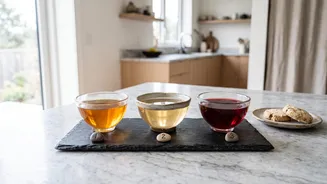

Why a Blind Tasting?
A blind tasting strips away all preconceptions. When guests don't know the tea's name, price, or origin, they are free to experience it without bias. The focus shifts entirely to the senses: the aroma of the dry leaves, the colour of the brewed liquor,
and the complex flavours on the palate. This approach encourages conversation and allows everyone, from tea novices to seasoned drinkers, to discover what they truly enjoy based purely on taste. The goal isn't to guess correctly, but to explore and share a sensory journey together.
Choosing Your Teas
The key to a successful tasting is a thoughtful selection of teas. Aim for three to five different varieties; this provides enough contrast without overwhelming the palate. For a cohesive experience, choose a theme. You could explore teas from a single category, such as a flight of black teas (like Assam, Darjeeling, and Keemun) or green teas (like Sencha and Dragon Well). Another popular theme is comparing teas from different regions or processing styles. If you mix types, always arrange the tasting from the lightest teas (like white or green) to the boldest (like oolong or black) to prevent stronger flavours from masking delicate ones.
Gathering Your Essentials
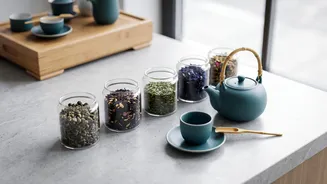
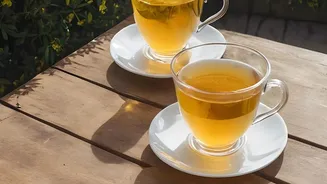
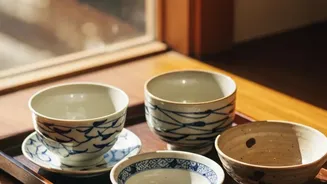
You don't need a lot of specialised equipment to host a beautiful tasting. Most of what you need is likely already in your kitchen. Gather a kettle for hot water, a timer, and a steeping vessel for each tea, such as a small teapot or an infuser. For serving, you’ll need small, matching cups for each guest; white or light-coloured ceramic is ideal as it allows everyone to clearly see the tea's colour. Also, prepare notepads and pens for guests to jot down their impressions. Finally, have still water and plain, unsalted crackers on hand to act as palate cleansers between teas.
Setting the Stage
Preparation is what makes the event feel special and run smoothly. Before guests arrive, arrange your tasting station. Assign a number or letter to each tea and keep the identities hidden. You can write the key down on a piece of paper and seal it in an envelope for a dramatic reveal later. Set out a small dish of the dry leaves for each tea so guests can observe their appearance and aroma before brewing. You can also create simple tasting sheets with prompts for notes on appearance, aroma, flavour, and mouthfeel to help guide your guests' observations.
Guiding the Tasting Experience
Once your guests have arrived, it's time to begin. Brew the teas one at a time, ensuring you use the correct water temperature and steeping time for each type. As each tea is ready, pour a small amount for each guest. Guide them through a four-step sensory process: first, observe the colour of the brewed liquor. Second, inhale the aroma, both from the pot and the cup. Third, take a sip. Encourage a loud slurp—this aerates the tea and helps reveal its full range of flavours. Ask guests to notice the texture and how it feels in their mouth. Finally, discuss the finish, which is the taste that lingers after swallowing.
The Grand Reveal and Final Thoughts
After tasting all the teas and discussing everyone's notes and preferences, it's time for the grand reveal. Open the envelope and share the identity of each tea. It's always fun to see how perceptions matched up with reality and which teas were surprise favourites. Emphasise that the point of the exercise was the shared experience, not a test of expertise. Often, the most memorable part of the tasting is the conversation and connection it inspires. You can even offer small bags of the favourite tea as a take-home party favour.