


The Reward for Patience
The first tool for any aspiring stargazer isn't a telescope, but patience. Our eyes, accustomed to screens and city lights, need time to adjust to the dark. Experts say it takes about 20 to 30 minutes for your eyes to become fully dark-adapted. This is when
the magic happens: faint stars begin to appear, the Milky Way starts to resolve from a faint cloud into a river of light, and the true depth of the sky reveals itself. Think of this waiting period not as a delay, but as a form of meditation. Put away your phone—its white light can reset your night vision in an instant—and simply let the darkness envelop you. Use a red-light torch if you need to see, as red light is less disruptive to your night vision. This quiet acclimatisation is the first step to transforming a simple glance into a profound experience.
Your Celestial Map for July
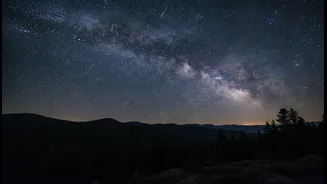
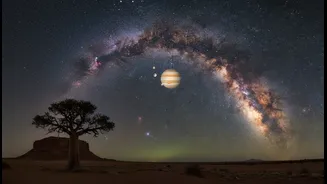
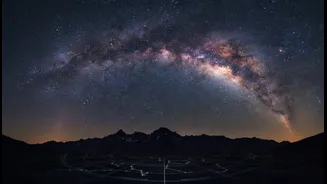
Once your eyes are ready, you’ll need a map. Thankfully, July 2026 offers a sky full of celestial landmarks visible from India, though the monsoon clouds may demand flexibility. The New Moon on July 14 provides the darkest skies, making it the best window for deep-sky viewing. This is the ideal time to hunt for the faint glow of the Milky Way, which arches across the summer sky with its bright core sitting in the constellation Sagittarius. Throughout the month, planets also put on a show. Look for a beautiful pairing of the crescent Moon and dazzling Venus in the western sky just after sunset around July 17. For early risers, a delicate celestial triangle forms on the morning of July 11, with the crescent Moon, reddish Mars, and the sparkling Pleiades star cluster visible in the east before sunrise. The red giant star Antares, the heart of the Scorpius constellation, will also be a prominent sight, with the Moon passing nearby on July 24-25. Phone apps like Star Walk or SkyView can act as interactive star maps, helping you identify these objects in real time.
The Annual Shooting Stars
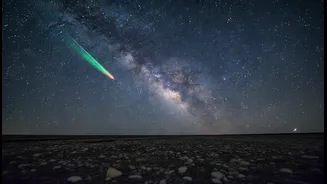
July also marks the arrival of annual meteor showers. The main event is the Southern Delta Aquariids, which are active from mid-July to late August. These meteors are known for being faint but steady. Unfortunately, their peak on the nights of July 30-31 coincides with a nearly full Moon, which will wash out all but the brightest meteors. A second shower, the Alpha Capricornids, also peaks at the same time and is known for producing occasional bright fireballs. Don't be discouraged by the Moon; while the peak might be challenging, you can still catch meteors in the week leading up to it during moon-free hours after midnight. The key is to find a comfortable spot, lie back, and look up. No special equipment is needed, just a wide view of the sky.
The Essential Hunt for Darkness
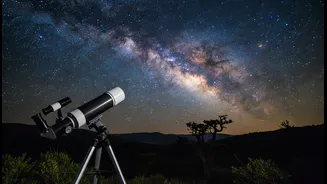
The final and most crucial ingredient is less light. Light pollution from our cities is the biggest obstacle to good stargazing, washing out all but the brightest stars and planets. But you don’t necessarily need to travel to a remote Dark Sky Reserve in Ladakh or the salt flats of Kutch, though those places offer world-class views. Even a short drive to the outskirts of your city can make a dramatic difference. Look for a local park, a hilltop, or any spot away from the direct glare of streetlights. Even from a city rooftop or balcony, you can still see plenty. The Moon, bright planets like Venus and Saturn, and major constellations are all visible through city skies. The trick is to block as much direct light as possible and give your eyes the time they need to adjust. The less light pollution there is, the more of the universe's splendour you will be able to see.