


A Home Beyond Earth
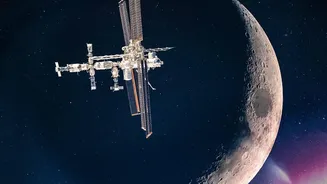
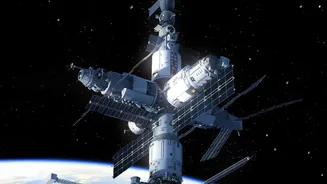
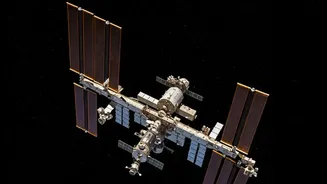
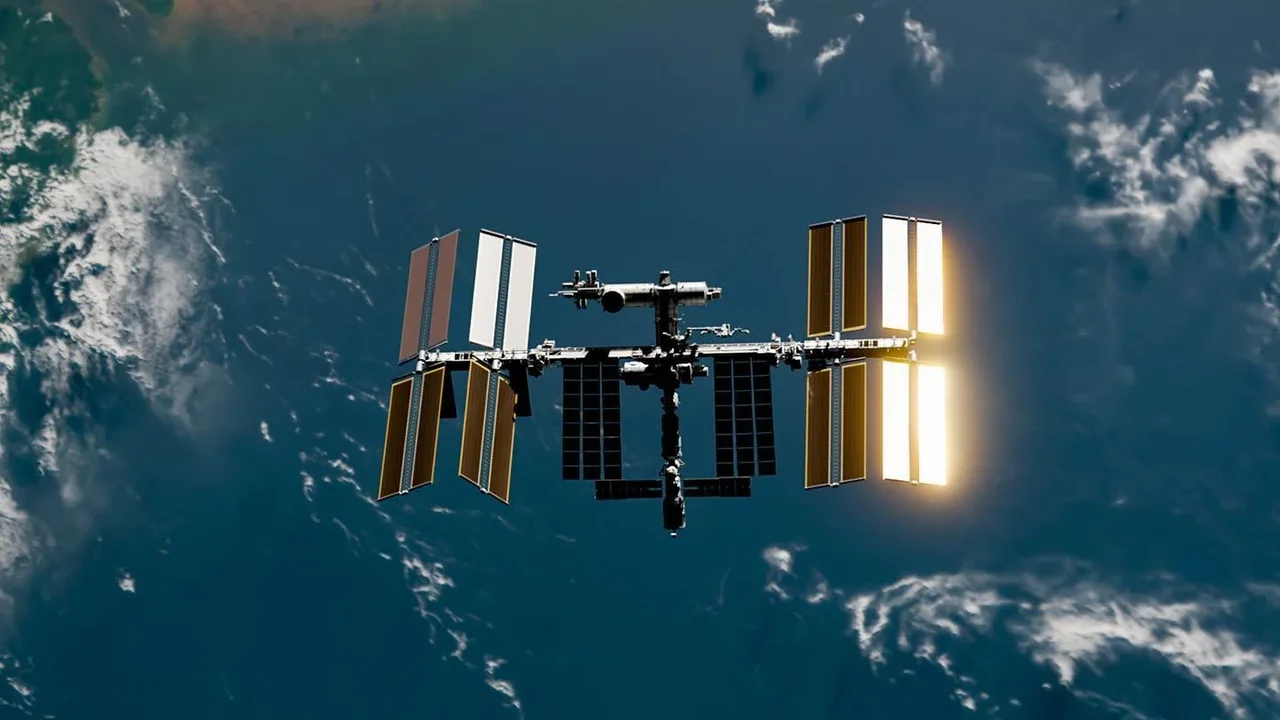
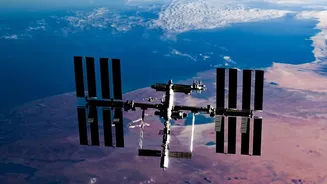
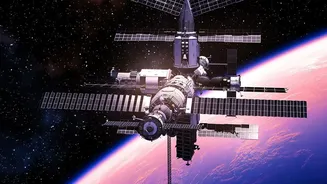
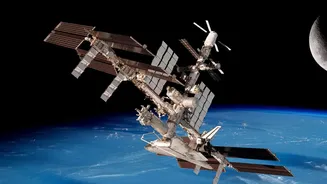
The Bharatiya Antariksha Station (BAS) represents the logical evolution from short-term space visits to a sustained human presence in Low Earth Orbit. Planned as a modular, 52-tonne orbiting outpost, it will circle the Earth at an altitude of about 400-450
kilometres. While the Gaganyaan mission is designed to carry a crew for a few days, the BAS is being developed to house astronauts for long-duration stays of three to six months. This allows India to join an exclusive club of nations with the capability to keep humans in space for extended periods, a foundational requirement for all future deep-space exploration. The project is planned to be developed in phases, with the first module, BAS-01, targeted for launch by 2028 and the entire five-module station expected to be operational by 2035.
A Laboratory in Microgravity
One of the station's primary roles is to serve as a unique scientific laboratory. On Earth, gravity influences every physical and biological process. In the microgravity environment of the BAS, scientists can conduct experiments that are impossible to replicate on the ground. This includes research in biotechnology, materials science, medicine, and fluid dynamics. For instance, studying how human cells, crystals, or metal alloys behave without the pull of gravity can lead to breakthroughs in drug development and the creation of novel materials. The station will also allow ISRO to study the long-term effects of space on the human body, such as muscle atrophy and bone density loss, which is critical for ensuring astronaut health on future long-haul missions.
The Gateway to the Moon and Beyond
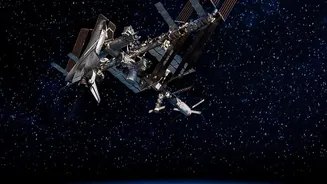
The Bharatiya Antariksha Station is not an end in itself, but a crucial stepping stone for India’s grander ambitions, including a crewed lunar landing by 2040. Complex missions to the Moon or Mars require technologies and procedures that are best tested closer to home. The BAS will function as a vital testbed for these systems. Key technologies like spacecraft docking, in-orbit refueling, life support systems designed for long-term use, and robotic arms can be trialed and perfected. Every time a Gaganyaan capsule docks with the station, or when astronauts practice extravehicular activities (spacewalks), ISRO will gain invaluable experience. This makes the station an essential bridge between mastering Low Earth Orbit and venturing out to other celestial bodies.
Fostering a Self-Reliant Space Ecosystem
Developing a space station is a monumental undertaking that stimulates technological innovation across the board. The project will drive growth in India’s indigenous high-tech manufacturing and encourage greater participation from the private sector. From advanced life support systems to sophisticated docking mechanisms like SpaDex (Space Docking Experiment), the BAS requires the development of a host of cutting-edge technologies. This not only enhances India’s strategic autonomy in space but also boosts its share in the global space economy. The skills and industrial capacity built for the station will create a robust ecosystem that can support a wide range of future space endeavours, solidifying India's position as a major spacefaring nation.