






The Science of a Winter Warm-Up
Exercising in the cold presents unique challenges. Low temperatures cause blood vessels to constrict, reducing blood flow to your extremities to conserve core body heat. This leaves muscles, tendons, and ligaments colder and less flexible than usual,
making them more susceptible to strains, sprains, and tears. A dedicated warm-up is designed to counteract this. By gradually increasing your heart rate and internal body temperature, you boost circulation, delivering oxygen-rich blood to the muscles you're about to use. This process not only makes muscles more pliable and responsive but also enhances coordination and power, setting you up for a better, safer workout.
Start Your Warm-Up Indoors
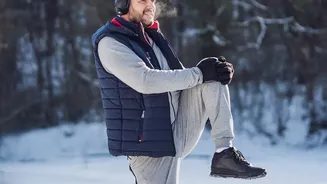
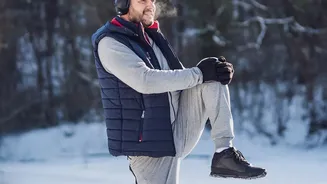
Don't wait until you're already shivering to begin your warm-up. Taking five to ten minutes to move inside your home can make a significant difference. This initial phase allows you to elevate your core temperature in a comfortable environment before you expose your body to the shock of the cold. Begin with simple, gentle movements that engage your whole body. Think marching in place, high knees, butt kicks, or arm circles. The goal isn't to break a sweat but to gently wake up your system and get the blood flowing, preparing your body for the next stage of the warm-up once you step outside.
Prioritise Dynamic Stretching
The long-held practice of holding a stretch for 30 seconds, known as static stretching, is best saved for your post-workout cool-down. Before a cold-weather workout, the focus should be on dynamic stretching. This involves active, controlled movements that take your muscles and joints through a full range of motion. Unlike static stretching, which can be counterproductive on cold muscles, dynamic movements actively increase muscle temperature and activate the specific muscle groups you'll be using. This 'active preparation' not only improves flexibility but also enhances body awareness and coordination, which are crucial for navigating potentially slippery winter surfaces.
Focus on Joint Mobility
Cold weather can make joints feel particularly stiff as the synovial fluid that lubricates them becomes more viscous. A good warm-up should include targeted mobility drills for the key joints involved in your activity. For runners and walkers, this means focusing on the hips, knees, and ankles. Exercises like leg swings (forward-and-back and side-to-side), hip circles, and ankle rotations are excellent choices. These movements prepare the joints for impact and improve their range of motion, helping you move more smoothly and efficiently while reducing the risk of sprains or other joint-related injuries.
Mimic Your Workout Movements
One of the most effective warm-up strategies is to rehearse the movements of your planned activity at a much lower intensity. If you're going for a run, start with a brisk walk that gradually progresses into a very light jog. If you're planning a bodyweight circuit, perform a few reps of each exercise (like squats or lunges) without any weight and with deliberate, controlled form. This technique prepares the specific neuromuscular pathways your brain and muscles will use during the workout, improving efficiency and ensuring the right muscles are firing from the get-go.
Dress in Smart Layers
While not an exercise, your clothing is a critical part of your warm-up strategy. Dressing in layers allows you to regulate your body temperature effectively. Start with a moisture-wicking base layer to pull sweat away from your skin, add an insulating middle layer for warmth, and top it with a waterproof or windproof outer shell. As your body heats up during the workout, you can remove a layer to avoid overheating. This system helps keep your muscles warm and functional throughout, preventing the dangerous cycle of getting sweaty and then rapidly cooling down, which can lead to muscle tightness and injury.