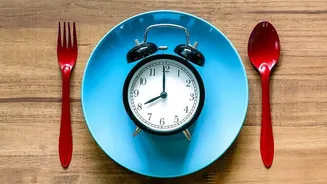








Your Body's Internal Clock
Deep inside your brain is a master clock, known as the suprachiasmatic nucleus (SCN). This clock operates on a roughly 24-hour cycle, governing everything from your sleep-wake patterns to hormone release and metabolism. It takes its primary cues from light.
But it's not the only clock in your body. Your organs, including your liver, pancreas, and gut, have their own 'peripheral' clocks. While the master clock in the brain responds to light, these organ clocks are most strongly influenced by another powerful signal: food intake. In an ideal world, all these clocks are synchronised, working together in perfect harmony, telling your body when to be active and when to rest and repair.
How Shift Work Creates 'Metabolic Jet Lag'
Shift work forces you to live against your body's natural programming. When you work, eat, and stay active at night, you create a conflict between your brain's clock and your organ clocks. Your brain sees darkness and wants the body to wind down, but the food you eat at 2 a.m. tells your digestive system it's time to get to work. This desynchronisation is often called circadian misalignment, or a kind of 'metabolic jet lag'. This internal conflict is not just a matter of feeling tired; it is a major stressor on the body. Research has consistently linked shift work to a higher risk of developing metabolic issues, including obesity, type 2 diabetes, and heart disease.
The Problem with Nighttime Eating
Eating at night, a common practice for shift workers, is at the heart of the problem. Your body simply isn't designed to process food efficiently in the middle of the night. During the night, your pancreas is less prepared to release insulin, the hormone that manages blood sugar. As a result, your ability to tolerate glucose is impaired. A pivotal study involving simulated night work found that participants who ate during the night saw their average glucose levels increase by 6.4%. Over time, these repeated blood sugar spikes can lead to insulin resistance, a key precursor to type 2 diabetes. This demonstrates that the same meal eaten at night can have a dramatically different and more damaging metabolic effect than when eaten during the day.
Daylight Eating as a Powerful Solution
The good news is that research points to a powerful strategy to counteract these effects: restricting your food intake to daylight hours. This practice is a form of time-restricted eating (TRE). In the same study where nighttime eaters saw their blood sugar rise, the group that also worked the night shift but ate all their meals during the day showed no significant increase in glucose levels. By aligning meal times with daylight, you help resynchronise your peripheral organ clocks with your brain's master clock. This alignment seems to preserve the body's ability to manage blood sugar effectively, even in the face of an unconventional work schedule. Essentially, you're giving your digestive system the chance to work when it's most prepared and rest when it expects to.
Practical Tips for Shift Workers
Adopting a daylight eating pattern might feel challenging, but it doesn't have to be all-or-nothing. The goal is to shift the bulk of your caloric intake to the daytime. Consider having a substantial, nutritious meal before you go to sleep after your night shift. If you feel hungry during your shift, opt for very light snacks and prioritise hydration. Avoid large, heavy meals and sugary products between midnight and 6 a.m., as this is when your body is least prepared to handle them. Planning meals ahead of time can prevent you from reaching for unhealthy options during your shift. Even small adjustments, like avoiding a heavy meal in the middle of the night, can begin to make a positive impact on your metabolic health.